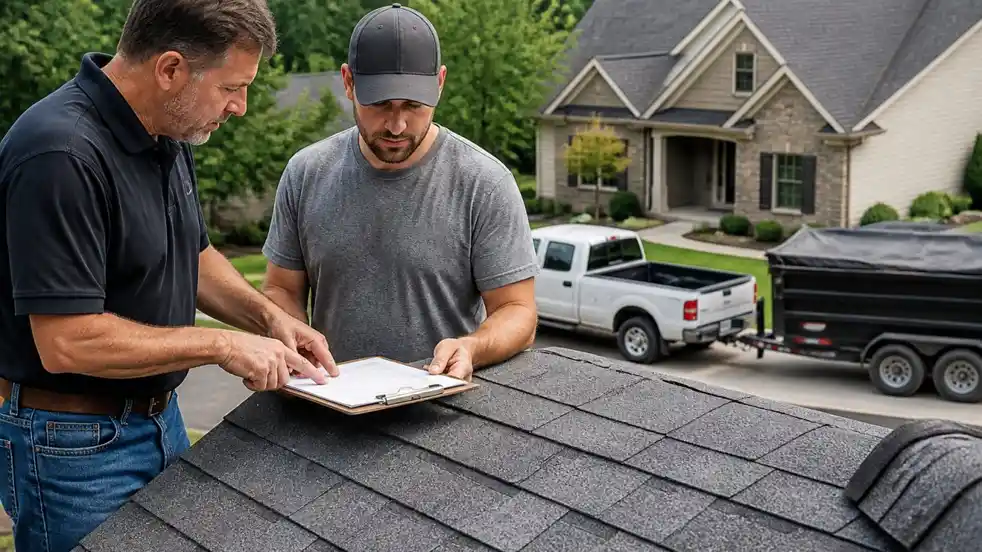
Last Updated: October 28, 2026
Quick Summary
Roof replacement quotes are driven up or down by roof size, shape and pitch, the roofing material chosen, tear-off and disposal needs, and the roof’s underlying condition. Material choice is one factor that can affect quotes, since contractors may quote different roofing materials for the same roof area. Comparing the stated scope of each bid matters more than comparing totals alone.
- Roofers price work in squares, where one square equals 100 square feet of roof surface.
- A hip roof has four planes, and every additional plane means more framing, flashing and labor hours.
- A quote may describe a full tear-off or a layover over the old shingles.
- Build a one-page comparison worksheet with one column per contractor and one row per scope item.
- Covenant Roofing & Restoration is a licensed Tennessee building contractor and a GAF factory-certified company.
Table of Contents
- Why Roof Replacement Quotes Vary So Much
- Roof Size, Shape, and Pitch: The Measurements Behind the Price
- Roofing Materials Comparison: Where the Biggest Cost Swings Come From
- Tear-Off, Disposal, and Roof Condition
- What Is Included in a Roofing Estimate? A Line-by-Line Checklist
- How Many Roofing Quotes to Get (and How to Compare Them Fairly)
- How to Compare Roofing Contractors Beyond the Bottom Line
- Request Your Roof Replacement Quote from Covenant Roofing & Restoration
- Frequently Asked Questions
Why Roof Replacement Quotes Vary So Much
Two roofing contractors look at the same house and hand you numbers that are thousands of dollars apart. That gap can be frustrating, and it does not necessarily mean one contractor is trying to rob you. It usually means the two quotes are describing two different jobs.
A roof replacement quote is an itemized offer to remove your existing roof and install a new one, and the final number reflects dozens of decisions: how big the roof is, how steep it is, what material goes on it, what has to come off first, and how much hidden damage the contractor expects to find.
Below, we break down factors that can affect roof replacement quotes, show you how to read a roofing estimate line by line, and explain how to compare bids.
Roof Size, Shape, and Pitch: The Measurements Behind the Price
Size is the biggest driver, but it is not as simple as square footage. Roofers price work in “squares,” where one square equals 100 square feet of roof surface. A steep roof has more surface area than its footprint suggests, so the same house can have a different roof surface area depending on pitch.
Square Footage and Roof Planes
A simple gable roof has two planes. A hip roof has four. Every additional plane means more framing, more flashing, more ridge and valley work, and more labor hours. Roofs with lots of valleys, dormers, and penetrations take longer to tear off and longer to seal correctly.
Slope, Complexity, and Accessibility
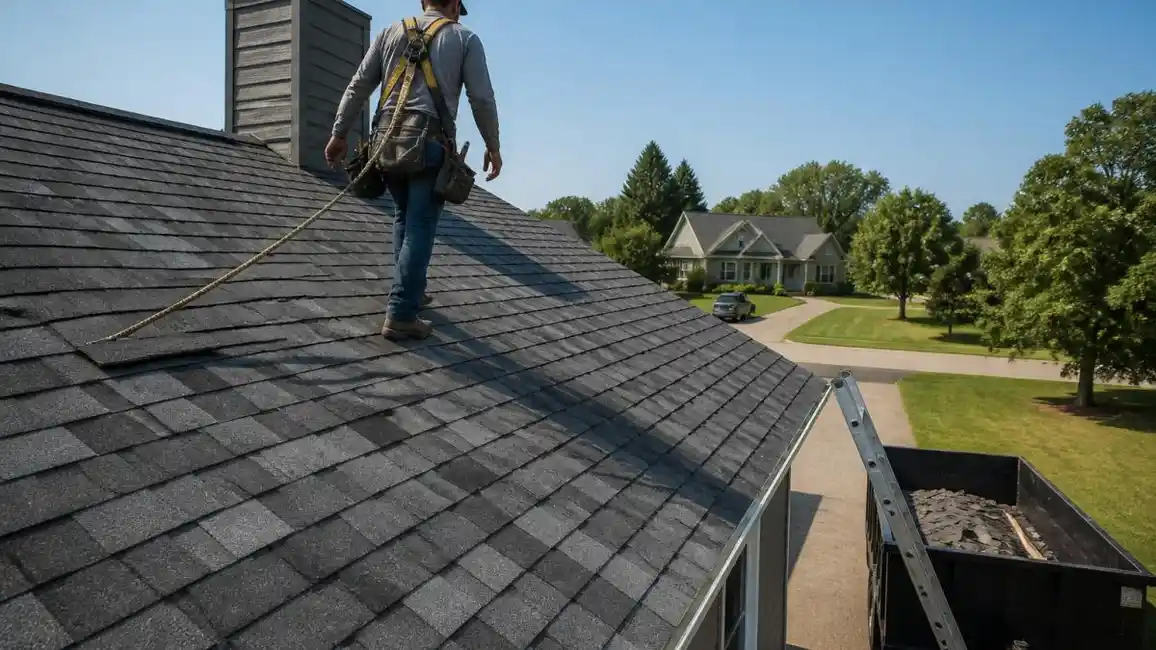
Steep slopes slow crews down and require extra safety setup. So do fences, landscaping, and tight driveways that block a dumpster or lift. These site conditions can affect the work involved.
Roofing Materials Comparison: Where the Biggest Cost Swings Come From
Material choice is one factor that can affect quotes. Contractors may quote different roofing materials for the same roof area.
Here is how the main options stack up on the factors that drive price:
| Material | Relative Cost | Typical Service Life | Best For |
|---|---|---|---|
| 3-tab asphalt shingles | Lowest | Shortest | Tight budgets, simple roofs |
| Architectural asphalt shingles | Mid | Long | Most homes, good value |
| Standing-seam metal | Highest | Longest | Long-term owners, steep roofs |
If you want a deeper look at how metal and shingle hold up against each other, see our comparison of metal roof vs shingle durability.
Tear-Off, Disposal, and Roof Condition
Tear-off is the removal of your old roof, and it is one of the most variable line items on any quote. A quote may describe a full tear-off or a layover, which involves installing new shingles over the old ones.
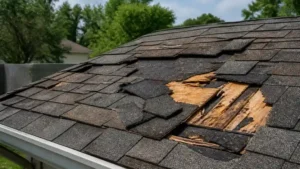
The condition of the roof underneath may affect the work required. Rotted decking, failed flashing, and water-damaged sheathing may be discovered when the old roof is removed.
If you are unsure whether your roof needs replacement at all, our guide to the signs you need roof replacement helps you confirm before you pay for tear-off.
What Is Included in a Roofing Estimate? A Line-by-Line Checklist
A roofing estimate may provide a written breakdown of materials, labor, and fees. Use this checklist to review an estimate and compare it with another bid.
- Tear-off and disposal of the old roof. Check whether the estimate states the number of layers being removed and whether disposal fees are included.
- Decking inspection and repair allowance. Check whether the estimate explains how decking repairs will be handled.
- Underlayment and ice/water shield. Check whether the estimate describes the underlayment and any ice/water shield included.
- Roofing material. Check that the estimate identifies the roofing material included.
- Flashing, vents, and ridge caps. Check whether the estimate describes the flashing and ventilation work included.
- Labor. Check whether the estimate describes the labor included.
- Permits and inspection fees. Check whether the estimate explains how permits and any related fees are handled.
- Warranty terms. Check whether the estimate describes any warranty terms.
- Payment schedule. Check whether the estimate explains the payment schedule.
- Cleanup and final walkthrough. Check whether the estimate describes cleanup and any final walkthrough.
Ask each contractor to describe the material, tear-off approach, and any warranty terms in the estimate. Comparing the stated scope can help you understand differences between bids.
How Many Roofing Quotes to Get (and How to Compare Them Fairly)
Consider getting multiple roofing quotes so you can compare the stated scope and terms.
Schedule An Appointment Today →
But the number of quotes matters less than how you compare them. A comparison worksheet can help you review estimates by scope item rather than by total alone.
Build a One-Page Comparison Worksheet
Create a table with one column per contractor and one row per scope item. Fill it in from each written estimate, not from what the salesperson said on the phone.
| Scope row | What to record | Why it matters |
|---|---|---|
| Roof area (squares) | The square count each contractor measured | A bid with fewer squares may be under-measuring, which leads to change orders |
| Material line | Manufacturer, product line, color | Different product lines carry very different prices per square |
| Tear-off layers | Number of layers removed | A one-layer quote is not comparable to a two-layer quote |
| Decking allowance | Dollar amount per sheet and unit price beyond it | Reveals how each contractor handles hidden damage |
| Underlayment and ice/water shield | Product name and where applied | A missing ice/water shield line is missing scope |
| Flashing and vents | Itemized or bundled | The most common hidden-scope item |
| Permits | Included or separate | A quote without permits is not comparable |
| Workmanship warranty | Duration and exclusions | A material warranty is not a workmanship warranty |
| Payment schedule | Deposit and milestone payments | Compare cash-flow risk, not just total |
When the rows are filled in, the estimates can be compared by their stated scope.
Normalize the Scope Before You Compare Price
Ask each contractor to describe the material and tear-off approach in the estimate, along with any warranty terms. Compare the stated scope and totals side by side.
If one quote differs substantially from the others, ask the contractor to explain the difference in the stated scope.
A Worked Example of How Scope Changes the Total
Consider two estimates for the same roof that describe different scopes of work. Comparing the stated scope can help explain why the estimates differ.
How to Compare Roofing Contractors Beyond the Bottom Line
Check a contractor’s credentials. Covenant Roofing & Restoration is a licensed Tennessee building contractor and a GAF factory-certified company, and we help homeowners navigate insurance claims when storm damage is involved.
Ask each contractor:
- Are you licensed in this state?
Consider the contractor’s answers alongside the stated scope and price.
Request Your Roof Replacement Quote from Covenant Roofing & Restoration
Getting a clear, itemized quote should not feel like a gamble.
At Covenant Roofing & Restoration, we are a licensed Tennessee building contractor and a GAF factory-certified company. We help homeowners navigate insurance claims and install shingle and metal roofing systems, with a relational approach and clear communication.
Schedule An Appointment Today.
Frequently Asked Questions
Why do roof replacement quotes vary so much between contractors?
Quotes can differ based on the scope and terms described in each estimate. Review the stated scope and compare estimates side by side.
How many roofing quotes should I get for a new roof?
You can compare multiple estimates by reviewing their stated scope and terms. If one quote differs substantially from the others, ask the contractor to explain the difference.
What should be included in a roof replacement quote?
Review the estimate for a clear description of the proposed work and its terms. Ask the contractor to clarify any items that are missing or unclear before signing.
Can hidden roof damage increase the final price?
Hidden damage may affect the work required. Ask the contractor how unexpected damage will be addressed and documented.