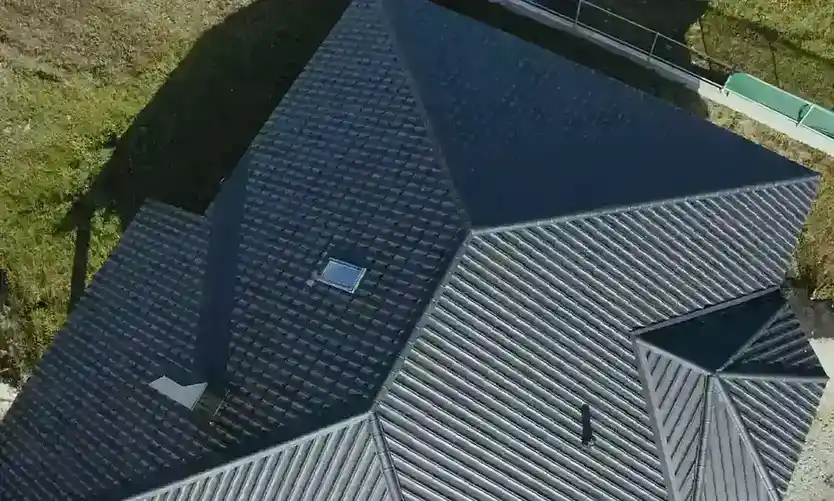
Choosing the right metal roof can feel confusing because every panel looks a little different, uses a different fastening system, and fits a different type of building. Some panels are made for homes, some are better for barns or garages, and some give a premium look with stronger long-term weather protection. For homeowners in Greeneville, TN, the right metal roofing panel should handle rain, wind, humidity, seasonal storms, and daily temperature changes without creating avoidable maintenance problems. This guide explains the main types of metal roofing panels in a simple way so you can compare your options before starting a roof replacement or metal roof installation project with Covenant Roofing & Restoration.
Quick Answer: Main Types of Metal Roofing Panels
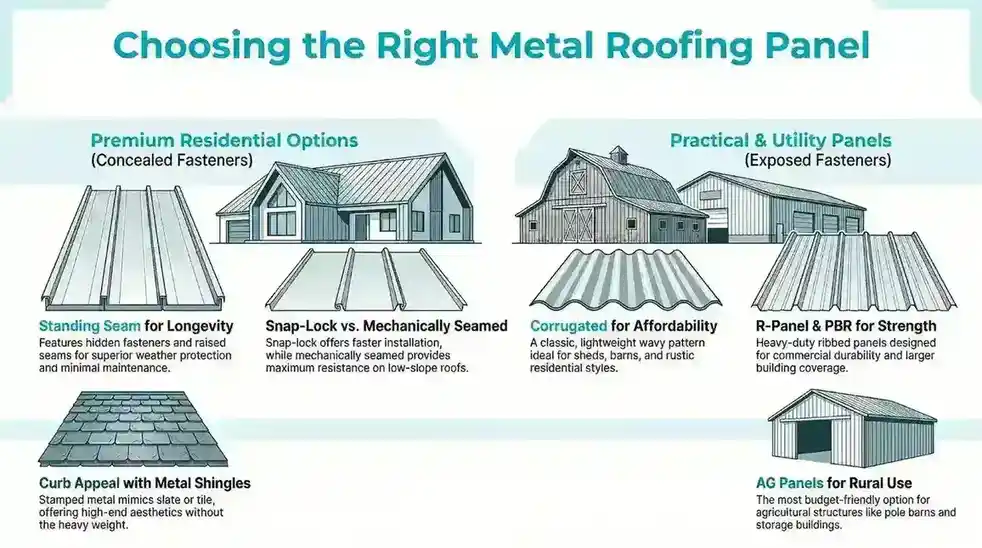
The main types of metal roofing panels are standing seam panels, corrugated metal panels, R-panel and PBR panels, AG panels, snap-lock panels, mechanically seamed panels, and metal shingle, slate, or tile panels. The biggest difference between these panels is usually the fastening system. Some panels use exposed screws that go through the face of the metal, while premium systems hide the fasteners under seams or clips for a cleaner look and stronger long-term weather protection.
For residential homes in Greeneville, standing seam, snap-lock, and metal shingle panels are often preferred because they offer better curb appeal and lower fastener-related maintenance. Corrugated, AG, R-panel, and PBR panels are still useful, especially for barns, sheds, garages, workshops, and budget-friendly roofing projects. The best option depends on roof slope, building style, budget, material choice, and how long you want the roof system to last.
First, understand the Two Fastener Systems
Before comparing panel profiles, it is important to understand how metal roofing panels are attached. The fastening method affects cost, appearance, leak resistance, maintenance, and installation skill. A roof may have strong metal panels, but if the fastener system is not right for the building or roof slope, it can create problems later. There are two main categories: exposed fastener panels and concealed fastener panels. Exposed fastener systems are usually more affordable and easier to install. Concealed fastener systems usually cost more but give a cleaner appearance and reduce the number of exposed screw points on the roof surface.
Exposed Fastener Panels
Exposed fastener metal roof panels are installed with screws that go through the face of the panel and into the roof deck, purlins, or framing. These screws usually include rubber washers that seal around the fastener hole. This system is common because it is simple, practical, and more affordable than concealed fastener roofing.
The main benefit is cost. Exposed fastener panels are often used on barns, sheds, garages, workshops, agricultural buildings, and some residential roofs where budget matters. They can perform well when installed correctly, but the fasteners must be placed properly. Overdriven screws can crush washers. Underdriven screws may leave gaps. Poor screw placement can lead to leaks.
The maintenance concern is also important. Since the screws and washers are exposed to sun, rain, wind, and temperature changes, they may need future inspection. Washers can dry out, screws can loosen, and fastener points can become leak risks over time. This does not mean exposed fastener roofs are bad. It means they need the right use case and periodic maintenance.
Common exposed fastener panels include:
- Corrugated metal panels
- R-panel
- PBR panel
- AG panel
- Hi-rib panel
These panels are often a good fit for utility structures, rural buildings, and simple roof designs. For a main residential roof, Covenant Roofing & Restoration can inspect the roof slope, decking, and budget goals before recommending whether exposed fastener panels make sense.
Concealed Fastener Panels
Concealed fastener metal roof panels hide screws or clips under raised seams, panel locks, or covered attachment points. The fasteners are not left exposed on the main roof surface, which gives the roof a cleaner appearance and reduces direct weather exposure on the fastening system.
This system is common in premium residential metal roofing. Standing seam panels, snap-lock panels, and mechanically seamed panels are all part of this category. These panels are often chosen for homes because they look modern, handle water well, and usually need less fastener-related maintenance than exposed fastener systems.
Concealed fastener panels also help with metal movement. Metal expands and contracts as temperatures change. A good concealed fastener system allows the panels to move without stressing the roof as much. This matters in Greeneville, where roofs can experience hot summers, cold nights, storms, and regular seasonal changes.
The main drawback is cost. Concealed fastener panels usually require more skilled installation, better flashing work, and more careful planning. They are not the best place to cut corners. Poor installation can affect seams, clips, trim, underlayment, and water flow. For this reason, homeowners should work with an experienced roofing contractor instead of treating standing seam or snap-lock roofing as a basic DIY project.
Common concealed fastener panels include:
- Standing seam panels
- Snap-lock panels
- Mechanically seamed panels
- Nail-strip or fastener-flange panels
For many Greeneville homeowners, concealed fastener metal roofing is the better long-term choice for the main house roof. It offers stronger appearance, better weather performance, and fewer exposed screw points.
Exposed vs Concealed Fastener Comparison
Both exposed and concealed fastener systems have a place in metal roofing. The right choice depends on the building, budget, roof slope, style, and maintenance expectations. A barn roof and a residential roof do not always need the same panel system.
| Feature | Exposed Fastener Panels | Concealed Fastener Panels |
| Fastener visibility | Screws are visible on the panel face | Screws or clips are hidden |
| Upfront cost | Lower | Higher |
| Appearance | More practical or utility-style | Cleaner and more premium |
| Maintenance | Screw and washer checks needed | Less fastener-related maintenance |
| Leak resistance | Good when installed well | Better long-term protection |
| Common uses | Barns, sheds, garages, workshops | Homes, premium roof replacement |
| Installation skill | Moderate | Higher |
| Examples | Corrugated, AG, R-panel, PBR | Standing seam, snap-lock, mechanical seam |
For a homeowner, the simplest way to compare them is this: exposed fastener panels can save money upfront, but concealed fastener panels usually provide better long-term appearance and lower fastener exposure. If you are replacing the roof on your home, this difference matters. Covenant Roofing & Restoration can help compare both options based on your roof design, long-term plans, and budget.
Common Types of Metal Roofing Panels
Once you understand the difference between exposed and concealed fasteners, it becomes easier to compare the actual panel types. Each metal roofing panel has its own profile, fastening method, appearance, maintenance needs, and best use case. Some panels are made for premium residential roof replacement, while others are more practical for barns, sheds, garages, workshops, or commercial buildings. Greeneville homeowners should choose a panel based on the home’s roof slope, curb appeal goals, budget, and long-term protection needs.
Standing Seam Panels
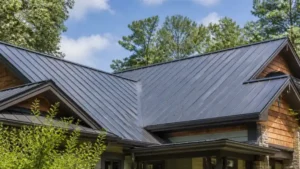
Standing seam panels are one of the most popular premium metal roofing choices for residential homes. These panels run vertically from the ridge down to the eaves and have raised seams between each panel. The fasteners are hidden under the seams or attached with clips, which gives the roof a clean, modern look and reduces exposed screw points on the roof surface.
This type of metal roofing panel is a strong choice for homeowners who want long-term weather protection and a cleaner appearance. Since the fasteners are concealed, standing seam systems usually require less screw-and-washer maintenance than exposed fastener roofs. They also handle rain well because the raised seams help direct water down the roof slope. For homes in Greeneville, TN, standing seam can be a smart option where rain, wind, humidity, and seasonal storms are part of normal roof wear.
The main drawback is cost. Standing seam metal roofs usually cost more than corrugated, AG, R-panel, or PBR panels. They also require professional installation because panel alignment, seam locking, flashing, trim, underlayment, and thermal movement all need to be handled correctly. Covenant Roofing & Restoration can inspect your existing roof and help decide if standing seam is worth the investment for your home.
Corrugated Metal Panels
Corrugated metal panels have a classic wavy pattern that many people associate with barns, sheds, farm buildings, and older utility structures. They are lightweight, affordable, and simple compared with many other metal roofing panels. Most corrugated systems use exposed fasteners, meaning screws are visible on the panel face. The biggest advantage of corrugated metal roofing is affordability. It can be a practical option for outbuildings, garages, workshops, lean-tos, and rural properties. It can also fit certain homes where a rustic or farmhouse style is desired. Because the panels are lightweight, they are easier to handle than some heavier roofing systems.
The tradeoff is maintenance and appearance. Exposed screws and rubber washers need to be checked over time. If fasteners loosen or washers wear out, leaks can develop around screw points. Corrugated panels may also look less premium on a main residential roof compared with standing seam or metal shingles. For Greeneville homeowners, corrugated metal can be useful, but it should be selected carefully based on building type and expectations.
R-Panel and PBR Panels
R-panel and PBR panels are ribbed metal panels with a stronger, sharper profile than traditional corrugated panels. They are often used on commercial buildings, garages, workshops, agricultural buildings, and some residential projects. These panels usually use exposed fasteners and are known for strength, coverage, and practical performance. PBR stands for purlin bearing rib. This means the panel has an added rib at the overlap to improve support and panel strength where one sheet meets another. R-panel and PBR systems are common when a building needs a durable metal roof without the higher cost of standing seam. They can be a good option for detached garages, storage buildings, workspaces, and certain homes with simpler roof lines.
The main concern is still exposed fastener maintenance. Since screws go through the panel face, the roof should be inspected over time for loose screws, worn washers, or sealant issues. Proper installation matters because rib alignment, overlap placement, flashing, and screw pattern all affect leak resistance.
AG Panels
AG panels, also called agricultural panels, are budget-friendly metal panels often used on barns, pole barns, sheds, storage buildings, and farm structures. They are usually lighter and less expensive than heavier ribbed panels. Their main purpose is practical coverage at a lower cost. For agricultural buildings around Greeneville and nearby rural areas, AG panels can be a sensible choice. They are affordable, easy to source, and useful for simple structures that need protection from rain and weather. They are not always the best choice for a main residential roof because they may not offer the same curb appeal, strength, or long-term performance as standing seam, snap-lock, or higher-grade residential panels.
That does not mean AG panels are low quality by default. It means they should be used in the right setting. If a homeowner wants a metal roof for a barn or shed, AG panels may work well. If the goal is to upgrade a home’s main roof, other panel systems may be better.
Snap-Lock Panels
Snap-lock panels are a type of concealed fastener metal roofing panel. They are part of the standing seam family, but instead of requiring mechanical seaming after installation, the panels snap together along the seams. This gives the roof a standing seam appearance with a faster installation process than some mechanically seamed systems. Snap-lock panels can be a good option for residential homes with the right roof slope. They provide a clean look, hide fasteners, and reduce the number of exposed screw points. Many homeowners like snap-lock panels because they offer premium metal roofing appearance without the same installation process as mechanically seamed roofing.
Still, snap-lock panels are not right for every roof. Roof slope, local weather exposure, panel specifications, and manufacturer requirements all matter. If the roof has a low slope or heavy water exposure, another standing seam system may be more suitable. Covenant Roofing & Restoration can review these details before recommending a snap-lock system.
Mechanically Seamed Panels
Mechanically seamed panels are another concealed fastener option in the standing seam family. These panels are installed and then locked together using a special seaming tool. This creates a tighter seam and can provide stronger weather protection than some snap-lock systems. Mechanically seamed panels are often used where water resistance, wind performance, or low-slope roof conditions require extra care. They can be a strong option for certain homes, commercial buildings, and advanced roofing projects. Because the seams must be locked properly, this panel type requires skilled installation.
For homeowners, the main benefit is stronger seam performance. The main drawback is cost and installation complexity. Mechanically seamed roofs are usually not a DIY system. They need the right equipment, trained installers, and careful flashing work around valleys, chimneys, vents, skylights, and roof edges.
Metal Shingle, Slate, and Tile Panels
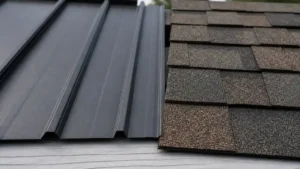
Metal shingles, slate, and tile panels are made for homeowners who want the strength of metal roofing without the vertical panel look. These panels are stamped or formed to look like asphalt shingles, wood shakes, natural slate, or clay tile. They can offer strong curb appeal while staying lighter than real slate or tile. This panel style works well for traditional homes, historic-style homes, and homeowners who want a roof that blends with the neighborhood. Metal shingles can be a good replacement option for asphalt shingles when a homeowner wants longer lifespan and better weather performance. Metal slate and tile panels can give a premium look without the heavy weight of natural materials.
The main drawbacks are cost and installation time. These systems often require more detail work than basic vertical panels. Flashing, starter sections, trim, panel layout, and transitions must be installed correctly. A professional roofing contractor can help decide if metal shingles, slate, or tile panels fit your home style and budget.
Which Metal Panel Is Best for Your Building?
The best metal roofing panel depends on the building. A main residential roof needs a different balance of appearance, weather resistance, and long-term value than a barn or shed. This is why choosing a panel by price alone can lead to poor results. A cheaper panel may work well on a utility building but look out of place or require more maintenance on a home.
| Building Type | Best Panel Options |
| Residential home | Standing seam, snap-lock, metal shingles |
| Barn or shed | AG panel, corrugated panel |
| Garage or workshop | R-panel, PBR panel, corrugated panel |
| Commercial building | Standing seam, PBR, structural ribbed panels |
| Traditional-style home | Metal shingles, metal slate, metal tile panels |
For most Greeneville homes, standing seam, snap-lock, or metal shingles are often better choices for the main roof because they provide stronger curb appeal and better long-term performance. For barns, storage buildings, and workshops, AG panels, corrugated panels, R-panel, or PBR panels may make more financial sense.
The roof shape also matters. A simple gable roof may work with more panel options. A roof with dormers, valleys, skylights, chimneys, and several transitions may need a more careful installation plan. Covenant Roofing & Restoration can inspect the roof design and explain which panel systems are practical before you commit to a roof replacement.
Metal Roofing Materials Used in Panels
Choosing the right metal roofing panel also means selecting the appropriate material. Different metals affect durability, corrosion resistance, weight, cost, appearance, and lifespan. Greeneville, TN homeowners should consider local weather patterns, rain, humidity, occasional hail, and seasonal temperature changes when picking the material for a metal roof.
Steel Panels
Steel is one of the most common metal roofing materials because it is strong, widely available, and cost-effective. Steel panels can be galvanized (zinc-coated) or Galvalume (aluminum-zinc coated), offering good corrosion resistance. They are often used for standing seam, corrugated, R-panel, PBR, and AG panels. For residential roofs, steel provides excellent durability at a reasonable cost and performs well in high-moisture environments.
Benefits:
- High strength and impact resistance
- Cost-effective compared with aluminum or copper
- Widely available
- Compatible with exposed and concealed fastener systems
Considerations:
- Heavier than aluminum
- Can rust over time if protective coating is damaged
- Painted panels may require touch-ups in long-term use
Aluminum Panels
Aluminum is lightweight, corrosion-resistant, and flexible. It is ideal for roof replacement in areas with coastal or high-humidity exposure. Aluminum panels are less prone to rust than steel but can dent more easily. They are often used for standing seam, snap-lock, and some custom corrugated panels.
Benefits:
- Rust-resistant
- Lightweight, easier to handle
- Flexible for complex roof shapes
Considerations:
- Higher material cost than steel
- Prone to dents from hail or falling debris
- Limited color and gauge options compared with steel
Copper Panels
Copper is a premium roofing material known for its long lifespan, aesthetic appeal, and natural patina over time. Copper panels are often used as accent areas, for porches, or for full residential roofs on high-end homes. Copper resists corrosion and can last 60–100+ years, but it is significantly more expensive than steel or aluminum.
Benefits:
- Extremely long lifespan
- Attractive appearance with natural aging
- Corrosion-resistant
- Lightweight for a durable roof
Considerations:
- High cost
- Can dent from hail or falling branches
- Requires professional installation
Zinc Panels
Zinc is a durable, corrosion-resistant metal that develops a protective patina over time. It is highly sustainable and can last 80–100+ years. Zinc is mostly used in custom or high-end roofing systems and may not be widely available in standard panels in Greeneville.
Benefits:
- Extremely long lifespan
- Resistant to rust and corrosion
- Sustainable and recyclable
- Self-healing patina protects from scratches
Considerations:
- Expensive
- Requires specialized installation
- Not commonly stocked by all local contractors
Galvalume and Galvanized Steel
Galvanized steel is zinc-coated, while Galvalume combines aluminum and zinc for superior corrosion resistance. Many exposed-fastener and concealed-fastener panels use Galvalume for increased durability. Painted finishes add color protection and extend the roof’s lifespan. Metal roofing finishes play a major role in energy efficiency. These are widely used for residential, commercial, and agricultural buildings because of affordability and performance.
Benefits:
- Affordable and strong
- Corrosion-resistant
- Available in multiple panel profiles
- Easy to source from contractors
Considerations:
- Protective coating must remain intact
- Panels can scratch if handled improperly
- Painted finishes may require touch-ups over time
How to Choose the Right Metal Roofing Panel
After understanding fasteners, panel types, and materials, homeowners can choose the most suitable panel based on roof slope, building type, maintenance expectations, and budget.
Consider Roof Slope
Low-slope roofs require careful panel selection. Standing seam and mechanically seamed panels are better at shedding water than exposed fastener panels. Steeper roofs may allow more panel options.
Match the Panel to the Building
| Building Type | Recommended Panel Options |
| Residential home | Standing seam, snap-lock, metal shingles |
| Barn or shed | AG panel, corrugated panel |
| Garage or workshop | R-panel, PBR panel, corrugated |
| Commercial building | Standing seam, PBR, structural rib panels |
| Traditional-style home | Metal shingles, metal slate, metal tile panels |
Maintenance and Longevity
- Exposed fastener panels need screw and washer inspection every few years.
- Concealed fastener panels generally require less maintenance but cost more upfront.
- Material choice impacts lifespan: copper > zinc > aluminum > steel (Galvalume extends steel life).
Balance Cost, Appearance, and Lifespan
- Low-cost: Corrugated, AG panels
- Mid-range: R-panel, PBR panels
- Premium: Standing seam, snap-lock, metal shingles, copper, zinc
Greeneville homeowners should consider long-term performance and curb appeal alongside budget. Covenant Roofing & Restoration provides consultations to compare cost vs. aesthetic vs. longevity, helping homeowners select the best panel for their home.
Common Mistakes to Avoid
Choosing metal roofing panels is not only about picking a style from a brochure. The panel must match the roof slope, building type, fastener system, material, and installation requirements. Many metal roof problems happen because the wrong panel was used in the wrong place or because the installation was rushed. Avoiding these mistakes can help protect your home from leaks, poor curb appeal, and unnecessary repair costs.
Choosing Only by Price
The cheapest metal roofing panel is not always the best value. Corrugated and AG panels can be great for barns, sheds, and utility buildings, but a main residential roof may need stronger curb appeal, better weather protection, and lower maintenance. If a homeowner chooses only by price, they may end up with a roof that needs more fastener checks, looks out of place, or does not match the home’s long-term value.
A better approach is to compare upfront cost with lifespan, appearance, maintenance, and leak resistance. For many Greeneville homes, spending more on standing seam, snap-lock, or metal shingles can make sense if the goal is long-term protection and a cleaner residential look.
Ignoring Roof Slope
Roof slope plays a major role in metal roofing performance. Some panels shed water better than others. Low-slope roofs need extra care because water moves more slowly and can find weak points if seams, fasteners, or flashing are not designed correctly. Using the wrong panel on a low-slope roof can raise the risk of leaks.
Standing seam or mechanically seamed systems are often better suited for roofs that need stronger seam protection. Exposed fastener panels may work well on steeper or simpler roofs, but they should still be installed according to manufacturer guidance and local building needs.
Poor Fastener Installation
Fasteners are one of the most common weak points in exposed fastener metal roofing. If screws are overdriven, the washer can split or deform. If screws are underdriven, the washer may not seal properly. If screws are placed at the wrong angle or in the wrong pattern, water can enter around the fastener.
Good installation also means using the correct screw type, correct washer, correct spacing, and proper panel overlap. This is why professional installation matters, especially on homes where leaks can damage ceilings, insulation, walls, and roof decking.
Forgetting Metal Expansion and Contraction
Metal expands and contracts as temperatures change. During hot days, cold nights, and seasonal weather shifts in Greeneville, panels can move slightly. If the roof system does not allow for this movement, panels, seams, fasteners, or trim can become stressed.
Concealed fastener systems often handle movement better because clips and seams can allow controlled expansion and contraction. Exposed fastener systems need proper installation so movement does not loosen screws or damage washers over time.
Hiring an Inexperienced Installer
Metal roofing requires more than placing panels on a roof. A quality installation includes roof deck inspection, underlayment, flashing, trim, ventilation checks, panel alignment, fastener placement, ridge caps, valleys, sidewall flashing, and proper sealing around vents and penetrations.
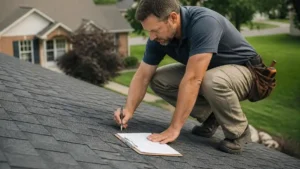
An inexperienced installer may leave gaps, misalign panels, use poor fastener patterns, or fail to handle transitions correctly. These mistakes can lead to leaks even if the metal panels themselves are high quality. Covenant Roofing & Restoration can help homeowners in Greeneville choose the right panel and install it with attention to the full roof system, not just the visible metal surface.
Why Choose Covenant Roofing & Restoration for Metal Roofing?
Choosing between different types of metal roofing panels can be difficult without seeing how each option fits your actual roof. A panel that works for a barn may not be right for a home. A system that looks affordable at first may need more maintenance later. A premium panel may be worth the investment if it improves weather protection, curb appeal, and long-term roof performance.
Covenant Roofing & Restoration helps Greeneville homeowners compare metal roofing options based on roof slope, existing roof condition, decking, ventilation, budget, and home style. Whether you are considering standing seam, corrugated panels, R-panel, PBR panels, AG panels, snap-lock panels, or metal shingles, a professional inspection can help narrow the options before installation begins.
Their roofing services can include:
- Metal roof installation
- Roof replacement consultation
- Existing roof inspection
- Decking and underlayment checks
- Flashing and ventilation review
- Storm damage evaluation
- Roof repair or replacement planning
- Guidance on panel style, material, and maintenance
If you are comparing different types of metal roofing panels for your Greeneville home, Covenant Roofing & Restoration can explain the pros and limits of each option and recommend a system that fits your property, budget, and long-term protection needs.