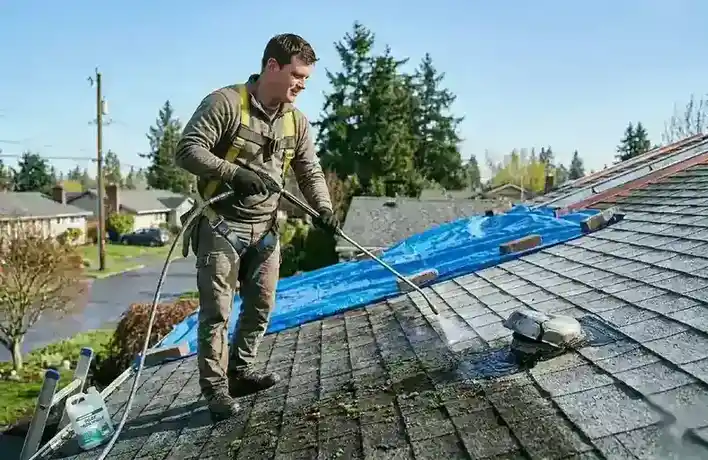
Black streaks on your roof can make a clean home look older than it really is. For many homeowners in Greeneville, TN, those dark stains are not just dirt. They are often roof algae growing on asphalt shingles because of shade, moisture, roof debris, and poor drainage. If the problem is ignored, algae can spread across the roof surface, reduce curb appeal, and hide deeper issues like moss, lichen, shingle wear, clogged gutters, or early roof damage. The good news is that roof algae can often be prevented with smart maintenance, safe cleaning methods, and timely roof inspections from a professional roofing contractor like Covenant Roofing & Restoration.
Understanding Roof Algae and Related Growth
Roof algae is one of the most common reasons asphalt shingles develop black roof streaks or roof discoloration. Many homeowners mistake these stains for mold, mildew, soot, or general dirt, but the dark streaking is often caused by a type of blue-green algae known as Gloeocapsa magma. This algae spreads through airborne spores and grows best where shingles stay damp for long periods. In Greeneville, TN, shaded neighborhoods, tree-covered properties, seasonal rainfall, and humid weather can all create the right conditions for algae to grow on the roof surface.
Algae is usually more of an appearance issue at first, but it should not be ignored. Once a roof stays damp, other organic growth such as moss, lichen, mildew, or mold-like staining can appear. Moss is more concerning because it can hold moisture against shingles and may cause shingle lifting, shingle curling, and possible water entry. A professional roof inspection can help confirm whether your roof has simple algae staining or a more serious moisture-related roofing issue.
Roof Algae vs Moss vs Lichen vs Mold
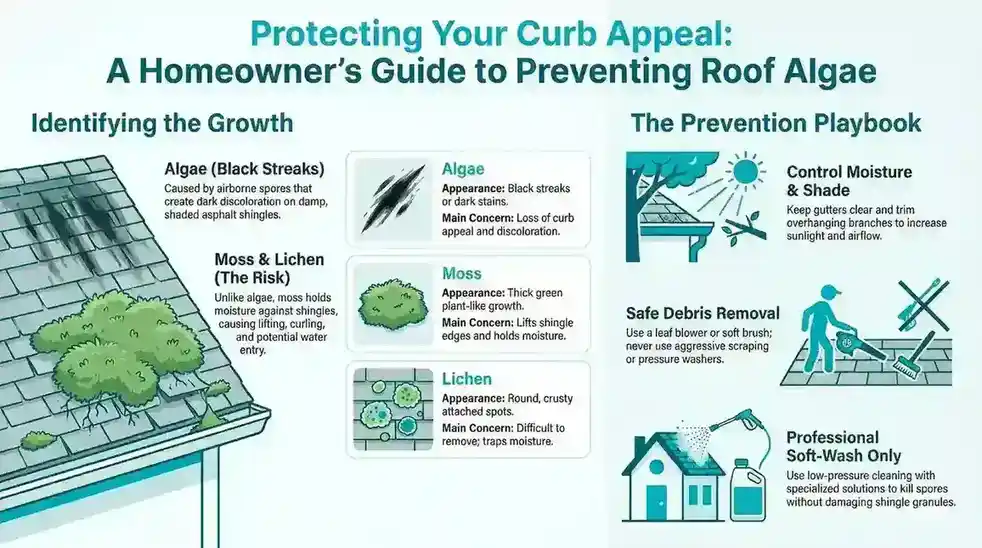
Algae, moss, lichen, and mold are often discussed together, but they are not the same problem. Each one looks different, grows in different conditions, and creates a different level of risk for your roof. Knowing the difference helps homeowners avoid using the wrong cleaning method or assuming a roof needs replacement when it may only need safe roof cleaning.
| Growth Type | Common Appearance | Main Concern |
| Algae | Black streaks or dark stains on shingles | Curb appeal loss and roof discoloration |
| Moss | Thick green plant-like growth | Holds moisture and can lift shingle edges |
| Lichen | Round, crusty spots attached to shingles | Can be hard to remove and may trap moisture |
| Mold / Mildew | Dark, damp, or powdery growth | Usually points to moisture problems |
Algae on asphalt shingles, especially on shaded or north-facing roof slopes. Moss is usually thicker and greener, and it can grow between shingles or along roof edges. Lichen attaches more firmly to roofing materials and can be difficult to remove without damaging shingle granules. Mold and mildew are more common in damp interior areas, but roof moisture problems can contribute to related staining and air quality concerns if leaks develop.
Causes of Roof Algae Growth
Roof algae does not appear without a reason. It grows because the roof surface gives it moisture, shade, and time. If the same black streaks on roof keep coming back after cleaning, the real problem may be poor drainage, overhanging tree branches, clogged gutters, old shingles, or roof areas that never dry fully. This is why prevention is more effective than waiting until the roof looks stained again.
For Greeneville homeowners, algae prevention starts with understanding the roof environment. A roof under heavy tree cover will need different maintenance than a roof with full sun exposure. A home with clogged downspouts may hold more moisture near roof edges. A roof with poor attic ventilation may also stay warmer and damper than it should. These small conditions can support algae, moss, and lichen growth over time.
Moisture and Poor Drainage
Moisture is the main reason algae grows on roof shingles. Rain, humidity, morning dew, and standing water can all keep the roof surface damp. If gutters or downspouts are clogged, water may back up near the roof edge or overflow onto lower roof sections. This keeps shingles wet longer and creates a better place for algae spores to grow. Poor drainage can also affect nearby parts of the home. Overflowing gutters may soak fascia, soffits, siding, and even the foundation area. If water is not moving away from the roof correctly, algae prevention becomes harder. Keeping gutters and downspouts clear is one of the simplest ways to reduce moisture buildup and protect your roofing system.
Shade From Trees and Buildings
Shade is another major cause of roof algae. Roof sections that receive less sunlight dry more slowly after rain. North-facing roof planes, areas under overhanging tree branches, and roof slopes blocked by nearby structures are more likely to develop black streaks, moss, and lichen. Trees also drop leaves, twigs, seed pods, and other roof debris. This debris traps moisture and gives organic growth more time to spread. Trimming branches does not mean removing every tree near the home. It means creating enough sunlight and airflow so the roof can dry properly after wet weather.
Organic Debris on the Roof
Leaves, twigs, pine needles, and small branches may seem harmless, but they can hold moisture against shingles. Over time, this can encourage algae and moss growth. Debris can also collect in valleys, behind chimneys, around skylights, and near roof edges. These are the same areas where water often slows down during rain. Roof debris should be removed carefully. Aggressive scraping, stiff brushing, or harsh tools can damage shingle granules. A leaf blower or soft cleaning method may be safer, but roof access can still be dangerous. If the roof is steep, wet, or hard to reach, Covenant Roofing & Restoration can inspect and clean the roof using safer methods.
Roof Material and Age
Asphalt shingles are commonly affected by algae because some algae feed on materials found in the shingle surface. Older shingles may also have more granule loss, which can make stains more visible and reduce roof protection. Once shingle granules are worn away, the roof becomes more exposed to sunlight, moisture, and weather damage. Wood shingles, concrete tiles, and other porous roofing materials can also develop algae, moss, or lichen if they stay damp. Roof age matters because older roofing materials may be more brittle and easier to damage during cleaning. This is why soft-wash roof cleaning and professional inspection are safer options than pressure washing or scraping.
Early Signs You Need Roof Algae Prevention
Roof algae prevention should start before the entire roof is covered with black streaks. Early signs are often small and easy to miss from the ground. You may notice dark stains on one roof slope, green growth near shaded edges, granules in gutters, or leaves collecting in valleys. These warning signs mean the roof is holding moisture or debris long enough for organic growth to begin. If you catch the problem early, cleaning and maintenance may be enough. If the roof already has moss, lifted shingles, curled edges, water stains, or leaks, the issue may need more than cleaning. A roof inspection can help decide whether the home needs soft-wash roof cleaning, minor roof repair, or a larger roofing solution.
Black Roof Streaks on Asphalt Shingles
Black roof streaks are one of the clearest signs of algae growth. These streaks usually run downward from the upper part of the roof because rain carries algae residue across the shingles. The staining may start in small patches before spreading across larger areas. These stains can make the roof look old and neglected, even when the roof still has useful life left. For homeowners planning to sell, roof discoloration can also reduce curb appeal. Preventing and treating algae early helps the roof look cleaner and can protect the home’s appearance.
Green Mossy Growth Near Shaded Areas
Green mossy growth is different from algae. Moss is thicker and holds more water. It often appears under trees, along roof edges, or on shaded roof slopes. Moss can push against shingle edges and may cause shingle lifting or curling if left alone. Moss should not be scraped aggressively because that can remove protective shingle granules. It usually needs a careful cleaning approach and follow-up prevention steps. If moss is widespread, a professional roof cleaner or roofing contractor should inspect the roof before removal.
Granules in Gutters or Downspouts
Granules in gutters can be a normal sign of shingle aging, but heavy granule buildup may point to roof wear or damage. When shingles lose granules, they become more vulnerable to UV aging, moisture, and staining. Algae and moss may also become more noticeable on worn roof areas. If you see a large amount of granules in gutters or downspouts, schedule a roof inspection. Cleaning the algae may improve appearance, but the roof may also need repair if the shingles are losing protection.
Damp Attic or Poor Ventilation Signs
Roof algae is mostly seen outside, but moisture problems can also show up inside the attic. Poor attic ventilation may trap heat and moisture under the roof deck. This can contribute to damp conditions, mildew odors, and roof system stress. Signs of ventilation problems may include musty attic smells, damp insulation, dark roof decking, or uneven roof aging. If your home has both roof algae and attic moisture signs, it is smart to have a professional check the full roofing system, not just the stained shingles.
Preventive Measures to Stop Algae Growth
Once you understand why algae forms on your roof and can identify the early warning signs, the next step is prevention. Preventive care keeps your roof healthy, reduces black streaks, preserves shingle life, and maintains the home’s curb appeal. For Greeneville, TN homeowners, combining proper maintenance with professional services is the safest and most effective way to manage algae and moss growth.
Keep Gutters and Downspouts Clean
Gutters and downspouts are essential for proper water drainage. When debris such as leaves, twigs, and dirt accumulates, water can back up along the roof edge, keeping shingles damp longer and providing an ideal environment for algae. Regularly clearing gutters ensures rainwater flows freely away from your roof, minimizing prolonged moisture exposure and the risk of black streak formation. Clean gutters also protect soffits, fascia, and foundation areas from water damage.
Trim Overhanging Tree Branches
Shade is a significant factor in algae growth. Roof sections shaded by large trees, overhanging branches, or nearby structures tend to dry more slowly after rain, allowing algae spores to settle and multiply. Trimming tree branches not only increases sunlight and airflow but also reduces the amount of debris dropping onto the roof, which can trap moisture and feed organic growth. Covenant Roofing & Restoration can evaluate your property and recommend safe trimming practices without damaging your landscape or roof.
Remove Roof Debris Safely
Leaves, pine needles, small branches, and other debris can trap water against shingles, creating conditions favorable to algae and moss. Use a leaf blower, soft brush, or scraper to remove debris safely. Avoid aggressive scraping or high-pressure washing, as these methods can strip protective shingle granules, accelerate UV aging, and void roofing warranties. Soft, low-impact cleaning preserves the integrity of the shingles while reducing the risk of algae growth.
Improve Roof and Attic Ventilation
Proper roof and attic ventilation keeps shingles and roof decking dry, reducing moisture buildup. Poor ventilation traps heat and humidity beneath the roof, creating an environment where algae, moss, and mold can thrive. Ensuring that attic vents are unobstructed and that airflow is adequate helps maintain a drier roof surface. This preventative measure also improves energy efficiency by reducing heat accumulation in the attic during hot months.
Use Algae-Resistant Shingles or Copper Granules
For homes undergoing roof replacement or major repairs, algae-resistant shingles can be an effective long-term solution. Products like Malarkey shingles with Scotchgard™ Protector or shingles containing 3M™ Copper Granules inhibit algae growth by releasing small amounts of copper during rain events. Zinc or copper strips installed near the roof ridge can also limit growth by distributing trace metals over the roof surface with rainwater. Professional installation is recommended to prevent leaks and ensure optimal effectiveness.
Schedule Professional Soft-Wash Roof Cleaning
Even with preventive measures, algae may eventually appear, especially in damp, shaded climates like Greeneville. Soft-wash roof cleaning uses low-pressure water combined with specialized cleaning solutions to remove algae, moss, and other organic growth safely. Unlike pressure washing, soft washing does not damage shingles or remove protective granules. Covenant Roofing & Restoration provides soft-wash roof cleaning for homes of all sizes, ensuring that algae and moss are removed effectively without compromising roof integrity.
Seasonal Roof Maintenance Tips
Implementing a seasonal maintenance routine helps keep algae and moss in check year-round. Recommended actions include:
Spring:
- Inspect roof after winter.
- Clean gutters and downspouts.
- Remove accumulated debris from valleys and slopes.
- Schedule roof cleaning if black streaks are visible.
Summer:
- Trim trees and branches to increase sunlight and airflow.
- Monitor shaded areas for algae growth.
- Clear debris after summer storms.
Fall:
- Remove leaves and pine needles before winter rain.
- Ensure gutters and downspouts are clear.
- Inspect for minor moss or algae and treat early.
After Storms:
- Check for fallen limbs or debris accumulation.
- Look for any new black streaks or moss growth.
- Call for a professional roof inspection if signs of algae or moss appear.
Safe Methods for Cleaning Existing Roof Algae
Even with preventive measures, algae can appear on shingles, especially in shaded or damp areas. Removing it safely is important because aggressive cleaning can damage shingles, reduce their lifespan, or void warranties. Greeneville, TN, homeowners should know which cleaning methods are effective and which ones pose risks.
Low-Pressure Soft Wash Cleaning
Soft washing is the recommended method for cleaning moss, algae and lichen from asphalt shingles. Unlike high-pressure washing, it uses a gentle water flow combined with cleaning solutions designed to kill algae spores without dislodging protective shingle granules. Soft washing preserves shingle integrity, prevents UV aging acceleration, and minimizes roof damage. Professional contractors like Covenant Roofing & Restoration offer roof cleaning for Greeneville homes. They apply solutions uniformly, rinse safely, and ensure runoff does not damage landscaping, siding, or gutters. Soft-wash cleaning also reduces the likelihood of moss or algae returning quickly.
Safe DIY Cleaning Options
If homeowners choose to handle minor algae themselves, the safest methods include:
- Bleach Solution: Mix a 50:50 ratio of laundry-strength liquid chlorine bleach and water. Spray gently onto algae-affected areas, let sit 15–20 minutes, then rinse with a low-pressure hose. Avoid letting the solution dry completely to prevent staining. Protect plants, siding, and nearby surfaces.
- White Vinegar Solution: Mix equal parts water and white vinegar for a less toxic alternative. Apply to algae, allow time to act, then rinse thoroughly. This method is gentler on shingles and the environment.
Tools and Safety
- Use a garden hose with low pressure instead of a pressure washer.
- Wear proper personal protective equipment (gloves, goggles, non-slip shoes).
- Avoid walking on steep or wet shingles; if necessary, hire a professional.
- Remove debris gently using a leaf blower, soft brush, or scraper, do not scrape aggressively.
What Not to Do
- Do not pressure wash asphalt shingles. High-pressure water can remove shingle granules, weaken shingles, and shorten roof life.
- Do not scrape shingles aggressively, as this can damage protective layers.
- Avoid walking on steep or wet roofs without proper safety equipment.
- Do not ignore moss, which retains moisture and accelerates shingle damage.
- Improper installation of copper or zinc strips can cause leaks; always consult a professional.
Long-Term Roof Maintenance for Greeneville Homeowners
Preventing algae requires ongoing attention, even after cleaning or repairs. Regular maintenance ensures that moisture, debris, and shade do not create conditions for algae, moss, or lichen.
Key Maintenance Practices
- Semiannual Inspections: Check shingles, flashing, gutters, vents, and valleys for early signs of algae or moss.
- Trim Overhanging Trees: Reduce shade and improve airflow to roof surfaces.
- Gutter Cleaning: Prevent standing water that promotes algae growth.
- Monitor Black Streaks and Moss: Early detection allows smaller, safer cleaning interventions.
- Improve Attic Ventilation: Adequate airflow helps shingles dry faster and reduces damp conditions.
- Consider Algae-Resistant Shingles: During roof replacement or major repair, invest in shingles with copper granules or Scotchgard™ protection to reduce future growth.
Roof Cleaning vs Roof Repair vs Roof Replacement
Not all algae issues require a full roof replacement. Understanding the severity of growth helps homeowners choose the right solution.
| Condition | Recommended Action | Why |
| Light black streaks | Soft-wash roof cleaning | Surface-level algae can be removed safely without replacement |
| Moss in small areas | Cleaning plus preventive measures | Moisture control prevents spread and protects shingles |
| Lifted shingles or small leaks | Roof inspection and targeted repair | Organic growth may have affected shingle integrity |
| Widespread algae, moss, or worn shingles | Repair or replacement evaluation | Older shingles may be near end-of-life and more vulnerable to moisture damage |
| Recurring algae after cleaning | Long-term maintenance plan or algae-resistant shingles | Preventive measures reduce repeat growth |
Professional guidance ensures that the roof is cleaned without damaging shingles and that minor issues are repaired before they become bigger problems. Covenant Roofing & Restoration in Greeneville provides full roof inspections, soft-wash cleaning, and repair recommendations, allowing homeowners to maintain a healthy, algae-free roof.
Why Hire a Professional Roofing Contractor
Hiring a licensed and insured contractor offers several advantages:
- Safety: Roof cleaning and inspections can be dangerous on steep or wet roofs.
- Expertise: Professionals can distinguish algae, moss, lichen, mold, or mildew, ensuring proper treatment.
- Effective Cleaning: Soft-wash cleaning preserves shingles and removes organic growth safely.
- Long-Term Prevention: Professionals can recommend algae-resistant shingles, install copper or zinc strips correctly, and advise on attic ventilation improvements.
- Local Knowledge: Greeneville contractors like Covenant Roofing & Restoration are familiar with local climate conditions, seasonal humidity, and roof types prone to algae.
FAQs About Roof Algae Prevention and Maintenance
Q1: What is the best way to prevent algae growth on a roof?
Trim overhanging trees, clean gutters, remove debris, improve attic ventilation, schedule professional soft-wash cleaning, and consider algae-resistant shingles.
Q2: What causes black streaks on shingles?
They are usually caused by blue-green algae (Gloeocapsa magma), which thrives in moist, shaded roof areas.
Q3: Does roof algae damage shingles?
Algae primarily affects appearance, but moss and lichen can hold moisture and lead to shingle curling, blow-off, or leaks.
Q4: Can I pressure wash roof algae?
No. Pressure washing removes protective granules, can damage shingles, and shorten roof lifespan.
Q5: How often should a roof be cleaned to prevent algae?
Frequency depends on shade, tree cover, and humidity. Semiannual inspections are recommended, with cleaning as needed.