Yes, you can usually stay home during roof replacement, but comfort and safety depend on household conditions. Roof replacement is loud, messy, and active from the moment the crew starts setting up. You may hear hammering, sawing, drilling, nail guns, footsteps on the roof, and debris sliding off old shingles. For many Greeneville, TN homeowners, staying inside is possible, but pets, children, elderly family members, and work-from-home schedules can make it harder. This guide explains what really happens during the roofing process so you can plan your day, protect your property, and know when leaving the house during roof replacement may be the smarter choice.
Quick Answer: Can You Stay Home During Roof Replacement?
Most homeowners can stay inside their house while the roof is being replaced. The roofing crew works mainly outside, and your home usually remains usable during the project. You may still use your kitchen, bathrooms, bedrooms, and living spaces, but you should expect loud roofing noise, home vibrations, blocked driveway access, and temporary outdoor work zones.
The safest approach is to stay indoors and avoid areas near ladders, dumpsters, supply trailers, gutter lines, and falling roof debris. If your household can handle noise and you do not need quiet time, staying home may be fine. If you have babies, nervous pets, elderly family members, online meetings, or noise sensitivity, leaving during daytime roofing work may be easier.
For homeowners in Greeneville, Covenant Roofing & Restoration can explain the roof replacement timeline before the work starts, so you know what to expect on installation day and how to prepare your home.
What Happens During a Roof Replacement?
A roof installation is a step-by-step roofing project that usually includes setup, tear-off, roof deck inspection, new roof installation, cleanup, and final inspection. Understanding these stages helps you decide whether you should stay home during roof installation or spend the day somewhere quieter.
Each stage affects the home differently. Some parts are louder than others. Some create more mess. Some may require quick decisions from the homeowner if hidden roof damage, roof cracks, roof leaks, or damaged decking are found under the old roofing materials.
Job Setup and Property Protection
The roofing crew usually starts by preparing the property. This may include placing roofing equipment, setting up ladders, moving materials into position, laying tarps, using plywood for protection, and setting up a dumpster, dump truck, or supply trailer. The driveway, garage area, and parts of the yard may become active work zones.
A good roofing contractor will focus on property protection before the tear-off begins. This can include covering landscaping, protecting windows, clearing access routes, and keeping roofing materials organized. Homeowners should move cars, grills, patio furniture, planters, and outdoor décor before the crew arrives so the team can work safely and avoid preventable damage.
Tear-Off of Old Roofing Materials
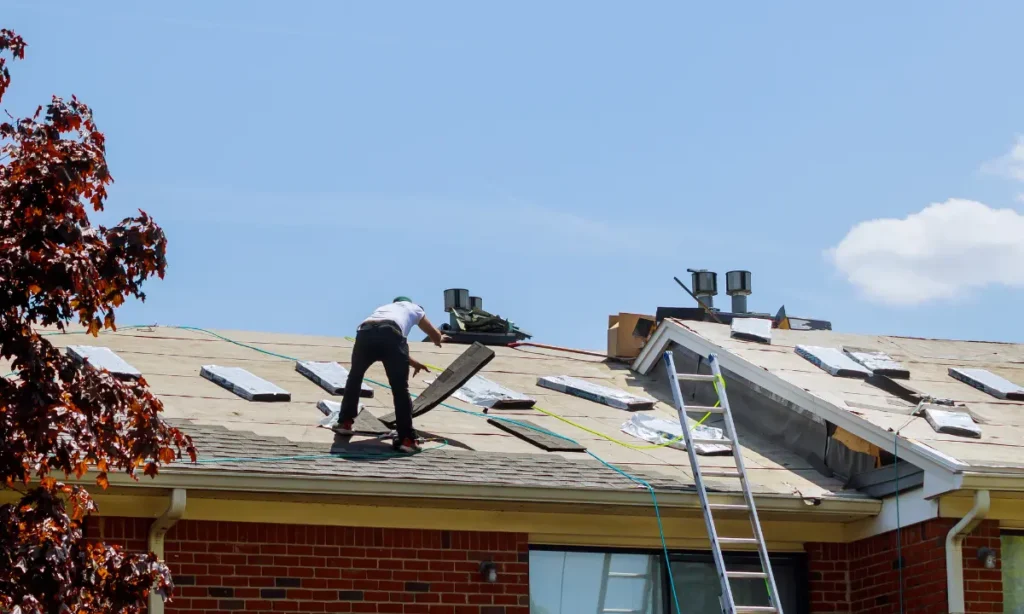
Tear-off is often the loudest and messiest part of roof installation. During this stage, roofers remove old shingles, underlayment, nails, flashing in some areas, and damaged roofing materials. You may hear heavy scraping, hammering, sawing, drilling, and footsteps across the roof.
This stage can also create falling debris around the gutter line, driveway, shrubs, and walkways. That is why homeowners should stay away from outdoor work areas during active tear-off. If you are staying home, keep doors and windows closed and avoid using exterior doors unless the project manager says it is safe.
Roof Deck Inspection and Repairs
After old roofing materials are removed, the roof deck becomes visible. This is where the roofing contractor checks for rot, water damage, weak decking, roof faults, old leaks, and other hidden issues. This step matters because new shingles need a solid surface underneath them.
If damaged decking is found, the crew may need to replace sections before installing the new roofing system. This can affect the roof installation timeline and may add extra noise from cutting, fastening, and repair work. For older homes in Greeneville, this step is especially important because roof aging, roof weathering, and past storm damage can stay hidden until the old roof is removed.
New Roof Installation
Once the roof deck is ready, the crew begins installing the new roofing system. This may include underlayment, moisture barrier, flashing, asphalt shingles, ridge caps, roof vents, and other roofing materials. This stage is still noisy because roofers are fastening materials, walking across the roof, and working around chimneys, vents, valleys, and edges.
New roof installation is where the contractor’s skill matters. Correct flashing, proper nail placement, strong ventilation, and clean shingle layout all help the roof perform better over time. A professional roofer does more than cover the home with new shingles. The goal is to create a roofing system that helps protect the house from rain, wind, leaks, and long-term roof damage.
Roofing Cleanup and Final Inspection
After installation, the crew cleans the property. Roofing cleanup usually includes removing debris, checking gutters, collecting loose materials, and using a magnetic cleanup tool to pick up stray nails from the driveway, yard, and walkways. Cleanup is an important part of the roofing process because nails and sharp debris can be dangerous for tires, pets, children, and anyone walking outside.
The final roof inspection helps confirm that the roof replacement is complete and that important details were checked. This may include shingles, flashing, ridge areas, vents, cleanup areas, and visible property protection concerns. Homeowners should ask questions during the final walkthrough if anything looks unclear.
What Will It Feel Like Inside the House?
Staying home during a roofing project feels different from staying home during normal home improvement work. Since the work happens directly above your living space, the sound and vibration can travel through ceilings, walls, shelves, and upper rooms. Some homeowners are surprised by how loud the process feels from inside. The experience depends on your roof size, roof type, attic space, insulation, contractor efficiency, and the stage of the project. Tear-off and new shingle fastening are usually the most disruptive parts.
Roofing Noise
Roofing noise is the biggest reason many homeowners choose to leave during active work hours. You may hear hammering, nail guns, drilling, sawing, scraping, and heavy foot traffic. The sound can be sharp and repeated for hours, especially during tear-off and shingle installation.
Earplugs or headphones can help, but they may not fully block the noise. If you work from home, take calls, record videos, study, or have a baby sleeping during the day, the noise can become a real problem. In that case, leaving the house for a few hours may be the easiest solution.
Home Vibrations
Roof replacement can cause vibration inside the home. This happens because roofers are walking, lifting, cutting, and fastening materials directly above the structure. Wall frames, mirrors, shelves, glassware, light fixtures, and hanging décor may shake during the work.
Before the crew arrives, remove fragile items from walls and shelves. This includes picture frames, mirrors, glass decorations, dishes, collectibles, and anything that could fall from vibration. This simple step can prevent avoidable damage inside the home.
Dust and Small Debris
Dust and small debris may fall into attic spaces, garages, or storage areas during the roofing project. This is more likely during tear-off because old shingles, nails, underlayment, and loose material are being removed from the roof deck.
If you store boxes, tools, holiday decorations, clothes, or keepsakes in the attic or garage, cover them with plastic sheets, tarps, or old blankets before work starts. This keeps belongings cleaner and reduces cleanup after the roofing project is finished.
Should You Leave the House During Roof Replacement?
You do not always have to leave the house during roof installation. Many homeowners stay inside and simply avoid the work zones. However, leaving for part of the day can make the experience easier, especially during the loudest roofing work.
The best decision depends on your household, comfort level, and schedule. A quiet adult household may handle the disruption well. A home with pets, young children, remote workers, or elderly family members may need a different plan.
Staying Home May Be Fine If
Staying home may be fine if you can handle loud noise and do not need a quiet environment. It may also work if everyone in the house understands the safety rules and can stay away from doors, windows, the driveway, and the yard during active roofing work.
You may be comfortable staying home if:
- You are not bothered by hammering or drilling
- You do not have important calls or meetings
- Your pets are calm around loud sounds
- Your children can stay safely indoors
- You can avoid all outdoor work zones
- You do not need to use the driveway during the day
In this situation, staying home can also make communication easier. If the project manager needs to ask about attic access, roof deck repairs, or an unexpected issue, you are nearby and available.
Leaving May Be Better If
Leaving the house may be better if the noise affects your comfort, health, work, or family routine. Roof installation can be stressful for babies, pets, people with sensory sensitivity, elderly family members, and anyone who needs quiet space during the day.
You may want to leave if:
- You work from home and need to take calls
- You have babies or small children at home
- Your dog or cat panics during loud noises
- Someone in the home is elderly or unwell
- You are sensitive to construction noise
- You need regular access to the driveway or garage
- You feel uncomfortable around active construction
Many homeowners choose to leave during the main daytime roofing work and return after the crew finishes for the day. This gives the roofing team space to work and gives the family a quieter day.
Best Practical Option
The best middle option is to stay available but spend the loudest hours somewhere else. You can leave during tear-off and installation, keep your phone nearby, and return in the evening when the crew has cleaned the area for the day.
This approach works well for many Greeneville homeowners because it keeps communication open without forcing the family to sit through hours of roofing noise. Before leaving, confirm the project manager’s phone number, ask about the expected schedule, and make sure pets, vehicles, and valuable items are already secured.
Can Children Stay Home During Roof Replacement?
Children can stay home during roof replacement, but they should be kept safely indoors and away from doors, windows, the attic, garage, driveway, and yard. The noise from hammering, drilling, and roof tear-off can scare younger children, especially if they do not understand what is happening above them.
If possible, plan indoor activities in a lower-level room or arrange school, daycare, or a family visit during the loudest part of the roofing project. Before the crew arrives, explain to children that workers will be on the roof, there will be loud sounds, and the outside area is off-limits until cleanup is complete.
What Should You Do With Pets During Roof Replacement?
Pets often have a harder time with roof work than people do. Dogs and cats may react to roofing noise the same way they react to thunderstorms or fireworks. The banging, vibration, unfamiliar voices, ladders, and movement around the house can make them bark, hide, shake, scratch doors, or try to escape.
The safest option is to keep pets in a quiet interior room, basement room, crate, or another secure space away from exterior doors. Use white noise, a fan, familiar bedding, and water to help them settle. For noise-sensitive dogs or anxious cats, pet boarding or a relative’s house may be a better choice for the day.
Will Roofers Need to Come Inside?
Most roof replacement work happens outside, but roofers may need indoor access in some cases. This can include attic inspection, checking roof leaks, looking at ceiling stains, confirming ventilation issues, or reviewing possible roof deck problems from below.
You do not always need to stay home all day for this, but you should stay reachable by phone. If Covenant Roofing & Restoration is replacing your roof in Greeneville, the team can explain before the project starts whether attic access or indoor inspection may be needed. That helps you plan without surprises.
How Long Does roof installation take?
Most single-family home roof installations take about a few days or a week, depending on roof size, roof type, weather, roof damage, contractor efficiency, and the number of repairs needed. Some simple asphalt shingle roof work may finish faster, while larger or steeper roofs may take longer.
In Greeneville, TN, the weather can also affect the schedule. Rain, wind, storms, or unexpected roof deck damage can slow the roofing process. A professional roofer should explain the expected re-roofing process timeline before work begins and update you if hidden problems are found.
What Can Affect the Roof Replacement Timeline?
Several factors can change how long the project takes. Roof size is one of the biggest factors because a larger roof requires more tear-off, more materials, more fastening, and more cleanup. Roof complexity also matters. Valleys, chimneys, skylights, roof vents, steep slopes, and multi-level sections take more time than a simple roof layout.
Other timeline factors include:
- Weather delays
- Damaged roof decking
- Hidden water damage
- Material delivery timing
- Roof type and shingle type
- Crew size and contractor efficiency
- Access around the driveway and yard
- Extra flashing or ventilation repairs
This is why a roofing project estimate should include more than price. It should also explain timing, preparation, cleanup, and how the contractor handles unexpected roof repair needs.
How to Prepare Before Roof Replacement Day
Good preparation makes roof replacement safer, cleaner, and less stressful. Before the crew arrives, walk around your home and think about anything that could be damaged by falling debris, vibration, dust, or blocked access. A few small steps the night before can save you from problems during the roofing project.
- Move Vehicles Away From the Driveway and Garage
- Protect Outdoor Furniture and Landscaping
- Secure Fragile Indoor Items
- Cover Attic and Garage Belongings
- Take Dated Photos of Your Property
- Inform Your Neighbors
Final Recommendation: Should You Stay or Leave?
You can stay home during roof installation if your household can handle the noise and follow basic safety rules. But leaving for the loudest daytime work hours is often the more comfortable choice, especially for families with pets, young children, elderly relatives, or remote work schedules.
| Situation | Best Choice |
| Quiet adult household | Staying home may be fine |
| Work-from-home calls | Leave or work elsewhere |
| Babies or young children | Leave during active roofing hours |
| Nervous pets | Use pet boarding or a quiet room |
| Elderly or noise-sensitive family | Spend the day elsewhere |
| Homeowner wants updates | Stay reachable by phone |
| Need driveway access | Move vehicles before the crew arrives |
If you are planning a roof replacement in Greeneville, TN, Covenant Roofing & Restoration can inspect your roof, explain the process, and help you prepare your home for a safer, smoother roofing day. Roof replacement conditions, safety risks, and timelines vary by contractor, structure, and weather. Homeowners should confirm details with their roofing professional.
FAQs
Is roof installation safe while you are inside?
Yes, staying inside is usually safe. The main safety risks are outside near ladders, gutter lines, dumpsters, trailers, falling debris, and loose nails.
How loud is the roofing project?
Roof replacement is very loud. You may hear hammering, nail guns, drilling, sawing, scraping, and heavy foot traffic across the roof for several hours.
Can I work from home during roof work?
You can, but it may be difficult. Roofing noise can interrupt calls, meetings, and focus work. It is usually better to work somewhere else during tear-off and installation.
Will roof work make a mess?
Yes, roof work creates debris, dust, old shingles, nails, and construction mess outside. A professional roofing crew should clean the property and use magnets to collect loose nails.
How long does the re-roofing process take?
Most single-family home re-roofing processes take about a few days or a week. Weather, roof size, roof type, damaged decking, and project complexity can affect the timeline.