Last Updated: November 5, 2026
Quick Summary
Natural slate is the longest-lasting roofing material, with a service life of 75 to 150+ years. Clay tile and concrete tile follow close behind at 50 to 100+ years and 40 to 75 years respectively. Metal and asphalt shingles round out the ranking at 40 to 70 years and 15 to 30 years.
- Lifespan estimates assume correct installation, proper ventilation, and routine maintenance, and the real number drops if any are missed.
- Standing seam metal hides fasteners under raised seams, removing the most common leak point on exposed-fastener metal roofs.
- Flat roofs need seam-sealed membrane systems like TPO, EPDM, or modified bitumen because they cannot shed water like pitched roofs.
- Clay, concrete, slate, and metal are noncombustible and generally carry Class A fire ratings, while cedar shake resists fire poorly without treatment.
- Compare cost per year of service by dividing installed cost plus maintenance by expected service life rather than comparing sticker prices.
Table of Contents
- Top 5 Roofing Materials Ranked by Longevity
- Roofing Material Lifespan: What the Numbers Really Mean
- Slate, Clay, and Concrete: The Century Club
- Metal Roofing Durability and the Case for Standing Seam
- Asphalt Shingles, Composite, and Cedar: The 20 to 50 Year Range
- Best Roofing Material for a Flat Roof
- Best Roofing Material for Hot Weather and Severe Storms
- Installation Quality, Ventilation, and What Longevity Really Costs
- Frequently Asked Questions
Top 5 Roofing Materials Ranked by Longevity
The best roofing material for longevity depends on how long you plan to stay, what your structure can carry, and what the weather throws at your home. Slate lasts the longest, followed by clay tile, concrete tile, metal, and asphalt shingles. This guide ranks each material by real service life, not marketing claims, so you can match durability to budget and climate.
Here’s the short version before the details: the longest-lasting roofing material is natural slate, with a service life that can span generations. Clay and concrete tile come close. Metal roofing is the durability value pick for most homes. Asphalt shingles remain the most common residential roofing material because they cost the least upfront.
The catch most guides skip: lifespan estimates describe the material, not your roof. A slate roof installed over a weak deck or without proper ventilation will not reach its advertised century. Installation quality decides whether you get the full life expectancy or a fraction of it.
How the Five Compare at a Glance
| Material | Typical Lifespan | Weight | Best For | Watch Out For |
|---|---|---|---|---|
| Natural slate | 75-150+ years | Very heavy | Historic and high-end homes | Structural support required |
| Clay tile | 50-100+ years | Heavy | Hot climates, Spanish styles | Brittle under foot traffic |
| Concrete tile | 40-75 years | Heavy | Hot, dry climates | Color fading over decades |
| Metal (standing seam) | 40-70 years | Light | Storm and snow country | Higher upfront cost |
| Asphalt shingles | 15-30 years | Light | Budget-conscious replacements | Shorter service life |
Roofing Material Lifespan: What the Numbers Really Mean
Roofing material lifespan is the expected service life of a roofing system under normal conditions, measured from installation to replacement. Those published estimates assume correct installation, proper ventilation, and routine maintenance. Miss any of the three and the real number drops.
A common mistake is reading a lifespan figure as a guarantee. It isn’t. It’s a range, and the top of that range belongs to roofs that were installed well and maintained.
Why Lifespan Estimates Vary So Much
Manufacturers test materials in controlled conditions. Your roof faces sun, wind-driven rain, hail, and temperature swings that no lab reproduces exactly. Two homes on the same street can get very different service life from identical shingles because of attic ventilation, tree cover, and how the roof was flashed.
The Asphalt Roofing Manufacturers Association notes that proper ventilation and installation are central to shingle performance. That’s the honest answer to why estimates vary: the material sets the ceiling, and the installation decides how close you get to it.
Slate, Clay, and Concrete: The Century Club
Natural slate is the longest-lived roofing material available, with a service life that can reach 75 to 150 years or more. Clay tile and concrete tile follow close behind, both regularly reaching 50 years and beyond. These three share one trait: they’re heavy, and they need a roof structure built or reinforced to carry them.
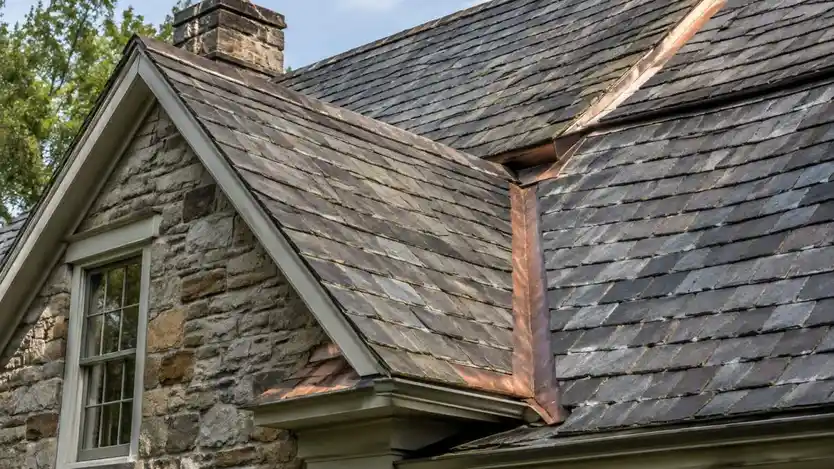
Slate’s longevity comes from the stone itself. It doesn’t rot, it doesn’t burn, and it resists freeze-thaw cycling well. The trade-offs are weight and repair skill: a cracked slate needs a roofer who knows slate, not a generalist. Clay tile handles heat and salt air, but it’s brittle, so walking a clay roof for maintenance demands care. Concrete tile offers similar durability at a lower cost than clay, with some color fade over decades.
For homeowners weighing these against shingles, our comparison of metal roof vs shingle durability breaks down the trade-offs directly.
Metal Roofing Durability and the Case for Standing Seam
Metal roofing durability is measured in decades, not years. Standing seam metal roofs commonly last 40 to 70 years. Standing seam panels hide fasteners under raised seams, which removes the most common leak point on exposed-fastener metal roofs.
Metal is often chosen for storm-prone areas because of its wind resistance and durability. The honest limitation is upfront cost: metal costs more to install than asphalt, and the payback comes through service life and lower maintenance, not a lower first invoice. Cheaper exposed-fastener panels can work, but the washers on those fasteners are the part that ages first.
Asphalt Shingles, Composite, and Cedar: The 20 to 50 Year Range
Asphalt shingles are among the most common residential roofing materials. Architectural shingles outlast basic 3-tab shingles, and luxury asphalt shingles can push toward the top of that range. Cedar shake sits higher at 30 to 50 years when maintained, and composite roofing lands in a similar band.
The gap between shingle grades matters more than most homeowners expect. If you’re choosing among shingle types, our guide to architectural vs 3-tab shingles covers which grade actually lasts longer. For a realistic look at how long asphalt shingles hold up and the warning signs of failure, see our breakdown of how long asphalt shingles last.
Cedar shake needs periodic treatment and resists fire poorly without added treatment. Composite products vary widely by manufacturer, so check the specific warranty rather than assuming a category-wide number.
Best Roofing Material for a Flat Roof
The best roofing material for a flat roof is a membrane system, not shingles or tile. Flat roofs can’t shed water the way pitched roofs do, so they rely on continuous, seam-sealed membranes: TPO, EPDM, or modified bitumen.
The failure mode on flat roofs is standing water. If ponding develops, even a good membrane ages fast. Prioritize drainage design and inspect seams annually.
Schedule An Appointment Today →
Best Roofing Material for Hot Weather and Severe Storms
Climate should drive the choice more than style, and the reason is that different weather exposures attack roofing materials through different failure mechanisms. A material that’s excellent in one climate can underperform in another, which is why a local assessment beats a generic ranking.
Intense heat and UV. Asphalt shingles lose granules and embrittle under sustained UV, which is why shingle life in hot, sunny climates often lands at the low end of its range. Clay and concrete tile handle heat cycling without breaking down, and their thermal mass and reflectivity help with attic heat gain. Metal with a cool-roof coating also performs well in heat, though dark metal can run hot.
Freeze-thaw cycles. Water that gets into small cracks, seams, or porous surfaces expands when it freezes and pries materials apart over repeated cycles. Slate resists freeze-thaw well because the stone itself is dense and non-porous. Metal expands and contracts with temperature swings, so fastener and seam design matter more than the panel itself.
Coastal salt air. Salt accelerates corrosion on fasteners, flashing, and metal panels. Clay tile handles salt air well. For metal roofs near the coast, the alloy and coating system, not just the panel gauge, determine how long the roof lasts, and standard fasteners may need to be upgraded to corrosion-resistant types.
Wildfire exposure. In wildfire-prone areas, the roof covering’s fire rating matters as much as its lifespan. Clay tile, concrete tile, slate, and metal are noncombustible and generally carry Class A fire ratings. Cedar shake resists fire poorly without added treatment, and even treated shake requires maintenance to keep that protection.
Hail and high wind. Metal, particularly standing seam, resists hail impact and wind uplift better than shingles and won’t lose granules the way asphalt does. Tile can crack under large hail, and the cost of matching replacement tiles adds up.
Heavy snow. Metal sheds snow readily, which reduces the load that sits on the roof and the ice-dam risk at the eaves. The trade-off is that snow sliding off a metal roof can damage gutters or landscaping below, so snow guards are often part of a well-designed metal installation.
Watch out: a material rated for one climate exposure can fail fast under another, a standard metal panel with the wrong fasteners near salt water, or cedar shake in a wildfire zone without treatment, can undercut the longevity you were paying for.
A local assessment that accounts for your actual heat, freeze-thaw, salt, wildfire, hail, wind, and snow exposures will beat any national ranking. The right question is not which material lasts longest in the abstract, but which material’s failure mechanisms your climate actually triggers.
Installation Quality, Ventilation, and What Longevity Really Costs
Total cost of ownership, not sticker price, is the right way to compare roofing materials. A roof that lasts twice as long at twice the price can cost less per year of service, but only if it’s installed correctly. Poor installation shortens any material’s life.
A useful comparison is cost per year of service rather than sticker price: divide the installed cost plus expected maintenance and repair by the expected service life. Pricing depends on quantity, roof size, structure, and installation details, so request a quote from Covenant Roofing & Restoration’s website for current pricing.
Three installation factors decide whether you get the advertised lifespan, and therefore whether the cost-per-year math holds:
- Underlayment and flashing: the waterproofing layers beneath the surface material fail first when done cheaply. A premium surface material over cut-rate underlayment is a false economy.
- Ventilation: trapped heat and moisture age shingles and decking from below. Inadequate intake and exhaust ventilation is one of the most common reasons a roof underperforms its rating.
- Workmanship: fastening patterns, seam sealing, and detail work separate a 30-year roof from a 12-year one. Manufacturer warranties often hinge on certified installation for a reason.
Watch out: a low bid that skips ice-and-water shield, cuts corners on flashing, or undersizes ventilation can erase the longevity advantage you paid a premium for, and many manufacturer warranties will not cover the resulting failure.
At Covenant Roofing & Restoration, we’re a licensed Tennessee building contractor and GAF factory-certified, and we install both shingle and metal systems. If you’re ready to act, you can book metal roof replacement in Greeneville or schedule shingle roof replacement.
Frequently Asked Questions
Which roofing material lasts the longest?
Natural slate is generally considered the longest-lasting roofing material, with a service life that can span generations when the slate is high quality and the installation is sound. Clay tile and metal are also long-lived options, while asphalt shingles are the most common roofing material in the U.S. and are the most budget-friendly.
Is slate or metal roofing more durable?
Slate wins on raw lifespan, but metal wins on toughness per dollar in most cases. Natural slate resists fire, rot, and hail and can outlast the house, yet it is heavy enough to require structural support and cracks if walked on carelessly. Standing seam metal roofing is a durable option for areas prone to high winds and heavy snow. For most homeowners weighing roofing material lifespan against budget, metal is the more practical long-term pick.
What is the best roofing material for hot weather?
In hot climates, the best roofing material for hot weather reflects sunlight and resists heat damage. Clay and concrete tile are commonly chosen in hot climates. Light-colored roofing materials can help reflect sunlight. Whichever you pick, proper attic ventilation matters as much as the surface material for keeping cooling costs in check.
Does roof maintenance extend the life of roofing materials?
Yes, routine maintenance adds years to almost any roofing material. Clearing debris, resealing flashing, replacing cracked tiles or lifted shingles, and keeping gutters flowing all slow the wear that shortens a roof’s service life. Asphalt shingles benefit most from regular inspection, while slate and metal need less frequent attention but still need prompt repair of individual components. A roof that is inspected annually and repaired early will consistently outperform an identical roof that is ignored.