Last Updated: November 22, 2026
Quick Summary
Choosing between residence roofing and empire roofing starts with verifying which company you are actually dealing with, since both names get used loosely online. Confirm licensing, insurance, and workmanship coverage before comparing bids, because the differences that matter show up in the contract, permit, insurance certificate, and warranty language.
- Confirm the review profile’s address and phone number match the company’s own contact details and state registration.
- Ask each company for three local references from the past twelve months and call those homeowners.
- A trustworthy estimate is itemized, not a single lump sum, so you can verify what you are buying.
- Call the insurer’s number on the certificate, not the number the contractor gives you, to confirm coverage.
- Ask for the workmanship term in years, whether it transfers, and what voids it.
Table of Contents
- Residence Roofing vs Empire Roofing: What Homeowners Need to Know
- Residence Roofing vs Empire Roofing Reviews: What Customers Actually Report
- Residence Roofing vs Empire Roofing Cost: Why Bids Differ So Much
- Roof Replacement Estimate Comparison: Line by Line
- Service Area, Licensing, and Insurance: Verifying Both Contractors
- Questions to Ask a Roofing Contractor Before You Sign
- Warranty and Workmanship Coverage Compared
- Schedule a Roof Inspection With a Local Contractor
- Frequently Asked Questions
Residence Roofing vs Empire Roofing: What Homeowners Need to Know
The residence roofing vs empire roofing question comes up often among homeowners comparing bids, and the honest answer is that both names get used loosely online, so the first job is verifying which company you are actually dealing with. At Covenant Roofing & Restoration, we tell every homeowner the same thing: a name on a truck means nothing until you confirm licensing, insurance, and workmanship coverage. This guide breaks down how the two companies compare on scope, credentials, pricing transparency, and warranty terms, so you can read a bid with confidence.
Here is the core tension most comparison articles miss. Roofing companies are not interchangeable, and the differences that matter rarely show up in a brochure. They show up in the paperwork: the contract, the permit, the insurance certificate, and the warranty language. Below, we walk through each of those, plus the questions that separate a careful contractor from a rushed one. Because the paperwork should reflect the scope of work rather than obscure it, understanding the differences between re-roofing and roof replacement can help clarify what a contractor is actually proposing.
Tennessee Board for Licensing Contractors, licensing and verification resources
Residence Roofing vs Empire Roofing Reviews: What Customers Actually Report
Reviews can show how a company behaves when a project goes sideways, not just when it goes well. That is the useful lens. Reviews describing how a crew handled a leak callback or an insurance dispute can be more informative than general praise.
The first problem with this comparison is identity. Company names are often shared or closely matched across different businesses, and review platforms can mix them together if you search by name alone. Before you read a single review, confirm you are looking at the right company by matching the address and phone number on the review profile to the company’s own contact details and its state registration.
Once you have the right profile, sort by newest first and read for patterns rather than single complaints. A common pattern in roofing reviews is a strong installation rating paired with a weak communication rating, the crew did good work, but nobody called when the schedule slipped. Those are different problems, and only one of them is likely to repeat on your project. Look for whether reviewers name a specific person, describe a specific phase (tear-off, dry-in, final inspection), and mention whether the company responded to a callback.
Read the three-star reviews first, since that is where detail often lives. Then read the company’s responses to negative reviews, noting whether they address the specific issue or repeat a generic apology.
Watch out: review counts and star averages can be inflated by review-generation campaigns, so compare the ratio of detailed reviews to short ones and check whether reviews cluster around a single month.
For a documented comparison, ask each company for three local references from the past twelve months, then call those homeowners and ask two questions: did the crew show up when promised, and did the company come back when something failed? References you can verify beat any star average. Federal Trade Commission, consumer guidance on home improvement contracts
Residence Roofing vs Empire Roofing Cost: Why Bids Differ So Much
Two bids for the same roof can land far apart, and price alone will not tell you which is better. The gap can come from several things, including material choices, decking and flashing allowances, labor, and what an estimate leaves out.
A lower bid often excludes items a complete job requires. Ask specifically whether the estimate covers permit fees, tear-off and disposal, underlayment, ice and water shield, ridge ventilation, and flashing replacement. If those are missing, the “cheaper” number is not a real comparison. Pricing also depends on roof pitch, square footage, layers being removed, and whether the deck needs repair once it is exposed.
For a structured way to line up wildly different numbers, compare roofing quotes without getting burned walks through the exact questions to put to each bidder before you sign.
Federal Trade Commission, consumer guidance on home improvement contracts
Roof Replacement Estimate Comparison: Line by Line
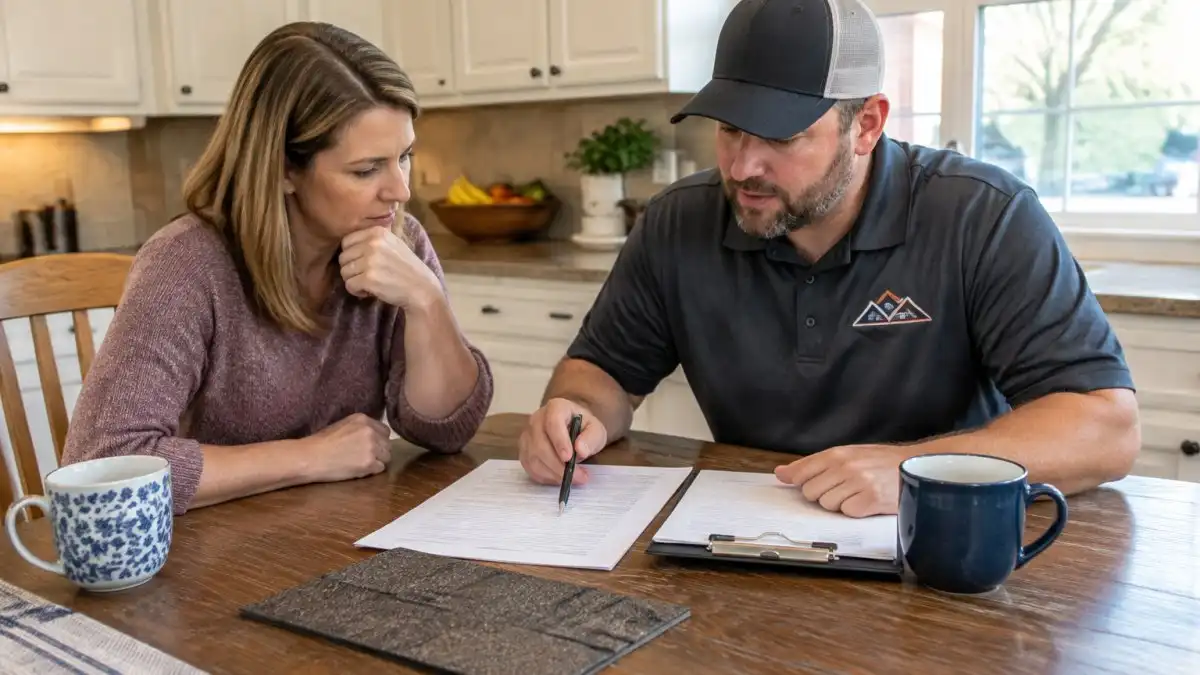
A trustworthy estimate is itemized, not a single lump sum. That is the whole test. If a proposal gives you one total and a handshake, you cannot verify what you are buying or compare it to anyone else.
What a Complete Estimate Should Itemize
- Square footage measured, not guessed
- Shingle or metal system brand and product line named
- Underlayment and ice and water shield listed separately
- Tear-off layers and disposal fees stated
- Decking repair allowance per sheet
- Flashing, vents, and ridge cap included
- Permit fees and who pulls the permit
- Labor, timeline, and payment schedule
- Warranty terms for materials and workmanship
If any line is vague, ask for it in writing before signing. A contractor who resists itemizing is telling you something.
Service Area, Licensing, and Insurance: Verifying Both Contractors
Verification is the step homeowners skip, and it is the one that protects you most. It is also where the two names in this comparison get confusing, because service area and company identity are tied together. Confirm in writing that the company covers your address, and confirm that the office quoting your roof is the same legal entity that holds the license and insurance.
Start with licensing. Roofing work is generally subject to contractor licensing and permitting rules, which vary by jurisdiction. Look up the company on your state’s contractor licensing board website rather than trusting a logo or a badge on a truck. The lookup should return a legal business name, a license number, a status, and a classification. Compare that legal name to the name on your written estimate.
Then verify insurance, and verify it directly. Ask for a certificate of insurance showing general liability and workers’ compensation, then call the insurer’s number on the certificate, not the number the contractor gives you, and confirm the policy is active and that roofing work is covered. General liability protects your property if the crew damages siding, gutters, or landscaping.
Service area is the third check, and it is not a marketing point. Ask how far the company travels for warranty callbacks and who actually performs them, the same crew, a subcontractor, or a warranty department. A company that covers your address for installation but sends a different crew for callbacks is a different experience than one that keeps the same team. Get the callback commitment in writing alongside the workmanship warranty term.
Watch out: a certificate of insurance can list a policy that has since been canceled, which is why the call to the insurer matters more than the PDF.
7 steps to verify roofing contractor insurance before you sign gives you the full checklist, and Tennessee Board for Licensing Contractors, licensing and verification resources is the lookup starting point for state licensing status.
Questions to Ask a Roofing Contractor Before You Sign
The right questions expose process, not personality. Ask them before you sign anything, and ask the same set of every bidder so the answers are comparable.
- Who pulls the permit, and will the inspection be scheduled?
- What is the payment schedule, and how much is due before materials arrive?
- How many layers are being removed, and how is decking damage priced?
- What is the workmanship warranty length, and is it transferable?
- Who is my point of contact, and how often will I get updates?
- How do you handle a leak discovered mid-project?
- Can you provide the manufacturer’s warranty documentation up front?
Write the answers down. A contractor who follows through on a timeline will not hesitate to put it in the contract.
Warranty and Workmanship Coverage Compared
Warranty language is where two similar bids become very different offers. Manufacturer warranties cover the shingles; workmanship warranties cover the installation, and the installation is where most failures originate. A long material warranty paired with a short workmanship term is a weak package.
Ask for the workmanship term in years, whether it transfers if you sell the house, and what voids it. Many warranties require specific ventilation or maintenance to stay valid. Get the terms in writing and keep them with your closing documents.
Understanding residential roofing warranty terms explains the difference in plain language, including what typically voids coverage.
GAF, roofing manufacturer warranty and certification information
Schedule a Roof Inspection With a Local Contractor
An inspection turns guesswork into a documented condition report, and it is the right first step whether your roof is leaking now or simply aging. A thorough inspection looks at the condition of the roof and should end with findings you can act on.
Covenant Roofing & Restoration is a licensed Tennessee building contractor and GAF factory-certified company serving homeowners in Greeneville, TN. We handle shingle and metal roof installations, storm damage restoration, and insurance claim navigation. One customer noted that Garrett came out to help with an emergency before the rain picked up.
If you want to know what an inspection involves before you book, our residential roof inspection cost guide covers what is included. When you are ready to move, you can request roof replacement service in Greeneville and we will schedule an assessment.
Roof decisions get easier once the paperwork is in front of you. If you are tired of comparing vague bids and want a clear scope, an itemized estimate, and a contractor who answers the phone, Covenant Roofing & Restoration can help. We bring licensed Tennessee contracting, GAF factory certification, insurance claim expertise, and a relational approach that keeps you informed from inspection to final walkthrough. Get started with Covenant Roofing & Restoration and protect your home with work you can verify.
Frequently Asked Questions
How do Residence Roofing and Empire Roofing compare in customer reviews?
Both companies maintain online business profiles with customer reviews and ratings, and review counts differ, so read the most recent reviews rather than the star average alone. Look for comments about workmanship, timeline follow-through, and how problems were handled after installation. A contractor with fewer reviews can still deliver strong service, so pair review reading with a license check and a written estimate before deciding.
How much does a roof replacement cost with Residence Roofing or Empire Roofing?
Neither company publishes fixed pricing, and roof replacement costs vary with roof size, pitch, material, decking condition, and permit requirements. Request a written, itemized estimate from each contractor so you can compare the same scope of work. Ask whether the bid includes tear-off, underlayment, flashing, ventilation, and cleanup, since missing line items are the most common reason two bids look far apart.
What should I compare in roofing estimates from two companies?
Compare scope, not just the bottom line. Check the roofing materials and manufacturer, underlayment and flashing details, number of squares, decking repair allowances, ventilation, permit responsibility, cleanup and dumpster fees, payment schedule, and warranty terms. A roof replacement estimate comparison only works when both bids cover identical work. Ask each contractor to list exclusions in writing so hidden costs do not appear mid-project.
How can I check whether a roofing contractor is licensed and insured?
Ask for the contractor’s license number and certificate of insurance, then verify both directly with the issuing bodies rather than relying on a logo on a truck. Confirm general liability and workers’ compensation coverage are current, and ask whether subcontractors carry their own policies. A licensed contractor should provide these documents without hesitation, and a written contract should name the insured entity that matches the license.