Weather can delay or extend roof replacement timelines if conditions change during the project. Many homeowners in Greeneville, TN, start a roofing project expecting it to finish in a few days, but rain, heat, or sudden storms can change that timeline overnight. The key is understanding how weather affects roof replacement scheduling so you can plan, avoid damage, and make better timing decisions. In this guide, you’ll learn exactly how different weather conditions impact roofing work, what delays to expect, and how a professional roofer helps keep your home protected during the process.
Why Weather Is Critical for Roof Installation Scheduling
Weather plays a direct role in how safely and effectively a roof installation can be completed. Roofing is not just about removing old materials and installing new ones, it requires the right conditions for proper sealing, alignment, and long-term performance. If weather conditions are poor, the risk of installation errors and future roof damage increases significantly.
A roofing contractor must consider several factors before starting a project. The roof deck must remain dry to prevent moisture damage, and asphalt shingles need proper temperatures to activate their adhesive strips. Strong winds can make it unsafe for workers, while extreme heat or cold can affect both the crew and the roofing materials. These conditions can lead to roofing delays, schedule changes, or even temporary pauses in the project.
In Greeneville, TN, weather patterns can shift quickly, especially during spring and summer. That is why working with a professional roofer who understands local weather conditions is essential for accurate roofing schedule planning and safe project execution.
How Weather Conditions Directly Affect Roof Replacement
Each type of weather condition affects re-roofing work differently. Understanding these impacts helps homeowners know what to expect and why delays happen.
Rain and Moisture (Top Delay Factor)
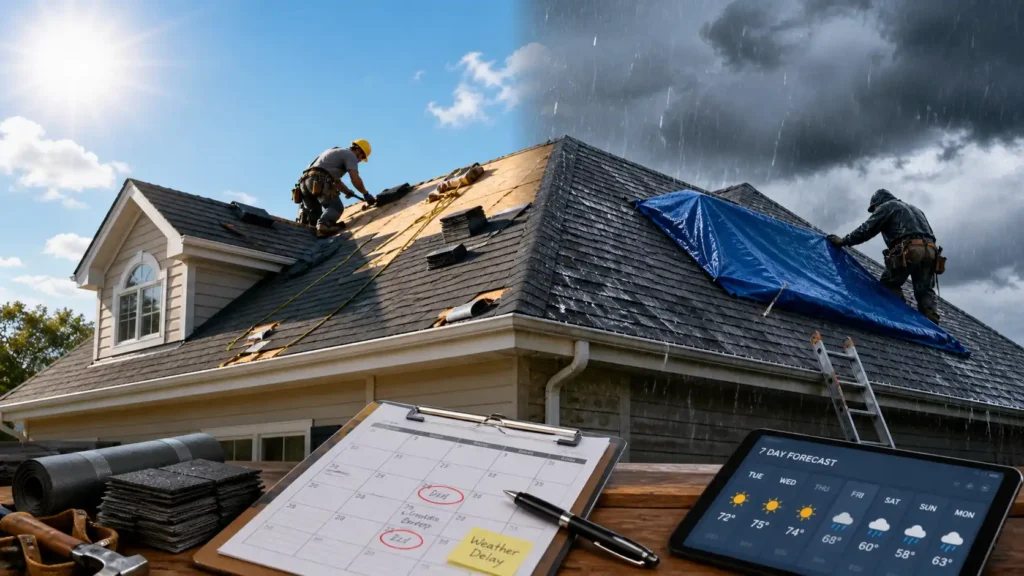
Rain is one of the biggest reasons for roofing delays. Roof replacement requires completely dry conditions because moisture can damage the roof structure and reduce installation quality. If rain starts during a project, the roofing crew must stop work immediately to prevent water from entering the home.
Moisture can soak into the roof decking, leading to long-term problems such as mold growth, wood rot, and structural damage. Installing asphalt shingles over a wet surface can trap moisture underneath, which may cause future roof leaks and reduce the lifespan of the roofing system. In some cases, temporary roof fixes like tarps are used to protect an unfinished roof until weather conditions improve. This is common during spring rain in Greeneville, where sudden showers can interrupt roofing projects.
Wind Impact on Roofing Safety and Installation
Wind is another major factor that affects roofing schedules. When wind speeds increase, roofing work becomes dangerous for both workers and the property. Strong winds can lift roofing materials, making it difficult to install shingles correctly. Wind can also cause shingles to shift before they properly seal, leading to alignment issues and potential roof leaks.
Tools, debris, and roofing equipment can become unstable, increasing the risk of accidents or property damage. Most professional roofing contractors avoid working when wind speeds reach unsafe levels, often around moderate wind speeds that make handling materials unsafe. This means roofing schedules may be adjusted based on local wind conditions, especially during storm seasons.
Heat and High Temperatures
Roofing in hot weather, especially during summer roofing projects, can affect both materials and workers. High temperatures cause asphalt shingles to become soft and more flexible. While this can help with sealing, it also makes shingles more vulnerable to damage during installation. Roof surfaces can become extremely hot, making it difficult and unsafe for roofing crews to work for long periods.
Heat exposure can slow down the project and reduce overall efficiency. Roofing contractors often adjust their schedule by starting work early in the morning and avoiding peak heat hours. In Greeneville, summer thunderstorms can also create sudden delays, even on otherwise clear days. This makes flexible scheduling important during hot months.
Cold Weather and Low Temperatures
Roofing in cold weather creates a different set of challenges. When temperatures drop, roofing materials like asphalt shingles become stiff and brittle. This makes them more likely to crack during handling or installation. Another issue is that adhesive strips on shingles may not activate properly in cold temperatures.
Without proper sealing, shingles may not bond securely, increasing the risk of wind damage later. In these situations, roofers may need to hand-seal each shingle, which slows down the process. Winter roofing is still possible in some cases, especially for emergency roof repair or critical roof installation, but it requires extra care, time, and planning.
Storms, Hail, and Severe Weather
Severe weather events such as storms, hail, and heavy winds can stop a roofing project immediately. These conditions create serious safety risks and can damage exposed areas of the roof during replacement. If a storm hits while the roof is partially removed, contractors use temporary roof fixes like tarps to protect the home from water damage.
Once the storm passes, a roofing inspection is usually done to check for any new issues before work resumes. Storm delays are common in regions that experience frequent weather changes. In Greeneville, summer thunderstorms and seasonal shifts can impact roofing availability and project timelines.
How Weather Affects Roof Replacement Timeline
The weather directly impacts how long a roof replacement takes from start to finish. Even a well-planned roofing project can be extended due to unexpected conditions.
Standard Roof Installation Timeline
Most residential roof replacement projects take between 2 and 7 days under normal conditions. The exact timeline depends on factors such as roof size, roofing materials, and the overall scope of repairs. Smaller homes with simple roof designs may be completed faster, while larger or more complex roofs may take longer. However, this timeline assumes stable weather conditions.
Common Weather-Related Delays
Weather can extend the roofing schedule in several ways. The most common delays include:
- Rain interruptions during installation
- Storm delays roof installation
- High humidity is affecting material performance
- Strong winds are stopping work
- Delayed delivery of roofing materials due to the weather
These delays are normal and are part of responsible roofing project planning. A professional roofing contractor will always prioritize safety and quality over speed.
Why Timelines Change Mid-Project
Sometimes, roofing timelines change even after the project has started. This usually happens due to:
- Sudden weather changes during installation
- Discovery of hidden roof damage after the tear-off
- Safety pauses due to wind or storms
- Moisture issues in the roof deck
When this happens, experienced contractors adjust the roofing schedule and keep homeowners informed. This ensures the roof replacement is completed correctly without compromising long-term performance.
Best Weather Conditions for the roofing schedule
The best roof work results come from stable and predictable weather. Roofing materials perform better, crews work more efficiently, and the risk of damage stays low when conditions are right. Ideal weather allows proper sealing of asphalt shingles, keeps the roof deck dry, and ensures the entire roofing system is installed correctly.
For homeowners planning a roofing project, these are the most suitable conditions:
- Mild temperatures (roughly 50°F to 85°F)
- Dry surfaces with no rain or moisture
- Low wind speeds
- Clear or lightly cloudy skies
- Stable forecast for several consecutive days
When these conditions are present, roofing contractors can complete the job faster with fewer interruptions. This also reduces the chances of temporary roof fixes or weather-related damage during installation.
Seasonal Roof Installation Planning
Weather changes throughout the year, and each season affects roof installation scheduling differently. In Greeneville, TN, understanding these seasonal patterns helps homeowners plan smarter and avoid unnecessary delays.
Spring Roofing
Spring is often seen as a good time for seasonal roofing projects because temperatures are moderate and materials perform well. However, frequent spring rain can slow down progress and create moisture risks for unfinished roofs. Rain during this season can lead to wet roof decking, which delays installation until surfaces dry completely. Contractors may pause work and use temporary roof fixes to protect exposed areas. While spring offers good working temperatures, flexibility in scheduling is important.
Summer Roofing
Summer provides longer daylight hours, which helps roofing crews complete projects faster. Warm temperatures also support proper sealing of asphalt shingles, making installation more efficient. However, extreme heat can create challenges. High temperatures can soften roofing materials, making them harder to handle during installation.
Workers may also face heat-related fatigue, which slows down progress during midday hours. In Greeneville, summer thunderstorms are another factor to consider. These storms can appear suddenly and cause roofing delays, even if the day starts clear. Many roofing contractors adjust their schedules by working early in the morning to avoid peak heat and storm risks.
Fall Roofing
Fall is widely considered the best time for roof replacement. The weather is more stable, temperatures are moderate, and humidity levels are lower. These conditions allow roofing materials to perform at their best and help crews complete projects without frequent interruptions.
Another advantage of fall roofing is preparation for winter. Replacing a roof before cold temperatures arrive helps protect the home from issues like ice buildup, leaks, and structural stress. One thing homeowners should watch for in fall is falling leaves. Leaves can collect on the roof and in gutters, which may require cleanup during the project. Still, overall, fall offers the most reliable conditions for roof replacement scheduling.
Winter Roofing
Winter presents the most limitations for roof replacement. Cold temperatures can make roofing materials brittle, increasing the risk of cracks during installation. Adhesive strips on shingles may also take longer to bond, which can affect the roof’s performance. Snowfall and ice buildup can stop roofing work completely.
Roof surfaces become slippery and unsafe, and access to the home may be difficult. In many cases, roofing contractors pause projects until conditions improve. That said, winter roof replacement is sometimes necessary in emergencies, such as severe roof damage or active leaks. In these cases, contractors may perform temporary roof fixes until full replacement can be completed safely.
What Happens If the Weather Changes During Your Roof Replacement
Weather conditions can change quickly, especially during multi-day roofing projects. When unexpected weather occurs, roofing contractors follow specific steps to protect the home and maintain safety. Can roofers work in rain? If rain or storms begin during a project, work is paused immediately. The exposed roof is covered using tarps or protective materials to prevent water damage. Roofing materials and equipment are secured to avoid movement caused by wind.
Once conditions improve, the contractor inspects the roof to ensure no moisture damage has occurred before resuming work. This process helps maintain the integrity of the roofing system and ensures the final result is not compromised. Homeowners should expect some level of flexibility in the roofing schedule, especially during seasons with unpredictable weather.
How Weather Impacts Roofing Materials and Installation Quality
Weather does not just affect scheduling—it also affects how well roofing materials perform during and after installation. Using materials like asphalt shingles in the wrong conditions can lead to long-term issues that are expensive to fix.
For example, high heat causes thermal expansion, where materials expand and become softer. This can lead to improper placement during installation. On the other hand, cold temperatures cause materials to shrink and become brittle, increasing the risk of cracks.
Moisture is another major concern. If water gets trapped under roofing materials, it can lead to moisture damage, mold growth, and even structural issues over time. That is why a dry roof deck is required before installation begins. Wind can also impact installation quality by shifting shingles before they are properly secured. This can create weak spots in the roof that may lead to leaks later.
A professional roofer understands how these conditions affect roofing materials and adjusts the installation process accordingly. This ensures the roof remains strong, durable, and able to handle future weather conditions.
How to Plan Your Roof Replacement Around Weather
Planning your roofing schedule the right way can save time, reduce stress, and prevent unnecessary roofing delays. The weather is not something you can control, but you can prepare for it by making smart decisions before the project starts.
A well-planned roofing project considers seasonal patterns, local forecasts, and contractor availability. In Greeneville, TN, the weather can shift quickly, so early planning makes a big difference. Homeowners who schedule ahead and stay flexible usually experience smoother projects with fewer interruptions.
Choose the Right Time of Year
Timing your re-roofing work based on the season helps avoid common weather-related problems. Fall is usually the most reliable season due to stable conditions and moderate temperatures. Spring is also a good option but may involve rain delays. Summer works well with proper heat management, while winter is mostly limited to urgent situations. Choosing the right season improves installation quality and reduces the chances of moisture damage, brittle materials, or storm interruptions.
Build Buffer Time Into Your Schedule
Even with careful planning, weather can still cause delays. That’s why adding extra time to your roofing schedule is important. Instead of expecting the project to finish on an exact date, allow a few additional days for unexpected weather conditions. Buffer time helps avoid pressure on the roofing crew and ensures the job is done correctly without rushing. This is especially important for larger roof replacement projects or homes with complex roof designs.
Work With a Local Roofing Contractor
Hiring a local roofing contractor gives you an advantage because they understand Greeneville’s weather patterns. Local professionals know how seasonal changes, storms, and temperature shifts affect roofing projects in the area. They can recommend the best time for your roof replacement, plan around potential storm delays, and adjust the schedule when needed. This local knowledge helps protect your home and ensures your roofing project stays on track as much as possible.
How Professional Roofing Contractors Manage Weather Risks
Experienced roofing contractors follow a structured approach to handle weather-related challenges. Their goal is to keep the project moving while protecting the home and maintaining installation quality.
A professional roofer will:
- Monitor local weather forecasts daily
- Schedule projects during stable weather windows
- Use tarps and coverings to protect unfinished roofs
- Adjust work hours based on temperature and conditions
- Pause work when safety risks increase
- Keep homeowners updated about any schedule changes
These steps reduce the risk of water damage, material failure, and safety issues during roof replacement.
Covenant Roofing & Restoration works closely with Greeneville’s weather patterns to plan roofing schedules that reduce delays and protect your property. Their team ensures your roof replacement is completed safely, even when conditions change.
What Homeowners Should Do Before Weather Delays
Homeowners also play a role in keeping the roofing project smooth. Preparing your home before the project begins can reduce stress and prevent damage during weather interruptions.
Here are simple steps to follow:
- Confirm the roofing schedule and timeline with your contractor
- Ask about backup plans for rain or storm delays
- Secure outdoor furniture, grills, and loose items
- Move vehicles away from the driveway or work area
- Keep communication open with your roofing contractor
Taking these steps helps protect your home and allows the roofing crew to respond quickly if weather conditions change.
Cost Impact of Weather Delays on Roof Replacement
Weather delays can affect the overall cost of a roofing project, especially if the delays extend the timeline. While most delays are unavoidable, understanding their impact helps homeowners plan their budget more effectively.
Here’s how weather can influence costs:
| Cost Factor | Weather Impact |
| Labor Costs | Extended workdays due to delays |
| Equipment Rentals | Longer usage time if the project is paused |
| Material Handling | Extra care needed for storage and protection |
| Temporary Fixes | Tarps or coverings for the unfinished roof |
| Project Timeline | A longer duration may increase total expenses |
While these costs can increase slightly, rushing a roof replacement during poor weather can lead to bigger repair costs later. That’s why experienced contractors focus on doing the job right rather than finishing quickly.
Final Thoughts
Weather is one of the most important factors in roof replacement scheduling. It affects safety, materials, timelines, and the overall quality of the installation. While delays can be frustrating, they are often necessary to protect your home and ensure long-term performance. A successful roofing project depends on proper planning, flexible scheduling, and working with a contractor who understands local weather conditions. Taking the time to schedule your roof installation correctly can prevent future issues like leaks, structural damage, and premature wear.
If you’re planning a roof replacement in Greeneville, TN, Covenant Roofing & Restoration can inspect your roof, provide a free roofing estimate, and schedule your project based on safe and reliable weather conditions. Their team focuses on protecting your home from start to finish. Roofing performance, installation methods, and weather tolerance vary by contractor and manufacturer. Homeowners should confirm details with their roofing professional.
FAQs
Can roofers work in light rain or wind?
Roofers may work in very light wind or cloudy conditions, but even light rain can stop the project. Safety and material performance are the main reasons for pausing work.
What temperature is too cold for roof replacement?
Cold temperatures can make asphalt shingles more brittle and harder to install properly. In such cases, extra steps like hand-sealing may be required.
What is the best weather for installing asphalt shingles?
Mild temperatures are generally preferred for asphalt shingle installation, as they support proper sealing.
Is fall really the best time for roof replacement?
Yes, fall offers stable weather, moderate temperatures, and fewer delays, making it one of the best seasons for roof installation.
Can roof installation be done in winter?
Yes, but usually only for urgent situations. Cold temperatures and snow can slow the process and affect material performance.