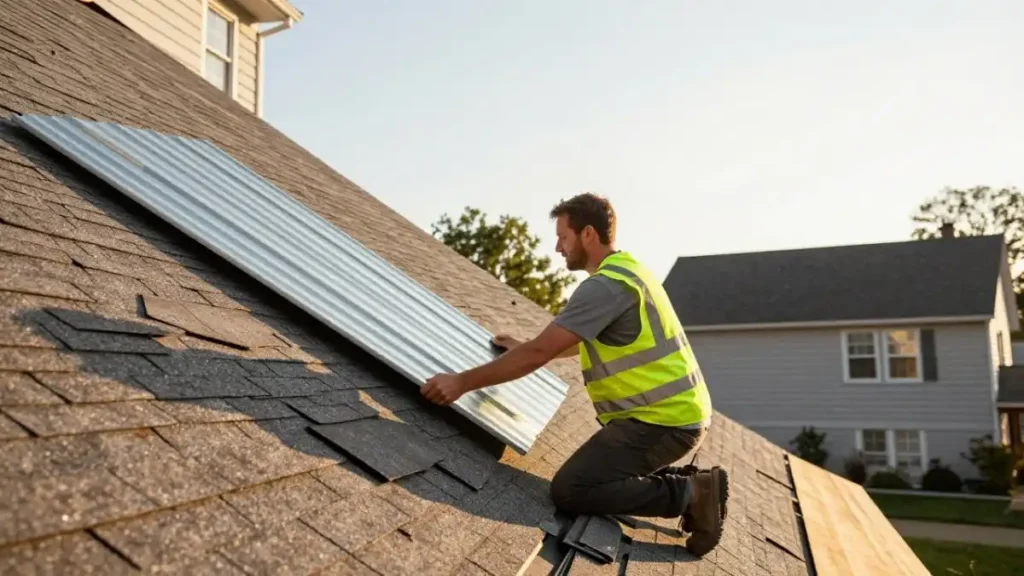
Last Updated: November 15, 2026
Quick Summary
The metal vs shingle roof cost comparison favors shingles on upfront price, since metal can cost several times more per square foot to install. However, metal generally lasts longer, so a shingle roof may need replacing two or more times while a metal roof is still in its first service life.
- Architectural shingles run roughly $4 to $8 per square foot installed, according to The Home Depot.
- Compare architectural shingles against exposed-fastener panels, and premium shingles against standing seam, for a fair quote.
- Metal usually requires a full tear-off to bare deck, while a second shingle layer can sometimes stay in place.
- State how long you’ll own the home, local installed cost per square, expected service life, and maintenance costs before running a lifetime model.
- Ask your insurance agent for the specific credit rather than assuming metal roofing earns a discount.
Table of Contents
- Metal vs Shingle Roof Cost: The Short Answer
- Metal vs Shingle Roof Cost Per Square Foot
- Total Roof Replacement Cost: What Changes the Final Bill
- Metal Roof vs Shingles Pros and Cons
- Metal Roof Lifespan vs Asphalt Shingles
- Roofing Insurance Discounts for Metal Roofs
- Schedule a Roof Assessment with Covenant Roofing & Restoration
- Frequently Asked Questions
Metal vs Shingle Roof Cost: The Short Answer
Metal roofing costs more upfront than asphalt shingles, but it generally lasts longer, which changes the math over a full ownership cycle.
Below, we break down installed cost per square foot, what drives the final bill, and where each material genuinely wins.
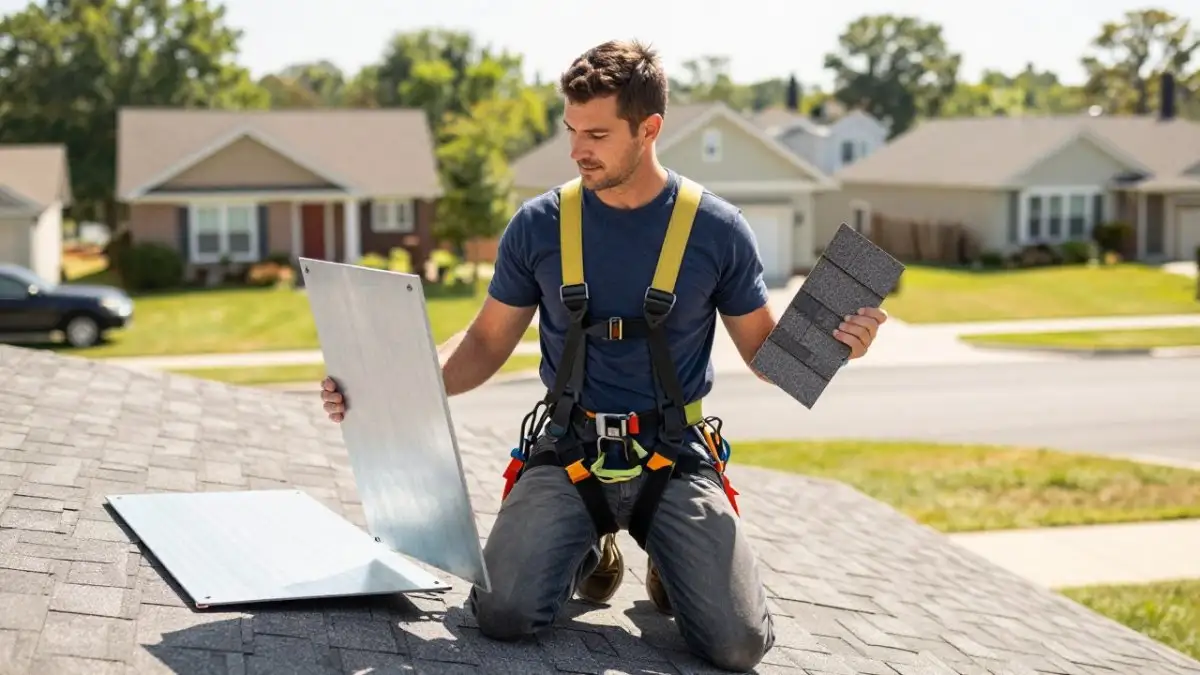
Upfront Cost vs Lifetime Cost at a Glance
The upfront gap is real and wide. Metal can cost several times more per square foot to install than asphalt shingles. But a shingle roof may need replacing while a metal roof is still in its first service life.
Here is the framework we use with homeowners:
| Factor | Asphalt Shingles | Metal Roofing |
|---|---|---|
| Upfront cost | Lower | Higher |
| Expected service life | Shorter | Longer |
| Replacement cycles over 50 years | Two or more | Often one |
| Maintenance burden | Moderate | Low |
| Insurance treatment | Standard | Often discounted |
The lifetime-cost model only works if you state your assumptions: how long you’ll own the home, your local labor rates, and whether you’ll finance the work. Change any of those and the answer can flip.
Metal vs Shingle Roof Cost Per Square Foot
Installed cost per square foot is a useful number to compare, not just the sticker price on materials alone. A square foot figure should include material, labor, underlayment, fasteners, flashing, and tear-off of the old roof.
The Home Depot’s comparison resource lists architectural shingles at roughly $4 to $8 per square foot installed, and metal roof cost guides from NerdWallet’s metal roof cost guide report average metal roof projects in the five-figure range for most homes.
Compare Like-for-Like Systems, Not ‘Metal vs Shingles’
A common mistake homeowners make is comparing a premium metal system to a basic shingle. The installed price depends heavily on which system you pick on each side:
- Three-tab asphalt shingles are the entry-level option and sit at the bottom of the shingle range.
- Architectural (dimensional) shingles cost more per square but are the common upgrade and carry longer warranties.
- Exposed-fastener metal panels are the lowest-cost metal option and are common on barns, shops, and budget-conscious homes.
- Standing-seam metal is the premium system, with concealed fasteners, longer panels, and the highest installed cost.
- Metal shingles and stamped tiles fall between panels and standing seam and can mimic traditional profiles.
A fair comparison puts architectural shingles against exposed-fastener panels, and premium shingles against standing seam. Mixing categories is how quotes get distorted.
What Moves the Per-Square-Foot Number
Four variables move the estimate more than anything else:
- Roof size and pitch. A steep roof slows installation and raises labor per square. A simple gable is cheaper per square than a cut-up hip roof of the same area.
- Material grade. Standing seam generally costs more than exposed-fastener panels, and architectural shingles generally cost more than three-tab.
- Tear-off and decking. Layered old roofs and soft decking add disposal and repair costs. A second layer of shingles can sometimes be left in place, but metal usually requires a full tear-off to bare deck.
- Complexity and access. Valleys, dormers, skylights, chimneys, and limited driveway access for a dumpster or lift all add labor hours on any material.
Metal systems also carry installation constraints shingles don’t. Panels are cut to length, so roof dimensions and penetrations have to be measured precisely before the order goes in. Metal also needs a solid substrate and proper underlayment, and standing seam requires clips and panels that are less forgiving of a wavy deck.
Regional Pricing and Labor Variation
Per-square-foot pricing is not national. Labor rates, permit costs, disposal fees, and seasonal demand all vary by market, and quotes for the same roof can differ by thousands of dollars between regions. Coastal and high-wind areas often require specific fastening and product approvals that raise cost. In hail-prone regions, impact-rated products may carry a premium but can also affect insurance treatment.
For a grounded local number, see our breakdown of roof replacement cost in Greeneville.
Total Roof Replacement Cost: What Changes the Final Bill
The final bill is rarely the per-square-foot number multiplied by roof area. Add-ons stack up fast.
Then there’s the wildcard: labor variation. Crew rates differ by market, season, and demand after a storm. A roof quoted in a quiet month can cost more when every crew in the region is booked.
Watch out: the cheapest bid usually wins by cutting something you can’t see, like underlayment grade or decking repair. Ask what’s excluded before you compare two quotes.
A Transparent Lifetime-Cost Model (With Stated Assumptions)
Most ‘metal pays for itself’ claims skip the assumptions. Here is a simple model you can run with your own numbers. State four inputs up front:
- How long you plan to own the home. If you sell in five years, the upfront premium may not be recovered; if you stay 25 years, the math changes.
- Your local installed cost per square for each system you’re actually comparing.
- Expected service life for each system under your conditions (installation quality, ventilation, climate).
- Maintenance, repair, and financing costs over the holding period.
A common pattern is that a shingle roof needs replacement once or twice within the service life of a metal roof, and each replacement carries its own tear-off, disposal, and permit costs. Add those replacement cycles to the shingle side, plus routine repairs, and compare the total to the metal side plus its smaller maintenance line. The result is sensitive to roof size, local labor, and material grade, which is why no single national number settles it. Run the model with your own quotes rather than relying on a broad claim.
Financing, Insurance, and Incentives
Because metal’s upfront number is higher, many homeowners spread it over time. Financing adds interest cost, so compare the monthly payment against the total repaid, not just the payment. Our guide to financing a metal roof covers loan options and monthly payment structures.
Insurance treatment can matter too. Because insurance credits and energy incentives depend on local conditions and policy details, weighing those variables alongside material costs can clarify the long-term trade-offs in El Paso with MAK Roofing & Construction.
Roof-Specific Installation Constraints
Before any bid is final, the installer should assess the structure, not just the surface:
- Structural assessment. Metal is heavier than some assume and lighter than others; the deck and framing must be checked for condition and capacity, and any soft decking replaced.
- Underlayment and ventilation. Both systems depend on proper underlayment and attic ventilation to reach rated life. A metal roof installed over a failing deck or a poorly vented attic won’t hit its rated lifespan.
- Flashing. Chimneys, skylights, and wall intersections are the most common leak points on any roof and should be itemized in the scope.
- Install over existing roof. Leaving the old shingle layer in place can save on tear-off and disposal, but metal usually requires a full tear-off to bare deck, and local code may limit overlays. Confirm what your jurisdiction allows.
A written, itemized scope that lists these items lets you compare bids fairly instead of comparing a complete job to a stripped-down one.
Metal Roof vs Shingles Pros and Cons
The metal roof vs shingles pros and cons list is shorter than most people expect. Metal wins on longevity, weather resistance, and heat reflection, which can ease cooling costs in summer. It also resists hail and wind better than standard asphalt in most comparisons.
Shingles win on upfront price, repairability, and quiet. A single damaged shingle is a small repair. Metal repairs are less frequent but often more specialized.
Appearance is subjective. Some homeowners love the standing seam look; others prefer the traditional shingle profile. Neither choice hurts resale value when the install is clean.
Metal Roof Lifespan vs Asphalt Shingles
The metal roof lifespan vs asphalt shingles gap is where the cost argument actually resolves. Cost guides such as SquareDash’s metal roof pricing guide put metal service life at 40 to 70 years.
For a deeper dive, read our comparison of metal roof vs shingle durability and our guide to how long asphalt shingles last, including the warning signs that mean replacement is close.
Here’s the honest caveat: lifespan claims assume proper installation and ventilation. A metal roof installed over a failing deck won’t hit its rated life, and neither will a shingle roof.
Roofing Insurance Discounts for Metal Roofs
Some insurers offer premium credits for impact-resistant and wind-rated roofing, and metal systems often qualify. The roofing insurance discounts for metal roofs vary by carrier and policy, so ask your agent directly rather than assuming. Impact-rated asphalt shingles can qualify too, so the discount alone rarely justifies metal.
What metal does reliably is reduce claim frequency. Fewer hail and wind claims over a long service life can matter more than a line-item discount.
Schedule a Roof Assessment with Covenant Roofing & Restoration
Deciding between metal and shingles starts with knowing what your roof actually needs.
Customers like Jessica Hughes-Schott have described our work as honest and reliable. If you’re ready to move, you can request metal roof replacement or book a full assessment.
The metal vs shingle roof cost decision rewards patience. Get a written scope, compare like for like, and model the cost over the years you plan to stay.
Frequently Asked Questions
Do insurance companies offer discounts for metal roofs?
Many insurers price policies partly on how well a roof resists wind and hail, so a metal roof can lower premiums compared with aging asphalt shingles. The size of any roofing insurance discount for metal roofs varies by carrier, policy, and deductible, and it is never automatic. Ask your agent to quote both roof types before you decide, and keep documentation of the installation so the discount can be applied.
Is it cheaper to put a metal roof or shingles on a house?
Asphalt shingles are cheaper upfront in almost every case. Asphalt shingles are generally less expensive per square foot, while metal roofing costs more depending on the system. The gap narrows when you count replacement cycles: a metal roof often lasts considerably longer than asphalt shingles, so the metal vs shingle roof cost comparison changes over time.
How much would a metal roof cost on a 1,000 square foot house?
Roof area is not the same as floor area, so a 1,000 square foot home usually has more than 1,000 square feet of roof once pitch and overhangs are counted. Roof cost depends on measured roof area, pitch, and the system chosen. Get a written estimate based on measured roof size rather than floor plan.
Does a metal roof increase home resale value?
A metal roof can help at resale because buyers factor remaining roof life into what they will pay. A roof with decades of service left removes an immediate repair worry that an older shingle roof creates. Actual return on investment depends on your local market, the roof system installed, and how the sale is priced. Ask a local agent how metal roofing is viewed in your area before treating resale value as the deciding factor.
What are the disadvantages of a metal roof compared with shingles?
The main drawbacks are upfront cost, noise during heavy rain if the roof is installed over an open deck without solid sheathing, and a smaller pool of contractors who install metal well. Some panel profiles can also dent under large hail, and repairs on certain systems require matching panels rather than a simple shingle swap. Weigh these against the longer lifespan and lower maintenance when comparing metal vs shingle roof cost.