Last Updated: November 1, 2026
Quick Summary
Choosing roofing materials means matching a shingle, metal, tile, slate, or wood system to your roof’s pitch, structure, climate exposure, and budget over its full service life. Your roof deck, slope, and framing decide which materials are viable before appearance or price matters. Start with the roof, not the catalog.
- Low-slope roofs allow only membrane or low-slope metal systems, not most shingles.
- Ask contractors for bids broken into material, labor, tear-off, deck repair, and permits.
- Wood shakes carry the highest fire risk and need the most maintenance.
- Filter materials by hazard, roof, and rules before ranking by total cost of ownership.
- A professional roof inspection confirms pitch, deck condition, and structural capacity before you buy.
Table of Contents
- Start With Your Roof, Not the Catalog
- The Main Roofing Materials and What Each One Does Well
- Roof Pitch and Roofing Materials: What Your Slope Allows
- Roofing Materials Cost Comparison: Material, Labor, and Repairs
- Roofing Material Lifespan and Total Cost of Ownership
- Asphalt Shingles vs. Metal Roofing: Which Fits Your Home
- Matching Materials to Your Climate, Hazards, and Home Style
- Book a Roof Inspection Before You Commit to a Material
- Frequently Asked Questions
Start With Your Roof, Not the Catalog
Choosing roofing materials is the process of matching a shingle, metal, tile, slate, or wood system to your roof’s pitch, structure, climate exposure, and budget over its full service life.
That order matters because the wrong system installed on the wrong roof fails early, no matter how good the product is.
Below, each major material is covered, along with what it costs to own and how to match it to your home. First, though, here is what most guides skip: the roof itself can veto your choice.
The Main Roofing Materials and What Each One Does Well
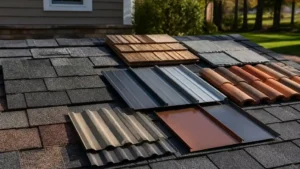
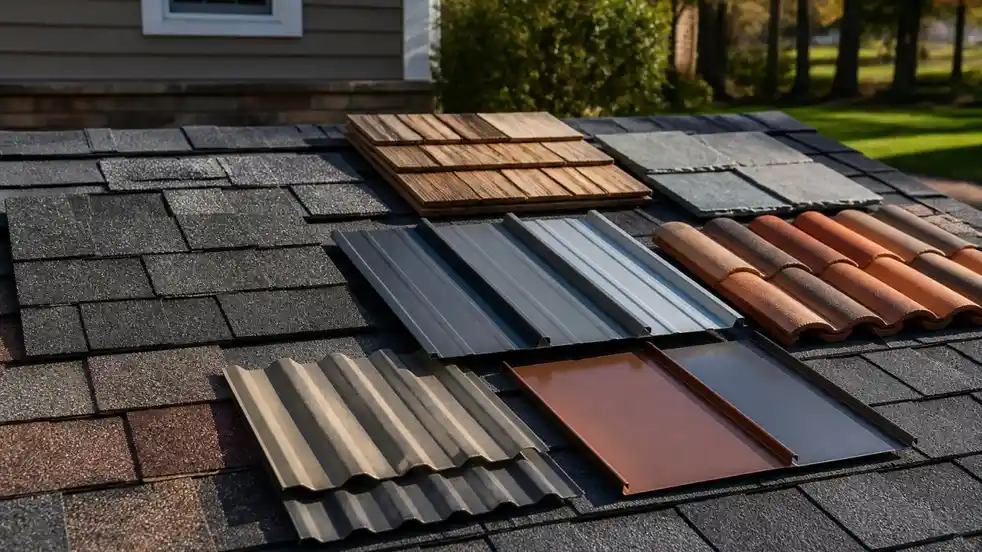
Five families of roofing materials cover most homes. Each solves a different problem well.
- Asphalt shingles, the default choice for cost and easy repair
- Metal roofing, longevity and energy reflectivity
- Clay and concrete tile, longevity and curb appeal in warm climates
- Slate, maximum lifespan and prestige
- Wood shakes and shingles, natural texture with high maintenance
Asphalt Shingles
Asphalt shingles are the most common residential roofing material because they balance cost, installation speed, and repairability. Architectural shingles generally carry longer manufacturer warranties than basic 3-tab products and handle wind better. The trade-off is lifespan: asphalt is the shortest-lived of the major options, so it wins on upfront budget and loses on total cost of ownership.
Metal Roofing and Stone-Coated Steel
Metal roofing panels and stone-coated steel deliver the longest service life of the common options, with strong wind and fire resistance and reflective finishes that reduce heat gain. Standing seam panels are the premium choice; corrugated and R-panel cost less but suit specific slopes and styles. Compare types of metal roofing panels before you commit.
Clay and Concrete Tile, Slate, and Wood Shakes
Clay tile, concrete tile, and slate are heavy systems that demand structural support and a steep pitch, but they last for decades and hold curb appeal. Wood shakes and shingles offer a natural look and decent insulation value, yet they need the most maintenance and carry the highest fire risk of the group in dry conditions.
Roof Pitch and Roofing Materials: What Your Slope Allows
Roof pitch is the steepness of your roof, expressed as rise over run, and it determines which roofing materials can shed water reliably. Low-slope roofs rule out most shingles and demand membrane or specific low-slope metal systems. Steep pitches open up tile, slate, and shake, but raise labor cost because installation is slower and more safety-intensive.
A quick rule of thumb:
- Low slope: membrane or low-slope metal only
- Moderate slope: asphalt shingles, most metal profiles
- Steep slope: tile, slate, shake, and standing seam all viable
Get this check wrong and no warranty saves you. Pitch is the first filter, not a footnote.
Roofing Materials Cost Comparison: Material, Labor, and Repairs
Roofing materials cost comparison comes down to four numbers, not one: material cost per square (100 square feet), installation labor, required structural or deck work, and repair cost over time. Material cost is only the first line on the bid. Heavy systems like tile and slate add framing reinforcement, crane or conveyor delivery, and slower labor, which pushes installed cost well above the shingle price tag. Metal sits in the middle upfront but cuts repair frequency.
Here is how the major families compare on the cost drivers that actually move a bid:
| Material | Relative Material Cost | Relative Installed Cost | Lifespan | Repair Profile | Best For |
|---|---|---|---|---|---|
| Asphalt shingles (architectural) | Low | Low | Short | Easy, low-cost patches | Tight budgets, short stays |
| Metal roofing (standing seam) | Mid to high | Mid to high | Longest | Rare, specialized | Long-term value |
| Stone-coated steel | Mid | Mid | Long | Moderate | Hail and wind zones |
| Clay/concrete tile | High | High | Long | Moderate, breakage risk | Warm climates, curb appeal |
| Slate | Highest | Highest | Longest | Specialized, costly | Historic and premium homes |
| Wood shakes | Mid | Mid | Moderate | Frequent upkeep | Rustic styles |
What actually drives the installed price
- Roof size and complexity. A simple gable roof costs less per square than a hip-and-valley roof with dormers, skylights, and multiple penetrations, because every transition adds labor and flashing.
- Tear-off and deck condition. Removing the old roof, replacing rotten sheathing, and adding underlayment or ice-and-water shield are separate line items that can rival the material cost on an older home.
- Structural reinforcement. Tile and slate can require added framing or truss work; that engineering and carpentry is invisible in a per-square material price but shows up on the bid.
Why the repair line matters as much as the install line
A cheap material with frequent, easy repairs can still cost less over time than a premium material with rare but specialized repairs. Asphalt patches are a routine service call; slate and tile repairs require matching salvaged or specialty pieces and a technician who knows the system. Metal repairs are infrequent but usually require a specialist rather than a general roofer.
Ask every contractor for a bid broken into material, labor, tear-off, deck repair allowance, and permit line items. A single lump-sum number hides the cost drivers that let you compare bids fairly.
For current pricing on your specific roof, request an itemized quote from Covenant Roofing & Restoration through our website rather than relying on a generic table. Local labor rates, deck condition, and roof complexity move the number more than the material itself, and two bids for the same material can differ by thousands of dollars for reasons that have nothing to do with the shingle or panel.
Roofing Material Lifespan and Total Cost of Ownership
Roofing material lifespan is where cheap choices get expensive. A low upfront price spread over a short service life can cost more per year than a premium system that outlasts it.
Schedule An Appointment Today →
Asphalt shingles typically need replacement far sooner than metal, tile, or slate, which means at least one, often two, additional roof cycles over the life of the home. See how long asphalt shingles last and what affects their lifespan.
The honest take: budget buyers should still price the second roof, not just the first.
Asphalt Shingles vs. Metal Roofing: Which Fits Your Home
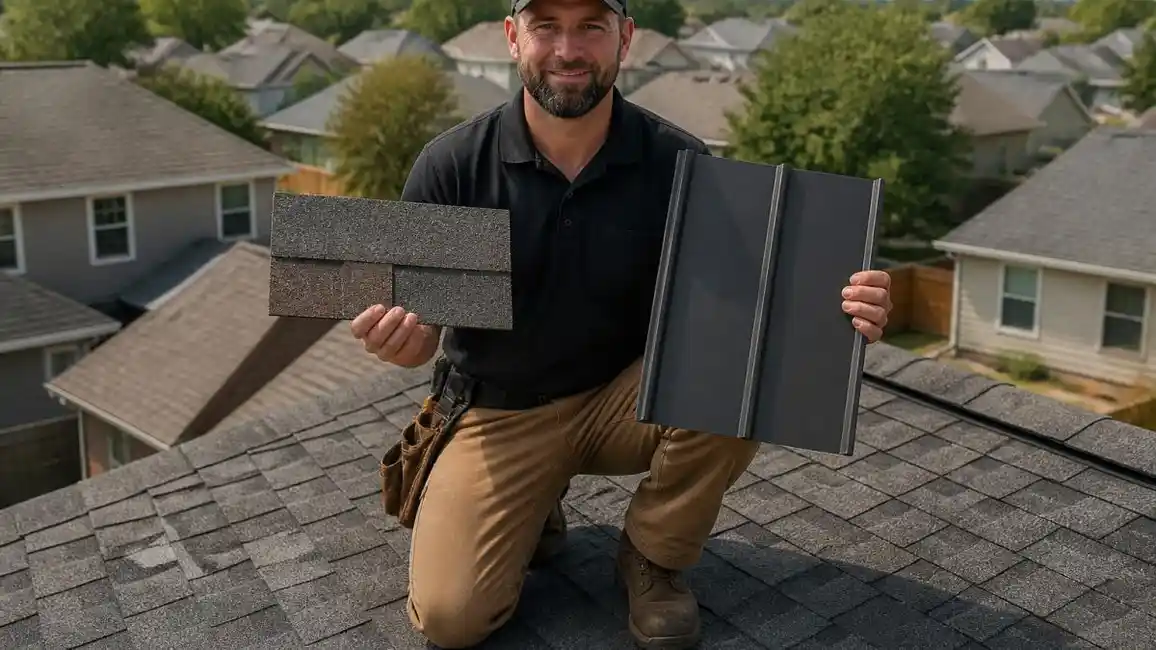
Asphalt shingles vs. metal roofing is the decision most homeowners actually face. Our guide to metal roof vs shingle durability goes deeper on how long each lasts.
A common mistake is choosing shingles to save money today without pricing the replacement you’ll likely face later.
Best for shingles: budget-conscious owners planning a shorter stay.
Best for metal: owners who want one roof to outlast the mortgage.
Matching Materials to Your Climate, Hazards, and Home Style
Climate and hazard exposure narrow the field faster than appearance ever will. The right question is not ‘which material is best’ but ‘which material survives the specific hazards at this address for the life of the roof.’ Use the hazard-by-hazard criteria below to rule materials in or out before you request quotes.
Hazard-by-hazard decision criteria
- Hail. Impact resistance is the deciding factor. Impact-rated asphalt shingles, stone-coated steel, and concrete tile handle hail better than standard 3-tab shingles or thin metal panels that can dent. Ask for the manufacturer’s impact rating and check whether your insurance carrier offers a premium discount for rated products.
- High wind. Wind uplift resistance depends on the attachment method as much as the material. Standing seam metal with concealed fasteners, architectural shingles rated for high wind, and properly fastened tile all perform; exposed-fastener panels and lightly nailed shingles are the weak points. The fastener schedule and edge metal details matter more than the product label.
- Wildfire. Fire-resistant metal, clay and concrete tile, and slate are the safer choices in wildland-urban interface zones. Wood shakes are the highest-risk option and are restricted or discouraged in many fire-prone areas. Class A ratings apply to the assembly, not just the surface material, so ask how the whole roof system is rated.
Home style, HOA, and historic rules
Appearance is a legitimate constraint, not a vanity. A modern standing seam roof looks wrong on a historic cottage, and slate looks wrong on a mid-century ranch. Before you fall in love with a profile, confirm:
- HOA architectural review requirements and approved color palettes
- Historic-district or local preservation rules that may require specific materials
- Whether the material’s profile and color are available in the timeline you need
The decision framework
Turn the criteria above into a shortlist in four steps:
- Filter by hazard. Eliminate any material that fails your top two local hazards (for example, wood shakes in a wildfire zone, or standard shingles in a severe-hail zone).
- Filter by roof. Eliminate any material your pitch, framing, and load capacity cannot support.
- Filter by rules. Eliminate any material your HOA or historic district will not approve.
- Rank the survivors by total cost of ownership and appearance. Only now does price enter the conversation, and it enters as lifecycle cost, not sticker price.
Installation quality decides whether any of this performs. A premium material installed poorly underperforms a modest material installed correctly, which is why contractor selection and warranty terms belong in the same conversation as the material itself. Skipping the contractor vetting step is the single most common way homeowners lose the value of a good material.
Book a Roof Inspection Before You Commit to a Material
A professional roof inspection confirms your pitch, deck condition, and structural capacity before you spend on materials, and it is the fastest way to avoid an expensive mismatch. Covenant Roofing & Restoration is a licensed Tennessee building contractor and GAF factory-certified company, and it helps homeowners navigate insurance claims for roof damage.
You can schedule an appointment with Covenant Roofing & Restoration today to get a material recommendation built around your actual roof.
Frequently Asked Questions
What factors should I consider when choosing roofing materials?
Work through five checks before you shop: your roof pitch, the weight your structure can support, the weather your roof faces, how long you plan to stay in the home, and your budget for both installation and upkeep. A steep slope opens up tile and shakes, while a low slope limits you to products rated for it. Local wind, hail, and sun exposure narrow the list further, and the roofing material lifespan you need depends on whether this is your forever roof or a resale roof.
How long do different roofing materials last?
Expected service life varies widely by product and installation quality. Asphalt shingles typically last around 20 to 30 years, metal roofing often 40 to 70 years, clay and concrete tile 50 years or more, slate up to a century, and wood shakes roughly 25 to 40 years with regular maintenance. These are general industry ranges, not guarantees. Proper ventilation, correct fastening, and the quality of the crew doing the work affect how close your roof gets to the top of its range.
Can I switch my roof from asphalt shingles to metal?
Yes, in most cases. A shingle-to-metal change is common, but the structure has to carry the new load and the decking must be sound before panels go on. Metal is usually lighter than tile or slate, so weight is rarely the blocker. The bigger questions are roof pitch, whether the panels are rated for your slope, and how the trim and flashing details get handled at valleys and penetrations. A contractor should confirm all of this during an inspection.
Which roofing material is the cheapest?
Asphalt shingles are the lowest-cost option for most homes when you count both material and installation. Three-tab and architectural shingles cost less per square than metal, tile, or slate, and repairs are simpler and cheaper. The trade-off is a shorter lifespan, so the cheapest roof is not always the lowest total cost over 30 years. Ask for a quote that separates material cost from labor so you can compare options fairly.
How do roof pitch and structure affect which material I can use?
Manufacturers rate each product for a minimum slope. Low-slope roofs generally need membrane or specially rated products because shingles and some tiles will not shed water fast enough. Steep roofs handle tile, shakes, and slate well but raise installation labor. Structure matters just as much: clay tile and slate are heavy and may need framing reinforcement, while metal and asphalt are lighter. Have your framing checked before committing to a heavy material.
Will a new roof help with insurance claims after storm damage?
A documented inspection helps. When a contractor records the damage with photos and measurements and matches the findings to your policy language, the claim is easier to support, especially if a first claim was denied. Keep every quote itemized by material and labor, and ask the contractor whether they handle claim paperwork directly. That documentation often matters more than the material you pick when you are dealing with an insurer.
The hardest part of choosing roofing materials isn’t picking a color. It’s knowing which systems your roof can carry and which will cost more over time. Get the inspection first, then decide. Get started with Covenant Roofing & Restoration and choose a roof built to protect your home for the long haul.