Table of Contents
- Roof Replacement Cost Greeneville TN: What Sets the Number
- How Roof Size and Square Footage Drive the Total
- Metal vs Shingle Roof Cost Comparison for East Tennessee Homes
- Labor, Tear-Off, and Disposal: The Costs Homeowners Overlook
- Choosing Roofing Contractors in Greeneville TN: How to Compare Bids
- The Roof Replacement Insurance Claim Process in Tennessee
- Financing, Payment Timing, and Repair vs Replacement
- Conclusion
- Frequently Asked Questions
Last Updated: October 9, 2026
Roof Replacement Cost Greeneville TN: What Sets the Number
Roof replacement cost in Greeneville TN depends far more on your roof’s measurements, pitch, and material choice than on any advertised price. This guide from Covenant Roofing & Restoration breaks down how each variable moves your final number. Two houses on the same street can receive quotes that differ by thousands of dollars, rarely because one contractor is overcharging, the roofs are simply not the same job.
The Variables That Move Your Estimate Most
The biggest driver is total roof area, measured in roofing squares of 100 square feet each. A typical Greeneville home between 2,000 and 2,500 square feet of living space often carries a roof surface larger than its floor plan once pitch and overhangs are factored in.
Beyond size, these factors separate a low bid from a realistic one:
- Roof pitch and steepness: Steeper roofs require more time, more safety equipment, and sometimes specialized crews.
- Layers to remove: One layer of old shingles tears off faster than two or three.
- Decking condition: Soft or rotted boards must be replaced before new material goes down.
Ask any contractor to list these variables line by line in the written estimate. A quote that says only “roof replacement: one price” is hiding its assumptions, and hidden assumptions become change orders later.
How Roof Size and Square Footage Drive the Total
Roof size sets the baseline for every other cost. Contractors price material and labor per square, where one square equals 100 square feet of roof surface. A 20-square roof uses roughly twice the materials and labor hours of a 10-square roof.
That is why square footage is the first number a serious estimator measures: not your living room ceiling, but the actual sloped surface area.
Turning Living Space Into Roof Squares
Most homes carry more roof surface than floor area once pitch and overhangs are added.
Typical Roof Size Ranges for Area Homes
| Living Space | Common Roof Squares | Typical Roof Surface |
|---|---|---|
| 1,200-1,500 sq ft | 14-18 squares | 1,400-1,800 sq ft |
| 1,500-2,000 sq ft | 18-24 squares | 1,800-2,400 sq ft |
| 2,000-2,500 sq ft | 24-30 squares | 2,400-3,000 sq ft |
| 2,500-3,500 sq ft | 30-42 squares | 3,000-4,200 sq ft |
These are planning ranges, not quotes. Your actual count depends on pitch, overhangs, and how many planes the roof has.
Why the Same House Gets Different Square Counts
Two estimators can measure the same house and arrive at different numbers because they treat waste, ridge caps, starter strips, and valley material differently. A bid listing 22 squares while another lists 28 may mean one is quoting net roof area and the other area plus waste and trim. Always ask whether the square count includes the waste factor, which commonly runs 5 to 15 percent.
Ask each contractor for the measured square count and the waste factor in writing. If two bids differ by more than about 10 percent on squares for the same roof, one of them is either guessing or padding, and you should ask which before signing.
How Squares Convert to Dollars
Once you have a square count, the math is simple: total cost equals squares times price per square, plus tear-off, decking, and add-ons. A one-square difference on a mid-range roof can move your total by several hundred dollars, which is why measurement accuracy matters more than any advertised “starting at” price.
Metal vs Shingle Roof Cost Comparison for East Tennessee Homes
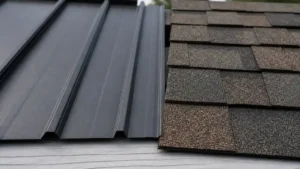
Asphalt shingles cost less upfront; metal costs more initially but often lasts longer. That trade-off is the heart of the metal vs shingle roof cost comparison, and East Tennessee’s summer storms and winter freeze-thaw cycles push many homeowners to weigh both seriously.
| Factor | Architectural Asphalt Shingles | Standing Seam Metal |
|---|---|---|
| Upfront cost | Lower | Higher |
| Typical lifespan | 20-30 years | 40-70 years |
| Storm and wind resistance | Good with proper rating | Excellent |
| Maintenance needs | Occasional granule loss, flashing checks | Minimal |
| Best for | Budget-conscious replacements | Long-term homeowners |
Neither option is automatically right. If you plan to stay for decades, metal’s longevity can justify the higher spend; if you are replacing to sell within a few years, architectural shingles deliver strong curb appeal at a lower entry point.
The cheapest material is not the cheapest roof. A low-grade shingle installed over a failing deck costs more over its life than a mid-grade shingle installed correctly the first time.
For a clearer picture of how material choice interacts with your home’s structure, the U.S. Department of Energy’s roofing materials guidance explains how reflectivity and durability affect long-term performance.
Labor, Tear-Off, and Disposal: The Costs Homeowners Overlook
Labor, tear-off, and disposal are the line items homeowners most often forget to ask about, yet together they can account for a large share of the total. Here is a transparent, itemized example you can hold any bid against.
A Sample Itemized Estimate
The table below shows how a mid-range architectural shingle replacement on a 2,400-square-foot roof surface might break down.
| Line Item | Basis | Illustrative Range |
|---|---|---|
| Materials (shingles, underlayment, flashing, ridge cap, starter) | Per square | $120-$200 per square |
| Labor and installation | Per square | $150-$300 per square |
| Tear-off (one layer) | Per square | $50-$100 per square |
| Tear-off (each additional layer) | Per square | $30-$60 per square |
| Disposal and dumpster | Per load | $400-$800 per load |
| Decking repair | Per sheet of plywood or OSB | $75-$150 per sheet |
| Permits | Per project | Varies by jurisdiction |
| Contingency (hidden damage) | Percent of total | 10-15 percent |
What Tear-Off Actually Involves
Removing old roofing is physical work: crews strip shingles, pull nails, inspect the decking, then load everything into dumpsters. A single layer of asphalt shingles on a 24-square roof can weigh several tons, which is why disposal is priced by weight and load rather than by square. On multi-layer roofs, tear-off and disposal charges climb, and some jurisdictions limit how many layers can legally remain before a full tear-off is required.
Disposal and Dumpster Logistics
Roofing waste is heavy and must be hauled to an approved facility. Dumpster rental, delivery, pickup, and tipping fees are often bundled into one number, making them easy to hide. Ask whether the bid includes the dumpster, haul-away, and tipping fee, or whether any are billed as extras later.
Decking: The Line Item That Changes Mid-Job
Decking repair is the most common source of change orders. Soft or rotted boards are not visible until the old roof is off, so a responsible bid states a per-sheet price in advance rather than a vague “as needed.” A typical roof has a handful of problem sheets; one with long-term leaks or poor attic ventilation can have many more.
A bid that folds labor, tear-off, and disposal into one vague figure is not necessarily dishonest, but it is unverifiable. Ask for the per-square and per-load rates in writing so you can compare bids on the same basis and see exactly what changes if hidden damage is found.
Questions That Separate a Complete Bid From a Starting Point
- How many layers will be removed, and is each additional layer priced separately?
- Is dumpster rental, haul-away, and the tipping fee included?
- What is the per-sheet price for decking repair, and who documents the sheets replaced?
Clear answers tell you whether a bid is complete or just a starting point.
Schedule An Appointment Today →
Choosing Roofing Contractors in Greeneville TN: How to Compare Bids
Comparing bids fairly means comparing scope, not just totals. When you evaluate roofing contractors Greeneville TN homeowners rely on, put every estimate side by side and check that each covers the same work.
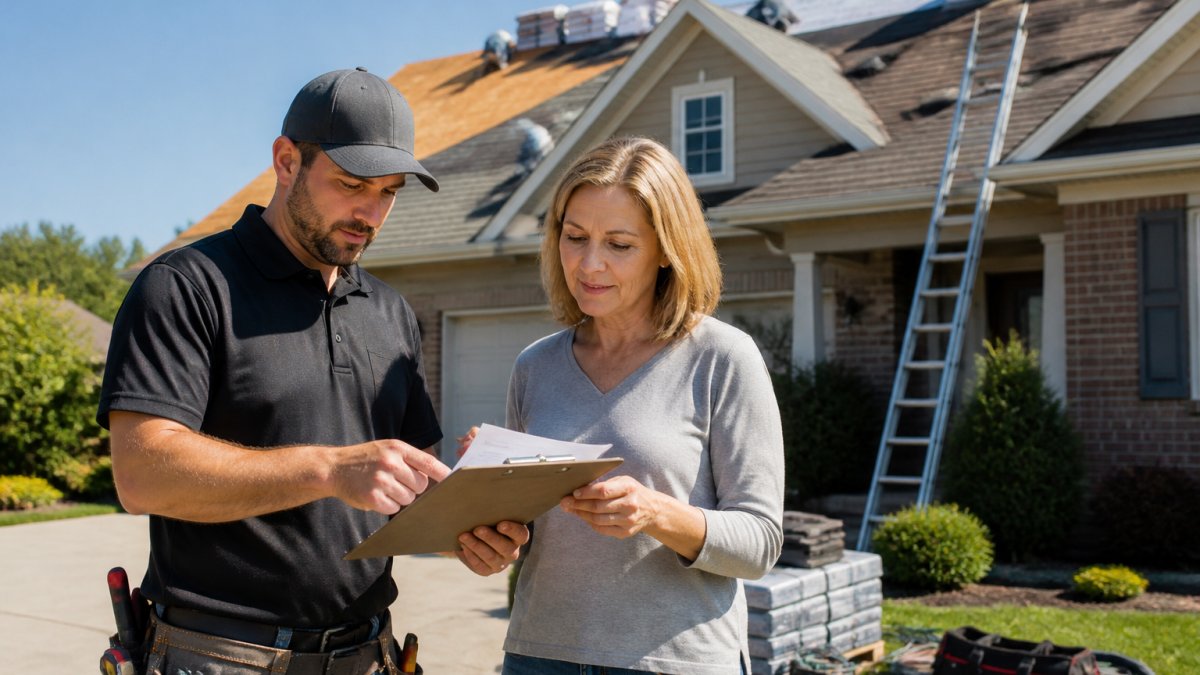
A practical comparison checklist:
- Written scope listing materials, brands, and quantities
- Tear-off and disposal explicitly included
- Decking repair terms stated (per-sheet price, not a vague “as needed”)
The most expensive mistake is paying a large deposit before materials arrive. If a contractor disappears mid-job, you have paid for a roof you do not have. Tie payments to delivered materials and completed phases.
At Covenant Roofing & Restoration, we are a licensed Tennessee building contractor and a GAF factory-certified company, and we put every one of these items in writing before work begins. Our customers consistently mention communication as the difference: as Jessica Hughes-Schott put it, “It’s so hard to find honest and reliable contractors these days and Covenant Roofing & Restoration came through!”
The Roof Replacement Insurance Claim Process in Tennessee
The roof replacement insurance claim process in Tennessee starts with documenting damage and filing promptly, because most policies require you to report losses within a set window after a storm.
Where homeowners get stuck is the gap between what the adjuster approves and what the roof actually needs. That gap is where professional claim navigation matters.
Here is how the process typically flows:
- Document the damage with photos and dates.
- File the claim with your insurer and get a claim number.
- Meet the adjuster on-site so nothing is missed.
- Review the scope against a contractor’s independent assessment.
- Supplement if needed when hidden damage is found during tear-off.
- Complete the work and submit final documentation.
If your claim was denied, a contractor experienced in supplements can often identify what the adjuster overlooked, such as interior water damage or code-required upgrades the first scope missed. the Tennessee Department of Commerce & Insurance publishes consumer guidance on filing and appealing claims.
Photograph everything before any tarp or repair goes up. Once temporary work covers the damage, proving what the storm did becomes much harder, and adjusters work from evidence.
Financing, Payment Timing, and Repair vs Replacement
Not every aging roof needs full replacement. If your roof is old but not leaking, a repair or maintenance plan can extend its life while you save for replacement on your own timeline.
The decision usually comes down to three questions:
- Age: Is the roof near the end of its expected service life?
- Damage extent: Is the problem isolated or widespread?
- Plans: Are you staying long enough to benefit from a longer-lasting material?
On payment timing, avoid paying in full upfront. A milestone schedule, a deposit for materials, a payment after tear-off and decking, and the balance on completion, protects both sides. Many homeowners also explore financing, so ask any contractor what payment structures they offer before signing.
Conclusion
The hardest part of a roof replacement is not the work itself; it is trusting that the estimate reflects the real job and that the crew will show up when promised. Covenant Roofing & Restoration built its reputation in Greeneville on exactly that: licensed Tennessee contracting, GAF factory certification, and specialized help navigating insurance claims so you are not left fighting the paperwork alone.
Frequently Asked Questions
What is the average cost to replace a roof on a 2,000 square-foot home?
Roof replacement cost depends on the square footage of the roof surface, not the home’s floor area. A 2,000 square-foot home often has a roof deck in the 2,000 to 2,500 square-foot range once pitch and overhangs are counted. Material choice, tear-off layers, decking condition, and local labor rates all shift the figure. Request a free inspection so a contractor measures your actual roof and gives project-specific pricing instead of a generic estimate.
What factors influence the total cost of a roof replacement?
The biggest drivers are roof size in square footage, roofing material, roof pitch and complexity, accessibility for crews and equipment, the number of old layers to tear off, and any underlying damage to decking or flashing. Labor and installation rates in your area, disposal fees, and whether the job involves an insurance claim also affect the final number. Get a written, itemized estimate so you can see which of these apply to your home.
Will homeowners insurance cover a roof replacement in Tennessee?
Tennessee policies typically cover sudden damage from storms, hail, or wind, but not wear and tear or an old roof that simply aged out. If your roof is around 20 years old, coverage depends on your policy terms, the cause of damage, and your deductible. Document the damage with photos, file promptly, and ask your contractor to meet the adjuster on site. A contractor experienced with the roof replacement insurance claim process can help you present the case clearly.
How can I tell if my roof needs a full replacement or just repairs?
Localized damage, like a few missing shingles or a single flashing leak, often calls for repair. Widespread granule loss, curling shingles, sagging, or leaks in multiple spots usually point to full replacement. A free inspection gives you a clear answer before you commit to either option.
How long does a typical roof replacement take to complete?
Most single-family roof replacements take one to three days once materials are on site. Larger roofs, steep pitches, multiple tear-off layers, or decking repairs extend the timeline. Weather in East Tennessee can also add delays. Ask your contractor for a written schedule and a communication plan, so you know when crews arrive, when the dumpster is delivered, and when the final walkthrough happens.
Do roofing contractors in Greeneville TN handle metal and shingle roofs?
Many local contractors install both asphalt and metal systems, but confirm certifications and experience before signing. Asphalt shingles, including architectural shingles, cost less upfront and are quick to install. Metal roofing costs more initially but can last decades longer and handle severe weather well. Ask for manufacturer credentials, warranty details, and examples of each system installed on homes similar to yours.