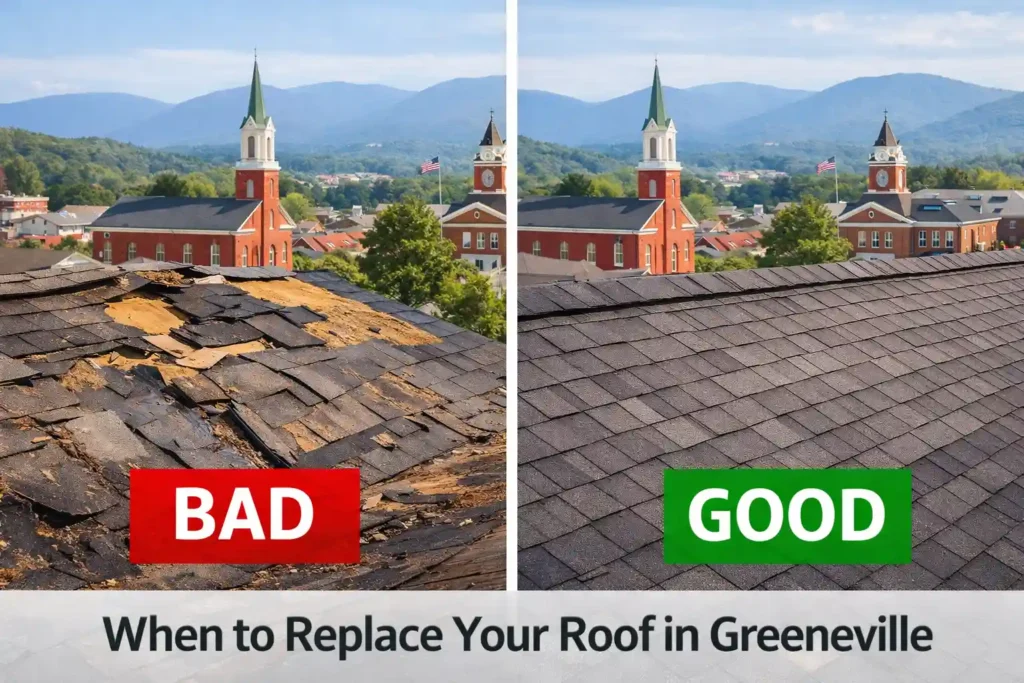
Your roof is the most important shield your home has, but because it is literally out of sight, it is often out of mind until water starts dripping onto your furniture. In Greeneville, our homes face a unique mix of heavy spring rains, humid summer heat, and winter ice that can wear down even the best shingles over time. If you are wondering whether your roof can survive another season or if it is finally time to invest in a new one, you need clear answers. Waiting too long can turn a simple replacement into a massive project involving mold removal and structural repairs. We help you spot the red flags early so you can make a smart choice for your family and your budget before a small leak becomes a major disaster.
The 20-Year Rule: Understanding Roof Lifespan in East Tennessee
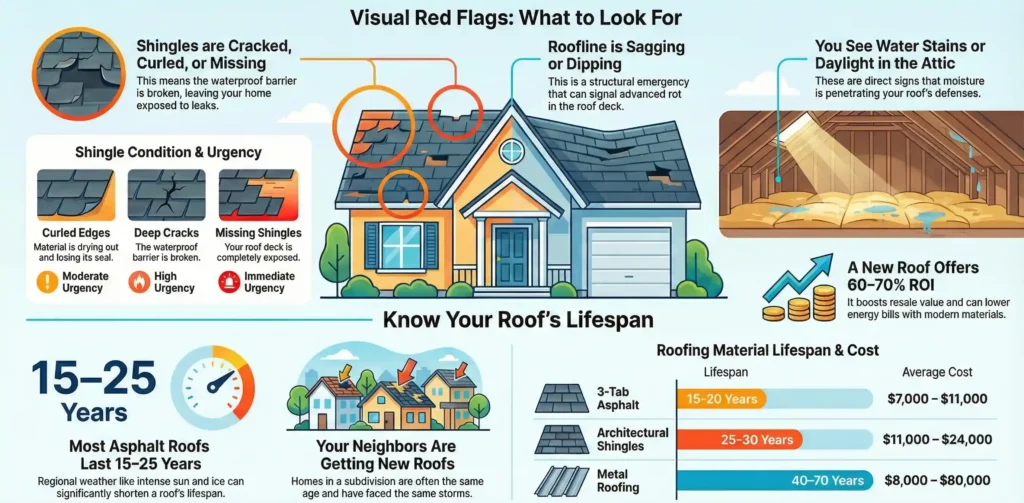
Every roofing material has a clock that starts ticking the day it is installed. In our part of Tennessee, the average asphalt shingle roof typically lasts between 15 and 25 years. While some high-end architectural shingles are rated for longer, the intense sun and temperature swings in the Appalachian foothills can cause materials to expand and contract rapidly, leading to early aging. If your roof was installed in the early 2000s, it is likely reaching the end of its functional life. Even if it looks okay from the ground, the chemical oils that keep shingles flexible have probably dried out, making them brittle and prone to cracking during the next big wind storm.
Material Expectations and Local Realities
The type of roof you have determines how much time you have left. Standard 3-tab shingles are the most budget-friendly but also have the shortest lifespan, often showing wear after just 15 years. Architectural shingles, which are thicker and more common in newer Greeneville subdivisions, usually hold up for 25 years. Metal roofing is a popular choice for homes near the mountains because it can last 40 to 70 years, but even metal requires checking the fasteners and seals every decade. Understanding what is in your home helps you predict when those first signs of failure will appear.
The Neighborhood Watch Sign
One of the most reliable ways to tell if your roof is at risk is to look at the houses around you. Most subdivisions are built at the same time, meaning all the roofs in your neighborhood are the same age. If you see roofing crews working on your neighbor’s homes, it is a strong signal that your roof has faced the same number of storms and sun exposure. At Covenant Roofing & Restoration, we often find that when one home on a street shows signs of aging, the rest are not far behind.
Visible Exterior Indicators: The Shingle Health Check
You don’t always need to climb a ladder to see that something is wrong. A simple walk around your yard with a pair of binoculars can reveal a lot about the health of your shingles. You are looking for inconsistencies in the texture and shape of the roof surface. Shingles should lie flat and uniform; any areas that look fuzzy, bumpy, or bald are clear indicators that the outer layer of protection is failing.
Cracked, Curled, or Cupped Shingles
When shingles reach the end of their life, they lose their ability to stay flat. You might notice the edges turning upward (cupping) or the middle starting to bubble (clawing). This happens because the shingle is drying out and shrinking. These gaps allow wind to get underneath, which can easily rip large sections of the roof off during a thunderstorm. If you see cracks running through the shingles, it means the fiberglass mat inside is broken, and water can now seep directly onto your wooden roof deck.
| Shingle Condition | What It Means | Urgency Level |
| Curled Edges | Material is drying out and losing its seal | Moderate |
| Deep Cracks | The waterproof barrier is broken | High |
| Missing Shingles | Your roof deck is completely exposed | Immediate |
| Bald Spots | UV protection is gone; leaks are coming | High |
Granule Loss and Bald Spots
If you find what looks like heavy black sand in your gutters or at the bottom of your downspouts, your shingles are shedding their granules. These small rocks are not just for color; they protect the asphalt from the sun’s UV rays. Once the granules fall off, the sun bakes the shingle, causing it to become brittle and fail almost immediately. Seeing these granules is a sign that the roof is balding and can no longer shed water effectively.
The Presence of Moss and Algae
Many homes in East Tennessee struggle with black streaks on the roof, which is actually a type of algae that thrives in our humidity. While algae is mostly a cosmetic issue, moss is a much bigger problem. Moss acts like a sponge, holding moisture against the shingles and roots into the roof deck. Over time, this moisture causes the wood underneath to rot. If you see green, fuzzy growth on the shady sides of your roof, it is a sign that moisture is being trapped, which can cut years off the life of your roofing system.
Visible Exterior Indicators: Structural Red Flags
While shingles are the outer skin, the roof deck is the skeleton that supports everything. When moisture gets past the shingles, it attacks the wooden boards underneath. Identifying structural failure early is the difference between a standard roof replacement and a major construction project that requires replacing rafters and support beams. If you notice the lines of your roof looking less than perfectly straight, the wood beneath has likely been compromised by long-term moisture exposure.
The Spongy Walk and Soft Spots
If you or a professional ever walk on your roof and feel a bounce or a spongy sensation underfoot, you are feeling the wood deck giving way. This happens when water has soaked into the plywood or OSB boards, causing them to delaminate and lose their strength. At Covenant Roofing & Restoration, our inspectors are trained to feel for these soft spots during every assessment. A spongy roof is a safety hazard and a sign that the entire surface needs to be stripped down to the bones to ensure a solid foundation for new materials.
Visible Sagging and Roofline Dips
A sagging roofline is one of the most serious indicators that you need a replacement. You can often spot this by standing across the street and looking at the ridge (the very top peak) or the valleys (where two roof planes meet). If the ridge looks like it is drooping in the middle or if the flat areas have developed sinks, it usually means there is significant rot or that the roof has been weighed down by too many layers of old shingles. This is a structural emergency that needs immediate attention to prevent a partial collapse.
Daylight in the Attic
One of the easiest ways to check your roof’s health is to go into your attic on a bright, sunny day and turn off the lights. If you see pinpricks of light coming through the roof boards, you have gaps that are also letting in wind, rain, and pests. While a single small hole might be patched, seeing multiple stars in your attic indicates that the roof deck has pulled away from the rafters or that the wood has decayed to the point of failure.
Interior Clues: What Your Ceilings and Walls Are Telling You
Your home will often try to tell you the roof is failing before you ever see a drop of water hit the floor. Because water follows the path of least resistance, a leak on the left side of your roof might travel down a rafter and show up as a stain on the right side of your living room ceiling. Paying attention to these subtle interior changes can help you catch a roof failure before it ruins your drywall and insulation.
The Ghost Leak and Water Stains
We often hear from homeowners about ghost leaks, brown, tea-colored stains on the ceiling that appear after a storm but seem to dry up and disappear during a sunny week. These are not gone; they are just waiting for the next rain. These stains are caused by water picking up the tannins in your wooden attic structure and depositing them on your ceiling. If you see these rings, your roof’s waterproof underlayment has failed, and moisture is consistently reaching your interior.
Active Mold, Mildew, and Attic Moisture
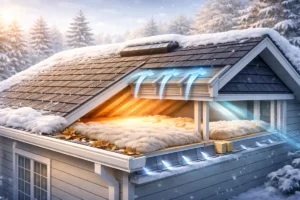
A failing roof doesn’t just let in liquid water; it also fails to let out humid air. If your roof’s ventilation system is blocked or damaged, heat and moisture build up in your attic, leading to mold and mildew growth on the underside of your roof boards. If you notice a musty smell in your upper floors or see black spots on your attic insulation, your roof is no longer breathing correctly. Replacing the roof allows us to install modern ventilation that protects your home’s air quality and lowers your cooling bills.
Peeling Paint and Bubbling Wallpaper
When moisture gets trapped inside your walls, it often manifests as peeling paint or wallpaper near the top of the ceiling. This happens because the water is soaking into the header boards of your walls and pushing the paint away from the surface. In many cases, homeowners think they have a plumbing issue, only to find out that the flashing around their roof’s edge has failed. Checking these high-wall areas can give you an early warning that your roof’s perimeter is no longer watertight.
The Storm Damage Factor: When Local Weather Makes the Choice for You
In Greeneville, your roof faces more than just old age; it has to survive the Big Three of East Tennessee weather: wind, hail, and ice. Often, the signs that a roof needs to be replaced are caused by a single afternoon storm rather than decades of slow wear. Knowing how to identify this damage early is essential because most insurance policies have a limited window for filing a claim. Because hail ‘bruises’ are so difficult to see from the ground, we recommend a professional storm damage inspection after any major weather event to protect your insurance claim eligibility.
Hail Impact vs. Mechanical Damage
Hail damage is often invisible to the untrained eye. Unlike a rock hitting a windshield, hail doesn’t always break the shingle. Instead, it creates a bruise, a soft spot where the protective granules have been knocked away. Over the next few months, the sun bakes that exposed asphalt until it cracks, leading to a leak. We often see homeowners who wait a year after a storm to call us, only to find out that the water damage has already reached their attic rafters.
The Wind-Lift Effect
High winds rolling through the Tennessee Valley can do more than just blow shingles off. Strong gusts often lift shingles up just enough to break the adhesive seal underneath. Even if the shingle lays back down, the waterproof bond is gone. This wind-lift allows rain to be driven up and under the shingles in the next storm. As a GAF Certified contractor, we look for these broken seals during our inspections, as they are a primary indicator that the roof’s defense system has been compromised. When structural sagging is present, a professional roof replacement is the only way to ensure your home remains safe and meets modern Tennessee building codes.
Repair or Replace? The Cost-Benefit Breakdown
When you are staring at a repair estimate, it is easy to focus only on the immediate cost. However, a new roof is one of the few home improvements that offers a massive return on investment, both in daily savings and future resale value.
Resale Value and Energy Efficiency
If you plan on selling your home in Greeneville anytime soon, a new roof is your best friend. Most buyers are looking for a move-in ready home and will walk away from a house that needs a $10,000 roof replacement. Studies in 2026 show that a new roof can provide a 60% to 70% return on investment at the time of sale. Additionally, modern GAF architectural shingles feature Cool Roof technology that can lower attic temperatures by 10 to 15 degrees, significantly reducing your monthly cooling bills during our humid Tennessee summers.
| Roofing Material | Estimated Lifespan | 2026 Avg. Cost (2,000 sq. ft.) |
| 3-Tab Asphalt | 15–20 Years | $7,000 – $11,000 |
| Architectural Shingles | 25–30 Years | $11,000 – $24,000 |
| Metal Roofing | 40–70 Years | $8,000 – $80,000 |
The Neighborhood Watch Strategy
As mentioned earlier, if your neighbors are getting their roofs replaced, it is a sign that your local environment has reached a tipping point. Whether it is a shared storm event or just the natural lifespan of the materials used by local builders 20 years ago, being proactive saves you money. Repairing a roof piecemeal over three years often ends up costing 50% more than simply doing a full replacement once.
Frequently Asked Questions
Can I put a new roof over my old one?
While some codes allow for a roof-over, we highly discourage it. A second layer traps heat, which kills your shingles faster, and it prevents us from seeing and fixing rot in the wood deck underneath.
How long does a roof replacement take in Greeneville?
Most residential replacements we handle at Covenant Roofing & Restoration take just 1 to 2 days. We work quickly to ensure your home is never left exposed to the elements overnight.
Is a leaking roof always an emergency?
If water is entering your living space, yes. Even a small drip can lead to toxic mold growth and structural rot within 48 hours. It is always better to get a free inspection now than to pay for mold remediation later.
How do I know if my shingles are still under warranty?
Most GAF shingles come with a 25-year to lifetime limited warranty, but this often requires proof of professional installation and regular maintenance. We can review your roof’s age and material brand during an inspection to help you determine if a replacement is covered by the manufacturer.
Does a new roof help with my home’s energy bills?
Yes, a modern roofing system with proper ridge vents and cool shingles can lower your attic temperature by up to 15 degrees. This reduces the strain on your air conditioner during hot Tennessee summers, leading to noticeable savings on your monthly electric bill.
Don’t Guess with Your Home’s Safety
Your roof is too important to leave to chance. At Covenant Roofing & Restoration, we bring professional expertise to every home in Greeneville. We don’t just look for holes; we evaluate the ventilation, the flashing, and the structural integrity of your entire roofing system. Whether you need a simple repair to get you through the winter or a full GAF-backed replacement, we provide the honest answers you need. Ready for peace of mind? Contact our Greeneville roofing team today for a transparent assessment and a promise you can trust.