When you realize your home needs a new roof, the first question is almost always about the schedule. You likely have concerns about how long your driveway will be blocked by a dumpster, how many days you’ll hear hammers on your ceiling, and when your life can get back to normal. In Greeneville, a roof replacement is a multi-stage process that involves more than just the days the crew is on your property. While the physical installation for a standard home in East Tennessee usually takes just a day or two, the total window from the moment you sign a contract to the final inspection involves several weeks of logistical planning. Understanding this timeline helps you prepare your family and your property for a smooth, stress-free transformation.
Pre-Construction vs. Active Installation
It is important to distinguish between work days and the project window. Many homeowners expect the crew to arrive the day after they sign a contract, but in reality, there is a planning phase that typically lasts one to three weeks. During this time, we are securing materials from our suppliers and coordinating with the Town of Greeneville for the necessary building permits.
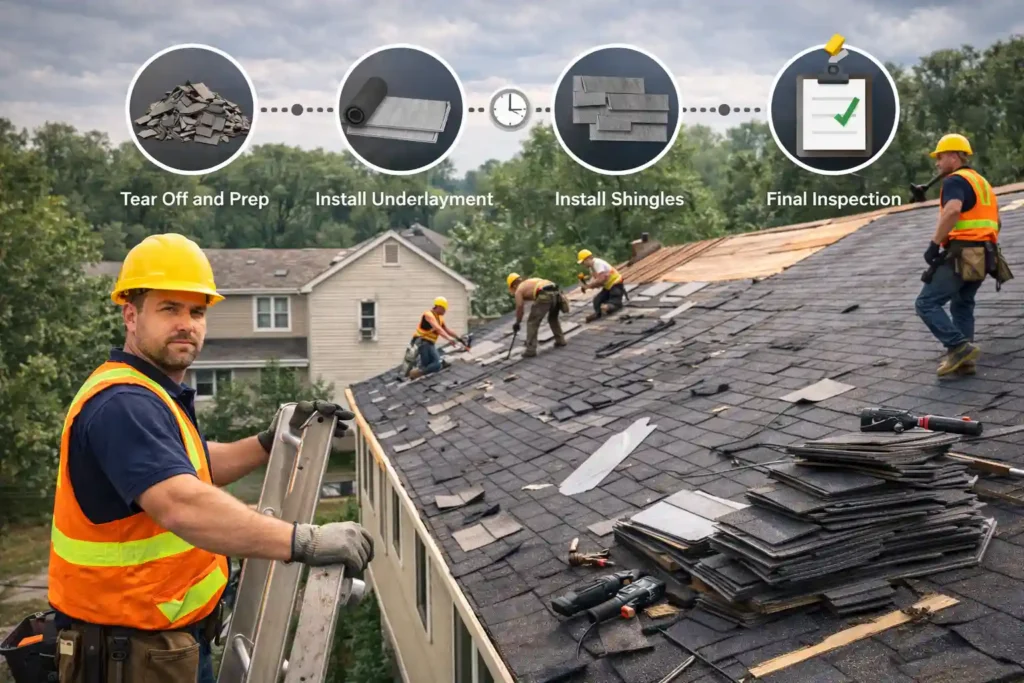
Once the materials are staged and the crew arrives, the active installation usually moves very quickly, often taking only one to three days for a standard asphalt shingle roof. By understanding that the clock starts with the paperwork, you can better manage your expectations for when the new roof will actually be sitting on your home. While the prep work takes time, our team specializes in providing a reliable roof replacement in Greeneville that prioritizes speed without compromising on local safety standards.
The Start-to-Finish Breakdown: A Step-by-Step Schedule
Phase 1: Inspection & Permitting (3–10 Days)
Every professional roof replacement must begin with a legal foundation. Because the Town of Greeneville has adopted the 2018 International Residential Code (IRC), we are required to pull a building permit and schedule specific inspections. This phase involves a forensic assessment of your current roof to identify any unique structural needs. The permit process ensures that your home meets local safety standards and that your investment is fully protected by law. While this adds a few days to the front end of the timeline, it is the only way to guarantee that your roof is up to code and eligible for the best manufacturer warranties.
Phase 2: Material Staging & Delivery (1 Day)
About 24 to 48 hours before the hammer hits the first nail, you will see a flurry of activity in your driveway. We coordinate the delivery of the shingles, underlayment, and the roll-off dumpster. Staging these materials properly is a critical part of the timeline; it ensures that once the crew starts, they don’t have to stop and wait for a delivery truck. We work with you to place the dumpster in a spot that minimizes the impact on your daily routine while giving our crew the accessibility they need to keep your yard clean throughout the tear-off process.
Phase 3: Tear-Off & Deck Inspection (Half Day to 1 Day)
The loudest part of the process happens during the tear-off. Our crews use specialized tools to strip away every layer of your old roof, down to the original wood deck. This is a pivot point in the timeline. Once the wood is exposed, we perform a detailed deck inspection to find soft spots or rot that were hidden under the old shingles. If the wood is solid, we move right into the next phase. If we find rot, we take the time to replace the compromised plywood immediately, ensuring your new roof has a sturdy, safe foundation that won’t sag or leak in the future. If you’re unsure about the health of your decking before the project begins, a professional roof inspection can identify hidden rot early, allowing us to factor structural repairs into your initial timeline.
Phase 4: Structural Repairs & Underlayment (Half Day)
Once the deck is prepped and repaired, we install the waterproof skeleton of your roof. This includes the drip edge along the eaves, the ice and water shield in the valleys, and a high-quality synthetic underlayment over the entire surface. Local codes require a mid-roof inspection to verify that the underlayment and flashing are installed correctly before the shingles go on. We schedule this with the city inspectors to ensure there is no delay in the workflow, keeping your project moving while staying strictly compliant with local building regulations.
Phase 5: The Main Install (1–2 Days)
With the underlayment inspected and approved, the final skin of your roof is applied. For an asphalt shingle roof, this is a highly coordinated effort where our team works in sections to ensure the roof is always protected from the elements. We install starter shingles, field shingles, and ridge vents to optimize your home’s airflow. If you’ve chosen a metal roof, this phase may take an extra day or two due to the precision required for cutting and fastening the large panels. This is the stage where you finally see the visual transformation of your home.
Phase 6: Cleanup & Final Inspection (Half Day)
The job isn’t done until your property is as clean as it was when we arrived. We perform a magnetic sweep of your lawn and driveway to pick up stray nails and use blowers to clear any debris from your gutters and porches. The final step of the timeline is the Final Building Inspection. This official sign-off confirms that the work meets all 2018 IRC standards and that the permit can be closed. Once this is complete, you receive your final warranty paperwork, marking the official end of your roof replacement journey.
| Roofing Material | Prep Time | Install Time | Total Work Days |
| Asphalt Shingles | 1 Day | 1–2 Days | 2–3 Days |
| Metal (Ribbed) | 1 Day | 2–3 Days | 3–4 Days |
| Standing Seam Metal | 1 Day | 3–5 Days | 4–6 Days |
5 Critical Factors That Shift Your Completion Date
While a standard residential project often follows a predictable path, several variables can push your finish date forward or back. It is rare for two roofs to be identical, meaning the labor hours required for a 1,500-square-foot ranch home are vastly different from those needed for a multi-story Victorian. We analyze these factors during our initial assessment so we can give you a firm timeline rather than a vague estimate.
1. Roof Complexity and Pitch
The pitch or steepness of your roof is one of the biggest drivers of the schedule. A flat or low-slope roof is easy to walk on and allows the crew to move materials quickly. However, once a roof reaches a steep-slope angle, workers must use specialized safety harnesses and ropes, which naturally slows down their movement. Additionally, a complex roof with multiple gables, dormers, and valleys requires more precision in cutting shingles and installing flashing. Each of these architectural features adds forensic detail work that can extend a project by an extra day to ensure a watertight seal.
2. Material Selection and Lead Times
The material you choose has a direct impact on both when we can start and how long we stay. Asphalt shingles are modular and relatively fast to install. Metal roofing, particularly standing seam systems, requires custom-cutting and much more fastening work, which can double the time the crew is on your roof. In 2026, we are also seeing shifting lead times for specific colors or high-end synthetic materials due to global supply chain trends. We stay ahead of this by ordering your specific materials the moment the contract is signed, ensuring they are on-site before the tear-off begins.
3. The Two-Layer Problem and Accessibility
If your home currently has two layers of shingles, a common sight in older Greeneville neighborhoods, the tear-off process will take twice as long and generate twice the debris. Removing multiple layers is labor-intensive and requires more trips to the dumpster. Property accessibility also plays a role; if your home is tucked away on a steep mountain lot or has beautiful, dense landscaping right up to the foundation, we have to move more slowly to protect your plants and navigate our equipment safely.
4. Property Accessibility: Equipment and Terrain
Narrow driveways or homes built on steep mountain slopes can limit where we place heavy equipment like shingles, elevators or dumpsters. If a house has tight access, our crew may need to manually carry materials, which adds several hours to the labor. We always plan our equipment placement ahead of time to protect your landscaping while keeping the work moving quickly.
5. Local Code Compliance: Mandatory Inspections
Following the Town of Greeneville’s building codes is a non-negotiable part of the timeline. Since the city follows the 2018 International Residential Code, we must schedule a mid-roof inspection once the underlayment is down. This requires a brief pause in work while a city official verifies the waterproof barrier is installed correctly. While this adds a small gap in the day, it ensures your roof is legally compliant and built to the highest safety standards.
| Factor | Impact on Timeline | Why it Happens |
| Steep Pitch | +1 Day | Crew must use safety harnesses and move slower |
| Complex Design | +1-2 Days | Extra time spent on valleys, dormers, and flashing |
| Second Shingle Layer | +Half Day | More labor required to strip and haul away debris |
| Custom Metal Work | +2-4 Days | Precision cutting and specialized fastening required |
Weather & Seasonal Realities in East Tennessee
We are lucky to live in a beautiful part of the country, but the Appalachian foothills present some unique weather challenges for roofing. We don’t just watch for rain; we have to monitor temperature and wind speed to ensure your shingles are installed in conditions that allow them to perform as designed.
The 40°F Rule for Asphalt Shingles
Most asphalt shingles have a thermally activated adhesive strip that needs heat to bond. If the temperature is below 40°F, the shingles can become brittle and the adhesive won’t seal immediately. On cold Greeneville mornings, we may wait until the sun warms the roof surface before we start nailing. If we must install in colder weather, we follow manufacturer-specific hand-sealing procedures, applying dabs of roofing cement to each shingle tab to ensure they don’t blow off before the weather warms up enough for the natural seal to activate.
Summer Storm Protocols
In the heat of a Tennessee summer, we often face sudden afternoon thunderstorms. Our crews are trained to dry-in the roof in sections. This means we only tear off what we can realistically cover with underlayment before the clouds roll in. This prevents your home from being exposed to the elements. During extreme heat, we may also start our work at dawn to protect our crew from heat exhaustion and to ensure the shingles don’t become too soft to walk on during the peak of the day.
The Best Time to Schedule
The Spring Window and the Fall Rush are the busiest times for roofing. While the weather is most predictable during these months, the demand for crews and materials is at its highest. If you have a flexible schedule, late winter or mid-summer can often lead to a faster start date, as we can find gaps in the schedule between major weather events. We work with you to find a slot that balances the best possible weather with your need for a quick completion. Ready to get your project on the calendar? Schedule your free roofing consultation today and let our GAF Certified team handle the permits, the planning, and the performance.
Common Roadblocks: What Causes Unexpected Delays?
Even with a well-planned schedule, the reality of construction means that surprises can occur. We often find that the biggest delays happen once the old shingles are removed and we get a true look at the bones of your home. Being aware of these potential hurdles allows you to prepare for a pivot in the schedule without feeling blindsided. Our goal is always to finish on time, but we will never sacrifice the quality or safety of your home just to meet a deadline.
The Hidden Rot Discovery
When a roof has been leaking slowly for years, the water often settles into the plywood decking or the rafters. This damage is frequently invisible during the initial ground-level inspection. If we strip your roof and find that the wood is soft or molded, we must stop and replace those sections before the new shingles can be installed. This can turn a one-day job into a two-day project, as we have to source additional lumber and perform the structural repairs. While it adds a few hours to the timeline, it is a vital step to ensure your new roof doesn’t sag or fail prematurely.
Insurance Red Tape and Supplementing
If your roof replacement is being funded by an insurance claim, the paperwork can sometimes introduce a delay. Occasionally, an insurance adjuster might miss a critical code-required item, like specific drip edge or flashing. When this happens, we must file a supplement with your insurance provider to ensure these items are covered and that your roof is rebuilt correctly. While we handle the communication with the adjuster, the time it takes for them to review and approve the extra materials can occasionally pause the project for a few days.
Frequently Asked Questions
Can a roof be replaced in one day in Greeneville?
Yes, for many standard-sized homes with asphalt shingles, a one-day replacement is very common. This requires a well-staffed crew, clear weather, and no hidden structural damage. We strive for a Sunrise to Sunset completion whenever possible to minimize the disruption to your life.
How long can a roof stay open during a replacement?
Ideally, a roof should never be left open (with the wood deck exposed) overnight. Our crews work in sections, ensuring that any area we tear off is covered with a waterproof underlayment by the time we leave for the day. This protects your home from unexpected overnight dew or rain.
Do I need to be home during the roofing process?
You do not need to be inside the house, but we recommend being available by phone. If we find hidden rot or have questions about your property, being able to reach you quickly helps us keep the project on schedule.
How long does the Town of Greeneville take to approve a roofing permit?
Most residential roofing permits in Greeneville are processed within 3 to 5 business days. However, during peak storm seasons, the building department can be busier, so we always pull your permit as soon as the contract is signed to avoid any scheduling gaps.
What happens to the timeline if it rains mid-project?
If rain starts, we immediately stop and secure the roof with waterproof tarps or underlayment. We wait for the wood deck to dry completely before resuming. Installing shingles over wet wood can trap moisture and cause the deck to rot, so we prioritize a dry installation over a fast one.
Why Our Timeline is Different: The Covenant Promise
At Covenant Roofing & Restoration, we know that your time is valuable. Our Promise to you is built on clear communication and meticulous planning. We don’t just give you a start date; we give you a comprehensive plan. From the moment we pull the permit at the Greeneville Building Department to the final magnet sweep of your driveway, we keep you updated on our progress. If a surprise like hidden rot or a sudden Appalachian storm shifts our schedule, you will be the first to know. We believe that a job done right is better than a job done fast, but we have the experience to give you both.