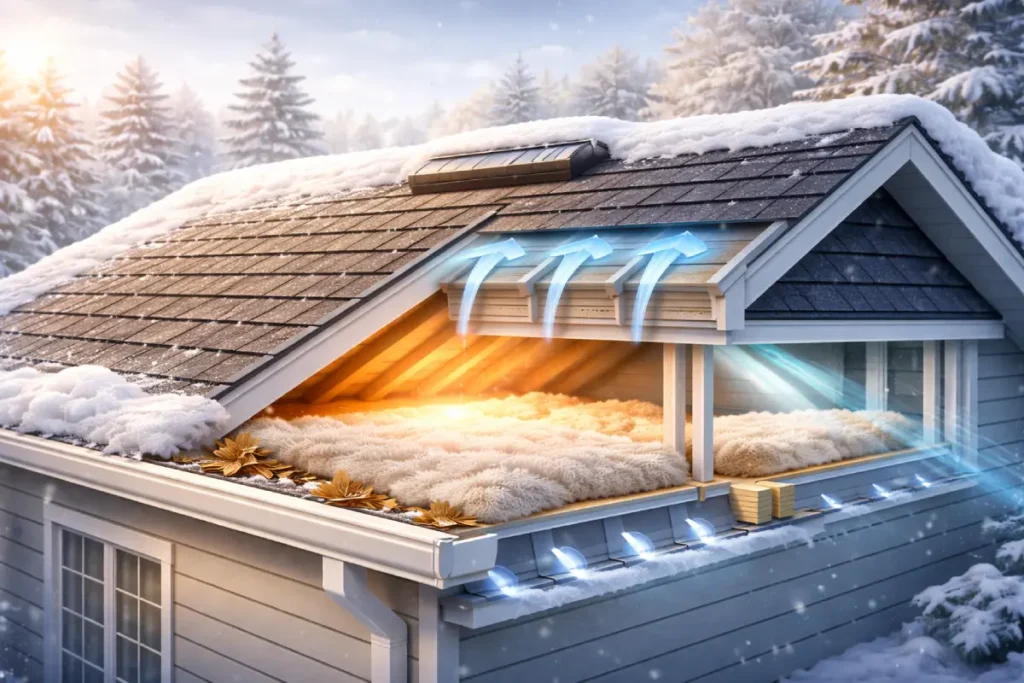
Winter can be a challenging season for homeowners in Greeneville, TN. Ice dams are one of the most common threats during cold months, forming when snow on your roof melts and refreezes at the eaves. This freeze-thaw cycle can force water under shingles and into your attic, ceilings, walls, and insulation, potentially causing costly damage. Understanding how ice dams form and taking proactive steps can protect your home and reduce energy costs, while giving you peace of mind. At Covenant Roofing & Restoration, we help homeowners prepare their roofs for winter and prevent ice dam formation through inspections, insulation improvements, and ventilation solutions.
Table of Contents
Understanding Ice Dams
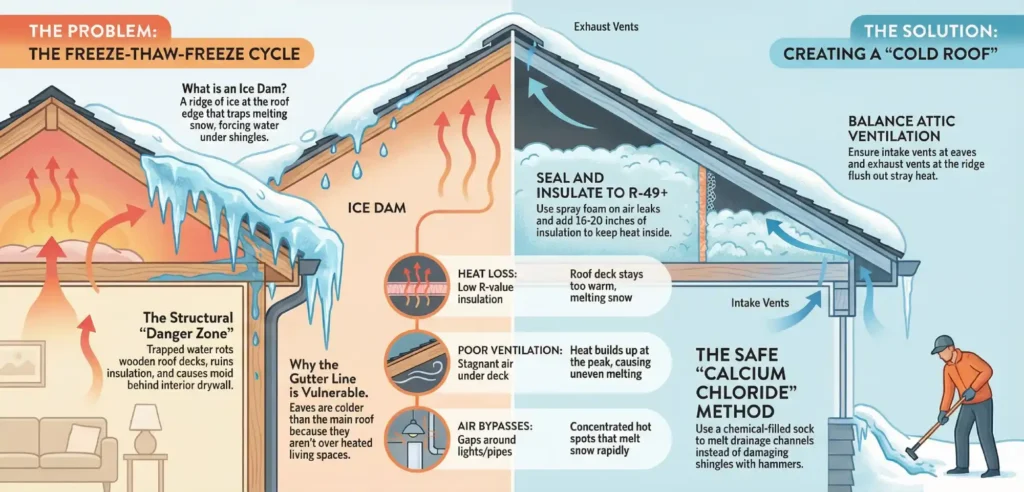
Ice dams are ridges of ice that develop along the edges of a roof, typically at the eaves. They form when snow melts on the upper roof, flows toward the colder eaves, and refreezes, creating a blockage. The trapped water can seep under shingles, leading to leaks, water-stained ceilings, warped walls, and damaged insulation. Homeowners often notice icicles hanging from eaves, water stains inside their home, or curling shingles as early warning signs of an ice dam.
How Ice Dams Form
The formation of ice dams is largely due to uneven roof temperatures. Heat escaping from your living space warms the upper sections of the roof, causing snow to melt. When this meltwater reaches the colder roof edges or overhangs, it refreezes and begins to accumulate. This cycle, melt, flow, freeze, and accumulate can create significant ice ridges that force water back under roofing materials. Roof areas with valleys, dormers, or low slopes are especially vulnerable.
Primary Risk Factors for Greeneville Homes
Several factors increase the likelihood of ice dams on your roof:
- Inadequate insulation: Attic R-values below recommended levels (R-38) allow heat to escape and melt roof snow.
- Poor ventilation: Blocked or improperly installed soffit and ridge vents prevent proper airflow, letting warm air accumulate in the attic.
- Air leaks: Openings around recessed lights, ductwork, plumbing vents, attic hatches, and chimneys contribute to heat loss that melts snow.
- Roof design: Flat roofs, complex valleys, and dormers trap water and encourage ice formation.
- Clogged gutters and debris: Leaves, twigs, and branches restrict snowmelt drainage, worsening ice accumulation.
- Overhanging tree branches: These can deposit snow and ice directly onto the roof and increase the risk of roof damage during storms.
Addressing these risk factors is essential for preventing ice dams and maintaining the integrity of your home. We offer professional inspections to identify vulnerable areas, evaluate insulation and ventilation, and implement solutions that keep Greeneville homes safe through winter.
Attic and Roof Preparations to Prevent Ice Dams
Attic Insulation: Keeping Heat Where It Belongs
One of the most effective ways to prevent ice dams is proper attic insulation. In Greeneville, TN, insufficient insulation allows heat to escape into the attic, warming the roof deck and causing snow to melt prematurely. This meltwater then flows to the colder eaves and refreezes, creating ice dams. Homeowners should aim for a minimum R-value of R-30, with R-38 recommended for optimal protection. High-risk areas, such as attic edges and eaves, may benefit from an R-50 upgrade.
Proper insulation not only prevents ice dams but also reduces heating costs, keeping homes warmer in winter. For many homeowners, professional installation ensures the insulation is even, continuous, and free of gaps that could let heat escape. Covenant Roofing & Restoration offers insulation evaluation and upgrades to ensure your attic is winter-ready. If an ice dam has already forced water under your shingles, seeking professional roof repair services is the only way to inspect the decking for rot and reseal the vulnerable entry points.
Ventilation for Uniform Roof Temperatures
Balanced attic ventilation is critical to preventing ice dams. Proper airflow keeps the attic and roof at a uniform temperature, preventing snow on the upper roof from melting and refreezing at the eaves. Soffit or eave intake vents combined with ridge or exhaust vents create continuous air movement that removes excess heat and moisture. Baffles installed along eaves ensure that insulation does not block airflow, maintaining consistent ventilation. Without this balance, even well-insulated attics can contribute to ice dam formation. Professional inspection is key to verifying that vents are working correctly and that no blockages exist.
Air Sealing: Stopping Heat Where It Escapes
Air leaks are the main culprit behind ice dam formation. Even with sufficient insulation and proper ventilation, warm air escaping from the living space can melt snow on the roof deck. Common leaks occur around recessed lighting, plumbing vents, ductwork, attic hatches, and chimneys. Sealing these penetrations with caulk, spray foam, or other approved methods reduces attic heat transfer, keeping the roof deck cold and preventing ice formation. Infrared and blower-door audits are useful for detecting hidden leaks that may not be visible during a standard inspection. Covenant Roofing & Restoration provides professional air-sealing services, ensuring attic leaks are properly sealed without compromising ventilation or safety.
Gutter and Roof Surface Management
Maintaining clear gutters and downspouts is essential for safe snowmelt drainage. Clogged gutters can trap water, worsening ice dam formation and increasing the risk of leaks under shingles. Additionally, inspecting and repairing flashing at eaves, valleys, and chimneys ensures that water flows correctly off the roof. Trimming overhanging branches prevents snow and ice from accumulating in problem areas or causing damage during winter storms. Debris removal from valleys, gutters, and downspouts is an important preventive measure that homeowners can do themselves, but professionals can handle difficult or high-risk tasks safely and thoroughly.
Timing Your Preparations
The best time to prepare your roof is early fall, after leaves have fallen but before snow begins. At this time, roofing contractors often offer more availability, and it is easier to access your roof safely. Performing these inspections and upgrades before the cold sets in ensures your home is fully protected during the winter months. Once the ice has cleared, it is vital to know how to check for roof damage after a storm to ensure the freeze-thaw cycle hasn’t permanently pried your shingles away from the deck.
Snow and Ice Management for a Winter-Proof Roof
Safe Snow Removal Techniques
Removing excess snow from your roof reduces the risk of ice dam formation and structural stress. Using a roof rake from the ground allows you to clear heavy snow without climbing onto the roof, which can be dangerous. For thick or hard-packed snow, professional roofers can safely remove it using specialized equipment, preventing damage to shingles, gutters, and flashing. We provide safe snow removal services to protect both your roof and your family during the winter months.
Ice and Water Barriers
Installing ice and water barriers along vulnerable roof sections, such as eaves, valleys, and around chimneys, adds an essential layer of protection. These self-adhered membranes prevent water that backs up under shingles from seeping into the attic or interior walls. Owens Corning WeatherLock or similar products create a continuous waterproof layer that minimizes damage from ice dams. Professional installation ensures proper adhesion and overlap, which is critical for long term performance.
Shingle Upgrades for Harsh Winters
Shingles play a key role in resisting ice and water intrusion. High-performance options, such as IKO Performance or Nordic shingles, offer superior durability in freeze-thaw cycles, hail, and wind. Replacing worn, curling, or damaged shingles before winter ensures your roof is fully prepared to withstand ice dam formation. A professional inspection can determine if your shingles are winter-ready or need replacement.
Monitoring and Maintenance During Winter
Even with proper preparation, monitoring your roof throughout winter helps catch issues early. Watch for icicles, water stains in the attic, or unusual ice build-up along eaves. Keeping gutters and downspouts clear during snowfall allows snowmelt to drain properly, reducing pressure on the roof edge. Routine checks and minor repairs performed by a professional can prevent small issues from escalating into costly damage.
Professional Intervention and Emergency Repairs
Ice dams can pose serious risks, and attempting to remove them without expertise can cause injury or further damage. Hiring a licensed and insured roofing contractor ensures that removal, repairs, and preventive solutions are performed safely and effectively. Covenant Roofing & Restoration specializes in roofs, offering inspection, repair, and maintenance services designed to prevent ice dams, protect home interiors, and extend the life of your roof.
Long-Term Prevention Strategies
For long-term protection, a combination of proper insulation, balanced ventilation, air sealing, quality shingles, and strategic use of ice and water barriers is essential. Annual roof inspections before winter provide a chance to address vulnerabilities, ensuring that your roof remains strong, watertight, and energy-efficient year after year. Investing in professional services now can save thousands in future repairs caused by ice dam damage.
Winter Roof Prep Checklist and Ice Dam Risk Points
| Area / Component | What to Check | Recommended Action | Service Recommendation |
| Attic Insulation | R-value, gaps, uneven coverage | Upgrade to R-38+ (R-50 near eaves if possible) | Covenant Roofing & Restoration offers professional insulation evaluation and installation |
| Ventilation | Soffit/eave intake, ridge/exhaust vents, baffles | Ensure continuous airflow, remove blockages | Inspection and balancing by licensed roofing contractor |
| Air Leaks | Around recessed lights, plumbing vents, attic hatches, chimneys | Seal with spray foam or caulk; check with infrared/blower door test | Pro air sealing to prevent heat escape |
| Gutters & Downspouts | Debris, alignment, clogs | Clean, trim branches; install guards if needed | Professional gutter maintenance and winter prep |
| Roof Surface & Shingles | Missing, curling, cracked, or aged shingles | Replace worn shingles with high-performance options | Full inspection and replacement by expert roofers |
| Flashing & Valleys | Deterioration, gaps, rust | Repair or replace to prevent leaks under ice | Professional flashing inspection and repair |
| Ice & Water Barriers | Presence at eaves, valleys, penetrations | Install or reinforce membranes | Expert installation ensures proper coverage and adhesion |
| Snow & Ice Removal | Accumulation on roof and around gutters | Use roof rake from ground or hire pro for safe removal | Safe snow removal services from licensed contractors |
| Monitoring | Icicle formation, water stains, ponding areas | Inspect regularly during winter | Professional winter roof inspection for early detection |
Key Ice Dam Risk Points
Eaves and Overhangs: Coldest areas where ice dams first form; ensure proper insulation and air sealing.
Roof Valleys: Natural water channels prone to snow accumulation; clean debris and install ice/water barriers.
Chimneys, Skylights, and Vents: Penetrations where leaks often start; verify flashing and sealant.
Low-Slope Sections: Snow and ice melt slowly; reinforced ice/water barriers recommended.
Gutters and Downspouts: Blocked or damaged drainage causes pooling and refreeze; keep clear.
Frequently Asked Questions
Will new shingles stop ice dams from forming?
Not by themselves. Shingles are designed to shed water running downward. If your attic is still losing heat, ice will still form on new shingles. However, a new roofing system installed by a professional will include the proper ventilation and ice/water shield needed to manage the problem.
Is it normal to have icicles on my gutters?
Small icicles are common, but logs of ice that fill the gutter or icicles that form behind the gutter are signs of an ice dam. If you see icicles coming out of your soffit vents or down your siding, you have a major problem that needs immediate attention.
How much insulation do I need in my attic to prevent ice dams?
For our region in Tennessee, you should aim for an R-49 rating, which is roughly 15 to 18 inches of blown-in insulation. This depth creates enough of a barrier to keep the roof deck at the same temperature as the outside air.
Does homeowner’s insurance cover ice dam damage?
Most policies cover the damage caused by the leak (like ruined drywall or flooring), but they often do not cover the cost of the roof repair itself or the removal of the ice dam. It is always best to check your specific policy details with your local agent.
Don’t Wait for the Melt: Why Professional Assessment Matters
Trying to diagnose heat loss from the ground is nearly impossible. At Covenant Roofing & Restoration, we use a comprehensive approach to find the invisible problems in your home’s anatomy. We look for the air bypasses and insulation gaps that the average person might miss. Our goal is to provide a permanent solution so you never have to worry about socks full of chemicals or water dripping from your light fixtures again. We build roofs that are designed for the Greeneville climate, ensuring your home is a fortress against the winter.