Winter in Greeneville doesn’t always mean a constant blanket of snow, but the mix of freezing rain, heavy sleet, and damp mountain air can be brutal on a roof that isn’t ready. Many homeowners wait until they see a leak in the attic to think about their shingles, but by then, the wood underneath may already be rotting. Preparing your roof for the cold months is about spotting the small gaps that water can crawl into during a freeze. A few simple checks now can prevent a major emergency repair during a January ice storm. This guide will show you exactly what to look for on your property to ensure your home stays dry and warm all season long.
Why Tennessee Winters are Unique: The Freeze-Thaw Threat
Tennessee winters are famous for thermal shock, which happens when the temperature swings from 50 degrees during the day to well below freezing at night. This rapid change causes your roofing materials to expand and shrink quickly, which can pull shingles apart or crack old sealants. Unlike northern states, where it stays cold, our freeze-thaw cycle means ice is constantly melting and refreezing in the small cracks of your roof. This process acts like a slow-motion crowbar, widening gaps in your flashing and shingles. Understanding this cycle is the first step in realizing why a look-over in the fall is so important for Greeneville homes. If the freeze-thaw cycle has already compromised your shingles, our storm damage restoration experts can perform the precision repairs needed to reseal your home before the next front arrives.
The Appalachian Humidity Factor
Even in the winter, the air around the Smoky Mountains stays relatively damp. This moisture can get trapped in your attic if your roof isn’t venting correctly. When warm air from your heater rises into a cold attic, it turns into condensation on the underside of your roof deck. This isn’t a leak from the outside, but it causes the same damage, mold, mildew, and weakened wood. Preparing for winter means making sure that moisture has a way to get out before it freezes into frost on your rafters.
Weight Loads and Heavy Wet Snow
While we don’t get feet of snow every week, the snow we do get in East Tennessee is often wet and heavy. This type of snow weighs significantly more than the dry, powdery snow found out west. A roof that has old, soft wood or a weak structure might start to sag under this weight. If you have noticed any dips in your roofline during the summer, they will only get worse when several hundred pounds of slush sit on top of them. We check the structural health of your roof to make sure it can handle the extra weight of a Tennessee winter.
The Gutter & Drainage Audit: Your First Line of Defense
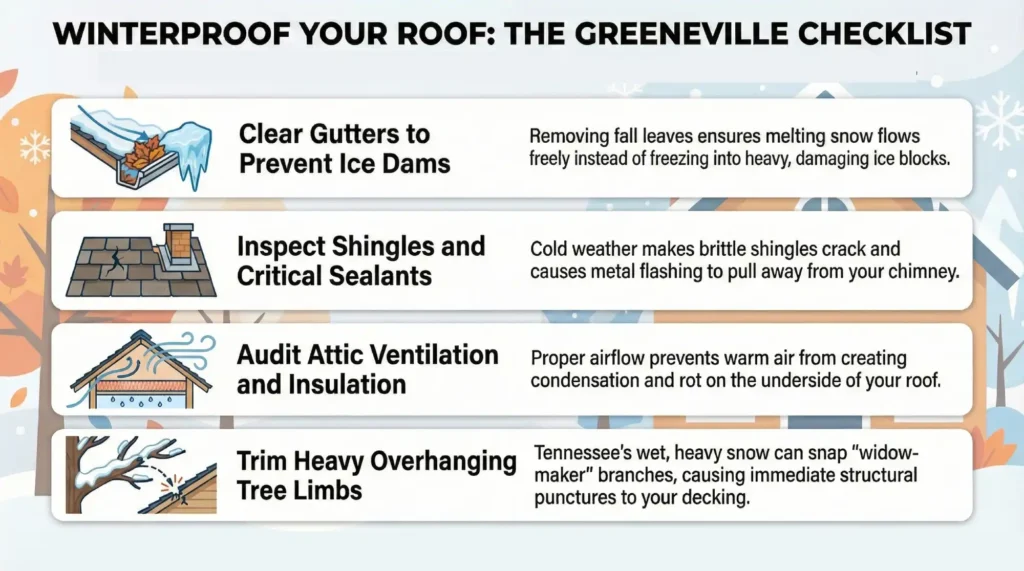
Your gutters are actually part of your roofing system, and in the winter, they are the most likely part to fail. If your gutters are full of leaves from the fall, they will trap water. When that water freezes, it turns into a heavy block of ice that can literally pull the gutters right off your house. This also causes water to back up under your shingles, leading to leaks along the edges of your home. Cleaning and checking your gutters is the single most effective thing you can do to prevent winter water damage.
| Action Item | Why It Matters | Goal |
| Clear Debris | Prevents ice dams and heavy ice plugs | Smooth water flow to the ground |
| Check Hangers | Ensures gutters can hold the weight of ice | No sagging or pulling away from fascia |
| Downspout Check | Moves water away from the foundation | Prevents basement and crawlspace flooding |
| Seal End Caps | Stops leaks that turn into icicles | Prevents slip hazards on walkways |
Clearing Fall Debris
Greeneville is full of beautiful trees, but those leaves end up in your gutters every November. Wet leaves create a thick sludge that blocks the opening of your downspouts. Once that happens, any rain or melting snow has nowhere to go. It sits in the gutter and freezes, creating a massive ice spear that can damage your siding and foundation. You should clean your gutters at least twice, once in mid-fall and again right before the first hard freeze is predicted in the local forecast.
Downspout Positioning and Hardware Check
Water needs to be moved as far away from your house as possible. In the winter, you should ensure your downspouts discharge at least 5 feet away from your foundation. If water pools near the house and freezes, it can cause the ground to heave, which puts pressure on your foundation walls. Also, give your gutters a firm tug. If they feel loose, the hangers need to be tightened or replaced. A gutter that is slightly loose in the fall will become a major problem when it is weighed down by fifty pounds of ice.
Roof Surface & Integrity: Identifying Weak Spots
Before the first frost hits, you need to know if your shingles are still in good shape. Cold weather makes asphalt shingles brittle. If they are already curling or losing their protective granules, the freezing temperatures will cause them to crack or snap. You don’t necessarily need to get on a ladder to see these signs; often, a pair of binoculars or a careful look from the driveway will reveal the red flags that indicate your roof is nearing the end of its life and might not survive a harsh winter.
Shingle Scrutiny and The Granule Sweep
Look for shingles that are cupping or clawing (edges turning up or down). These shingles are no longer shedding water correctly. Another sign is finding a lot of sand-like grit in your gutters. These are the protective granules that shield the asphalt from the sun and ice. If your shingles are bald, they will soak up water and crack during the freeze-thaw cycle. At Covenant Roofing & Restoration, we look for these signs of aging to let you know if a simple repair can get you through the winter or if a more serious fix is needed. If your shingles are bald and the decking feels soft, you may need to replace your roof in Greeneville to avoid a mid-winter structural failure.
Flashing & Sealants at Critical Joints
Flashing is the metal trim around your chimney, skylights, and vent pipes. Because metal expands and shrinks much faster than shingles, the sealant around these areas often cracks first. In the winter, water gets into those cracks, freezes, and expands, tearing the sealant even further. Check the pipe boots (the rubber seals around your plumbing vents). If the rubber looks dry and cracked, it will leak as soon as the snow on your roof starts to melt. Replacing a $20 pipe boot now can save you a $500 ceiling repair later in the season. While replacing a pipe boot is a minor expense, waiting until a leak destroys your ceiling can significantly increase the cost of typical roof repairs in Greeneville.
Attic & Interior: Preventing Ice Dams and Heat Loss
The space directly under your roof is just as important as the shingles on top. During a Tennessee winter, your attic acts as a buffer between your warm living space and the freezing outdoor air. If this area isn’t managed correctly, it creates a temperature imbalance that leads to one of the most destructive winter roofing problems: ice dams. By checking your insulation and airflow now, you are doing more than just saving on your heating bill; you are preventing the physical destruction of your roof’s edges and your home’s interior walls.
The Insulation R-Value Gap
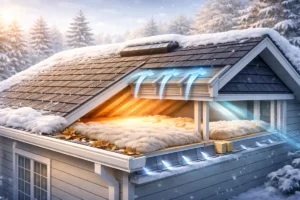
Insulation is meant to keep heat inside your house and out of your attic. When heat escapes through the ceiling because of poor insulation, it warms the roof deck. This causes the snow on the roof to melt from the bottom up, even if the air outside is still below freezing. As that water runs down to the cold eave (the part of the roof that hangs over the yard), it freezes again. This creates a wall of ice that traps water behind it, forcing that liquid under your shingles and into your drywall. We check to see if your insulation meets modern standards to keep that heat where it belongs.
Attic Ventilation Check
A common mistake is thinking that an attic should be sealed tight in the winter to stay warm. In reality, your attic needs to stay as close to the outdoor temperature as possible. Proper attic ventilation allows any heat that does escape your home to be flushed out before it can melt the snow on your roof. You should check that your ridge vents and soffit vents aren’t blocked by dust, bird nests, or misplaced insulation. If air can’t move, moisture will build up on your wood rafters, eventually leading to wood rot and black mold that can thrive in the damp winter months.
Pipe Boot Inspection
The rubber seals around your plumbing vent pipes, known as pipe boots, are often the first part of a roof to fail in the cold. Because they are made of rubber, the intense Tennessee sun in the summer makes them brittle, and the first hard freeze in the winter causes them to snap. A cracked pipe boot allows melting snow to run directly down the outside of the pipe and onto your bathroom or kitchen ceiling. Inspecting these boots from the attic side is a great way to see if water has been trickling in before a major winter storm makes the problem worse.
Surrounding Hazards: Protecting Your Roof from the Outside In
Sometimes the biggest threat to your roof in the winter isn’t the roof itself, but what is hanging over it. Trees and organic growth behave differently when the temperature drops. In Greeneville, we have many large, beautiful oaks and pines that add character to our properties, but they can become a liability when weighed down by ice or snow. Part of your winter preparation should involve a walk around your yard to look at your home from a distance, identifying external hazards that could cause catastrophic damage during a high-wind winter front.
Tree Trimming and Widow-Makers
Ice is incredibly heavy, and a single ice storm can add hundreds of pounds of weight to a tree limb. Dead or dying branches, often called widow-makers, are prone to snapping under this extra weight. If these branches hang over your roof, they can puncture your shingles and decking or crush your gutter system. Before the first freeze, you should trim back any branches that are within 6 to 10 feet of your roofline. This also prevents squirrels and other rodents from using those branches as a bridge to find a warm winter home in your attic.
Moss and Lichen Removal
If your roof has green moss or crusty lichen growing on it, you should address it before the damp winter weather sets in. These organisms act like a sponge, holding moisture against your shingles for weeks at a time. When that trapped water freezes, it expands and pries the shingles away from the roof deck. While you shouldn’t use a high-pressure washer, which can strip away protective granules, a gentle professional cleaning can remove these water-traps and ensure your shingles can dry out between winter rain and snow events.
Professional Support: When to Call the Experts at Covenant
While many homeowners are comfortable cleaning a gutter or looking at shingles from the ground, a truly winter-ready roof requires a deeper look. There are certain things that only an experienced eye can catch, such as subtle soft spots in the decking or a ridge vent that was installed without a proper air gap. At Covenant Roofing & Restoration, we provide a forensic winter inspection that goes beyond a simple estimate. We look at the health of your entire system to ensure you won’t be calling us for an emergency repair in the middle of a February blizzard when our crews are already stretched thin.
The Forensic Winter Inspection
Our local Greeneville team performs a multi-point check that focuses on the areas most likely to fail under ice and snow. We don’t just look for leaks; we look for potential leaks. This includes checking the seal on every single nail head that is exposed and ensuring your chimney cricket is clear of debris. By catching these issues in November or December, we can perform a permanent fix while the weather is still dry, rather than a temporary patch during a winter rainstorm.
The Covenant Promise and Emergency Preparedness
We live and work in East Tennessee, so we know exactly how the mountain weather behaves. Our Covenant Promise means we treat your home like our own, providing honest feedback on whether your roof is truly safe or if it needs a small adjustment to make it through the season. Having a professional relationship with a local roofer before a storm hits is the best way to ensure you are at the top of the list if a tree limb falls or a major leak occurs during a winter front.
Frequently Asked Questions
Can you install a new roof in Tennessee during the winter?
Yes, but it requires specific conditions. Asphalt shingles have a thermal seal that needs sun to activate. While we can install the roof, it may take a few weeks of sunny days for the shingles to fully lay flat and bond together. We use specialized techniques for cold-weather nailing to ensure your roof stays secure.
How do I know if I have an ice dam on my Greeneville home?
Look for massive icicles hanging from your gutters but not from other parts of the house. Another sign is water dripping from the underside of your soffit or moisture appearing on the interior walls near the ceiling. If you see ice building up in a thick ridge at the very edge of your shingles, an ice dam has likely formed.
How much snow can a Tennessee roof safely hold?
Most modern Tennessee roofs are built to handle about 20 pounds per square foot. Since our snow is often wet and heavy, about 10 to 12 inches of fresh snow is the limit for many older homes before stress begins to show. If your doors are sticking or you hear creaking sounds in the attic after a heavy snow, it’s time to call for an inspection.
Is it safe to pressure wash my roof before winter?
No. Pressure washing can strip away the protective granules that shingles need to resist ice and UV rays. Instead, use a soft wash solution or a broom to gently remove leaves and moss.
Secure Your Home Before the Frost: Final Thoughts
The difference between a stress-free winter and a winter spent worrying about buckets on the floor is a single afternoon of preparation. Being proactive is always cheaper and safer than being reactive. By checking your gutters, clearing your attic vents, and having a local professional verify your roof’s integrity, you can rest easy when the Greeneville forecast calls for ice. Your roof is your home’s first line of defense; make sure it is strong enough to stand up to whatever the Appalachian winter throws its way.