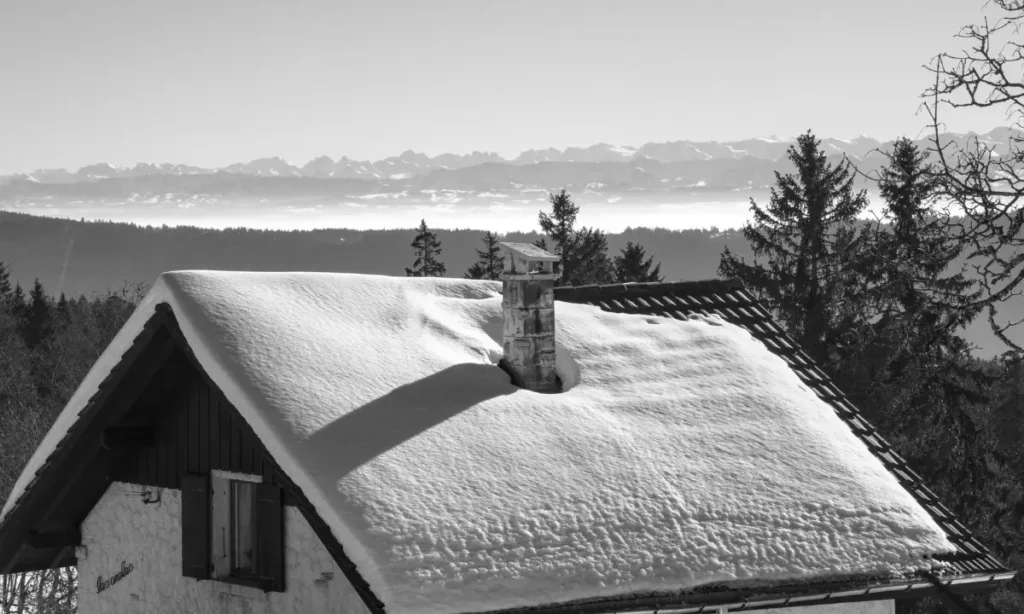
Winter in Greeneville brings a mix of freezing temperatures, heavy rainfall, and occasional snow, all of which can put serious stress on your home’s roof. Even small issues like loose shingles or clogged gutters can turn into costly problems when ice, snow, or wind arrives. Preparing your roof before winter not only protects your home from leaks and water damage but also ensures the safety, energy efficiency, and longevity of your roofing system. This guide provides actionable steps, expert tips, and insights into common winter roofing risks, helping homeowners take the right precautions and know when to call professional help.
Why Winter Preparation Matters More Than Most Homeowners Realize
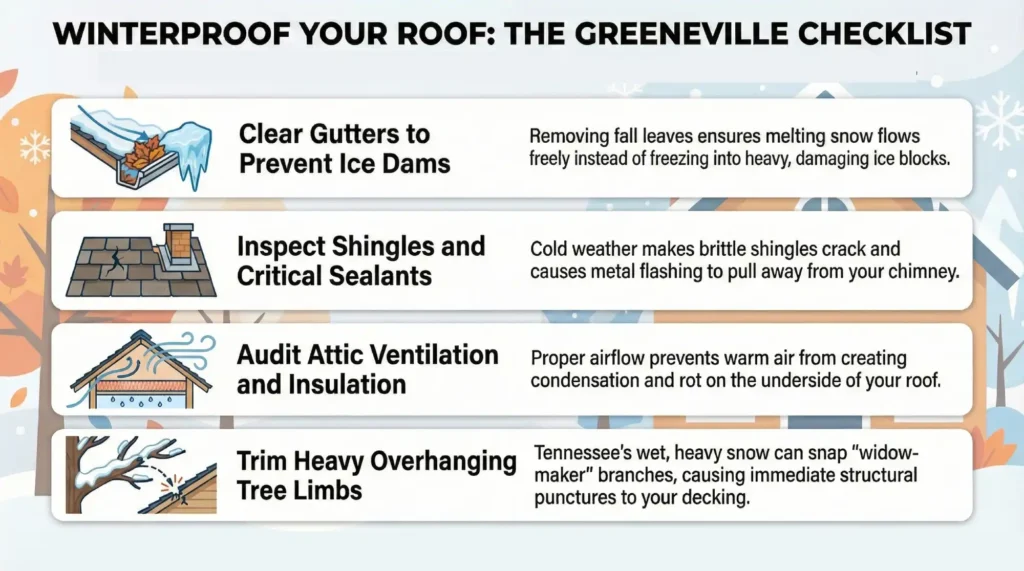
Many homeowners overlook the importance of pre-winter roof maintenance, assuming minor damage won’t worsen. In reality, the combination of cold temperatures, snow accumulation, and freeze-thaw cycles amplifies existing weaknesses. Snow and ice add significant weight to the roof, stressing shingles, decking, and the structural framework. Freeze-thaw cycles can crack flashing, separate sealants, and allow water to seep beneath shingles, often unnoticed until interior damage appears. Attic moisture that builds up due to inadequate ventilation can lead to mold, rotting insulation, and structural decay, while clogged gutters can cause ice dams, which force water under shingles and into the home.
Understanding these risks highlights why fall preparation is essential. Early inspection and repair save homeowners from emergency calls during winter storms, reduce repair costs, and prevent damage that could compromise both safety and comfort. For residents, where winter temperatures often fluctuate between freezing and mild, timely preparation ensures your roof remains strong throughout the season. If the freeze-thaw cycle has already compromised your shingles, our storm damage restoration experts can perform the precision repairs needed to reseal your home before the next front arrives.
The Ice Dam Cycle Explained
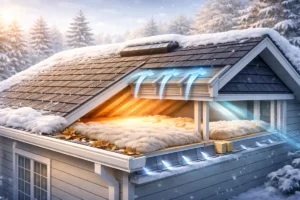
Ice dams are one of the most common winter roofing problems in the Tennessee area. They form when heat from the attic warms the roof, causing snow on the upper roof to melt. This meltwater then refreezes at the colder eaves, creating a dam that traps additional water. The pooled water eventually seeps under shingles through nail holes or cracks in the decking, causing leaks inside the home. Left unchecked, ice dams can damage shingles, gutters, soffits, and interior walls.
Preventing ice dams starts with maintaining proper attic insulation and ventilation. Keeping the roof cold reduces snowmelt, while ensuring continuous airflow removes excess heat and moisture from the attic. Installing an ice and water barrier along eaves and vulnerable roof areas adds an extra layer of protection. Professional roofing contractors like Covenant Roofing & Restoration specialize in identifying potential ice dam areas and recommending solutions before the first winter freeze.
The Most Common Winter Roof Failure Points
Winter damage usually occurs at specific weak points on a roof. Focusing inspections on these areas ensures early detection and prevention of costly repairs.
Shingles and Seal Integrity
Shingles are the roof’s first line of defense, but curling, cracking, or missing shingles significantly increase the risk of leaks during snow or rain. Sealant strips on asphalt shingles lose flexibility in cold temperatures, which reduces their adhesion. For homes in Greeneville, upgrading to impact-resistant shingles like IKO Performance or Nordic series provides extra protection against hail, wind, and ice. Fall is the ideal time to make these upgrades because sealants bond more effectively before freezing temperatures arrive. If your shingles are bald and the decking feels soft, you may need to replace your roof in Greeneville to avoid a mid-winter structural failure.
Flashing and Chimney Transitions
Flashing around chimneys, vents, skylights, and valleys often becomes the most vulnerable point in winter. Small cracks or separations allow water to enter the home, and leaks near chimneys can be mistaken for total roof failure. Step flashing, counter flashing, and valley flashing must be inspected carefully for rust, gaps, or loose caulking. A professional roofing contractor can repair or replace flashing correctly, ensuring that winter storms do not result in interior water damage. While replacing a pipe boot is a minor expense, waiting until a leak destroys your ceiling can significantly increase the cost of typical roof repairs in Greeneville.
Sagging Roofline and Structural Red Flags
A sagging roofline signals potential structural stress that worsens under the weight of snow and ice. Rotten decking or weakened sheathing may not be visible from the ground but can fail during heavy snow accumulation. Other warning signs include uneven roof planes, dips along ridges, or nail pops in shingles. Identifying these early with a professional inspection prevents serious collapses, protects your home, and ensures peace of mind for your family.
Drainage & Ice Dam Prevention
Proper water management is critical for preventing winter roof damage. Even a structurally sound roof can fail if snowmelt and rain cannot drain efficiently. Ice dams, clogged gutters, and improperly installed drip edges are among the most common causes of water infiltration and interior damage during winter. Homeowners need to address these issues proactively before the first freeze.
Clean and Inspect Gutters Before Winter
Gutters are the unsung heroes of a roof’s drainage system. Over the fall season, leaves, pine needles, and other debris accumulate in gutters and downspouts, blocking water flow. When snow melts, these clogs cause water to pool at eaves, creating ice dams that push water under shingles. Sagging or misaligned gutters further worsen the problem, leading to damage to fascia boards, soffits, and siding. Cleaning gutters thoroughly after leaf drop and ensuring proper slope toward downspouts is essential.
For homeowners who hire a professional like Covenant Roofing & Restoration ensures gutters are cleared safely, inspected for alignment, and reinforced if needed. Professionals also identify hidden damage that may not be visible from the ground, preventing leaks before they develop into costly repairs.
Install or Evaluate Gutter Guards
Gutter guards can be an effective solution for homes surrounded by trees, but improper installation can trap debris and worsen drainage issues. Deciduous trees shed large amounts of leaves, guards must be selected and installed carefully. A professional assessment ensures guards do not compromise water flow or create blockages that lead to ice dams. When combined with clean gutters, guards reduce maintenance needs and improve long-term roof protection.
Understanding Ice Dams and How to Prevent Them
Ice dams form when the roof’s upper areas warm due to attic heat, causing snow to melt. Meltwater then flows to the colder eaves, where it refreezes and forms a dam. This trapped water eventually seeps under shingles, causing leaks inside walls and ceilings. Preventing ice dams involves three critical steps: maintaining proper attic insulation, ensuring balanced ventilation, and installing ice and water barriers along vulnerable roof sections. Products such as Owens Corning WeatherLock, VentSure ridge and soffit vents, and AttiCat blown-in insulation are widely used by professionals to reinforce roof protection before winter.
By addressing these factors proactively, homeowners reduce the risk of leaks, water damage, and costly interior repairs. Scheduling a pre-winter professional inspection ensures that insulation and ventilation systems are functioning correctly and that ice barriers are installed in key areas like eaves and valleys.
Ensure Proper Drip Edge and Edge Protection
Drip edges, installed along eaves and rakes, guide water into gutters while protecting fascia and roof edges from water intrusion. During winter, overflow from blocked gutters or ice formation can damage shingles, fascia boards, and soffits if drip edges are missing or improperly installed. In Greeneville’s variable winter climate, even minor roof edge issues can escalate quickly. Professional roofing contractors inspect and reinforce these areas, guaranteeing that water is directed away from the home and reducing ice dam formation risk.
Additional Preventive Measures for Water Management
Beyond cleaning gutters and checking drip edges, homeowners should remove debris from roof valleys, behind chimneys, and around skylights. Debris accumulation increases water retention, which can accelerate shingle deterioration and ice buildup. Likewise, trimming overhanging tree branches reduces the risk of snow- or ice-weighted limbs breaking and causing structural damage. While some of these tasks are DIY-friendly from ground level, full roof clearance, flashing checks, and ice barrier installation are best handled by licensed and insured professionals like Covenant Roofing & Restoration to ensure safety and effectiveness.
Attic Insulation, Ventilation, and Advanced Protection
The roof’s performance in winter depends not only on visible components like shingles and gutters but also on what lies beneath. Attic insulation and ventilation are critical for preventing ice dams, reducing energy loss, and extending the life of your roofing system. Homeowners in Greeneville often overlook these areas, yet proper internal management can prevent significant structural damage and costly repairs.
Attic Insulation: Keeping Your Roof Cold and Efficient
Attic insulation plays a vital role in controlling the temperature of your roof deck. When insulation is insufficient or uneven, heat from your home escapes into the attic, warming the roof and melting snow. This creates the conditions for ice dams at the eaves. Upgrading to high-quality insulation, such as blown-in fiberglass or dense-pack cellulose, reduces heat loss and keeps the roof deck colder. Proper insulation also improves energy efficiency, lowering heating costs during cold months by up to 30 percent.
Professionals like Covenant Roofing & Restoration can assess your attic’s R-value, check for gaps or moisture damage, and install or replace insulation efficiently. Early fall is the ideal time for this work, ensuring your roof is fully protected before the first freeze.
Ventilation: Maintaining Airflow to Prevent Moisture Damage
Balanced ventilation works hand-in-hand with insulation. Intake vents at the soffit pull cool air into the attic, while ridge or off-ridge exhaust vents allow hot, moist air to escape. This airflow prevents heat buildup that accelerates snowmelt and stops condensation from forming on the roof deck, which can lead to mold and rot. Without proper ventilation, even a well-insulated attic cannot fully prevent ice dams or moisture-related damage.
A professional roofing inspection evaluates whether your current system provides continuous airflow, identifies blocked vents, and recommends upgrades if needed. This ensures that your attic stays dry and your roof remains strong throughout the winter.
Ice and Water Protection: Layering for Maximum Defense
In addition to insulation and ventilation, installing ice and water barriers in critical areas provides an extra layer of protection. Valleys, eaves, around chimneys, and skylight penetrations are particularly vulnerable to winter water intrusion. The proper sequence, roof decking, underlayment, ice barrier, shingles, and ridge/hip caps, ensures that water flows away from the home and reduces the likelihood of leaks.
Professional installation of these products, such as Owens Corning WeatherLock, guarantees that the roof’s most leak-prone sections are reinforced. In a winter climate, these preventive measures can save homeowners thousands in repairs from ice dams or storm-driven water infiltration.
Snow Load and Structural Considerations
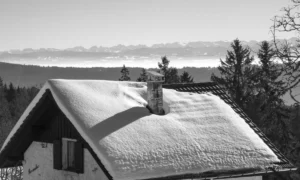
Even with a well-maintained roof, the structural framework must handle snow accumulation safely. Heavy snow can add up to 20–25 pounds per square foot, stressing weak decking, rafters, or trusses. Homeowners should monitor for sagging rooflines or dips, as these may indicate compromised structural integrity. Licensed roofing professionals can evaluate load capacity, reinforce framing if necessary, and ensure the roof withstands seasonal snow without collapsing or causing interior damage.
Safe Winter Preparation and Holiday Considerations
Many Greeneville homeowners enjoy decorating their homes for the winter holidays, but placing heavy items or nailing decorations into shingles can compromise roof integrity. Using clips instead of fasteners, avoiding roof-mounted inflatables, and installing lights before ice or snow appear ensures your decorations are safe and your roof remains undamaged. Professionals can advise on safe practices and even install certain features to prevent accidents or damage.
DIY vs Professional Assistance
While homeowners can perform basic tasks such as ground-level inspections, minor debris removal, and visual checks for ice accumulation, many critical preparations require professional expertise. Walking a steep roof, inspecting flashing, installing ice barriers, and upgrading insulation or ventilation carry risks of injury and improper installation. Licensed and insured roofing contractors like Covenant Roofing & Restoration provide the knowledge, tools, and safety measures needed to perform these tasks efficiently and correctly.
Investing in professional winter preparation reduces the likelihood of emergency repairs, prevents interior water damage, and extends the overall lifespan of your roof.
Winter Roof Inspection Checklist for Greeneville Homeowners
| Component | What to Check For |
| Shingles | Curling, cracking, missing, or weak adhesion |
| Flashing | Gaps, rust, or separation at valleys and chimneys |
| Valleys | Debris accumulation and proper metal flashing coverage |
| Gutters | Clogs, misalignment, and sagging |
| Attic | Moisture stains, insulation gaps, vent blockage, pest activity |
| Roofline | Sagging, dips, or uneven ridges |
| Drip Edge | Proper installation and secure attachment |
Using this checklist ensures that all critical points are evaluated before winter, giving homeowners confidence that their roof is ready for the season.
Final Thoughts: Protect Your Roof Before Winter Arrives
Preparing your roof for winter in Greeneville, TN, is more than cleaning gutters or patching shingles. It involves a strategic combination of structural inspection, drainage management, insulation, ventilation, and preventive reinforcement. Early action prevents ice dams, water infiltration, and structural damage, while professional assistance ensures safety and long-term effectiveness. Scheduling a pre-winter inspection with Covenant Roofing & Restoration allows homeowners to address small issues before they escalate, giving peace of mind and protecting both the home and investment.