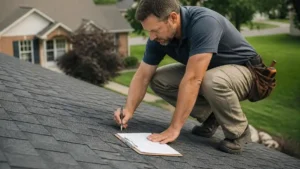
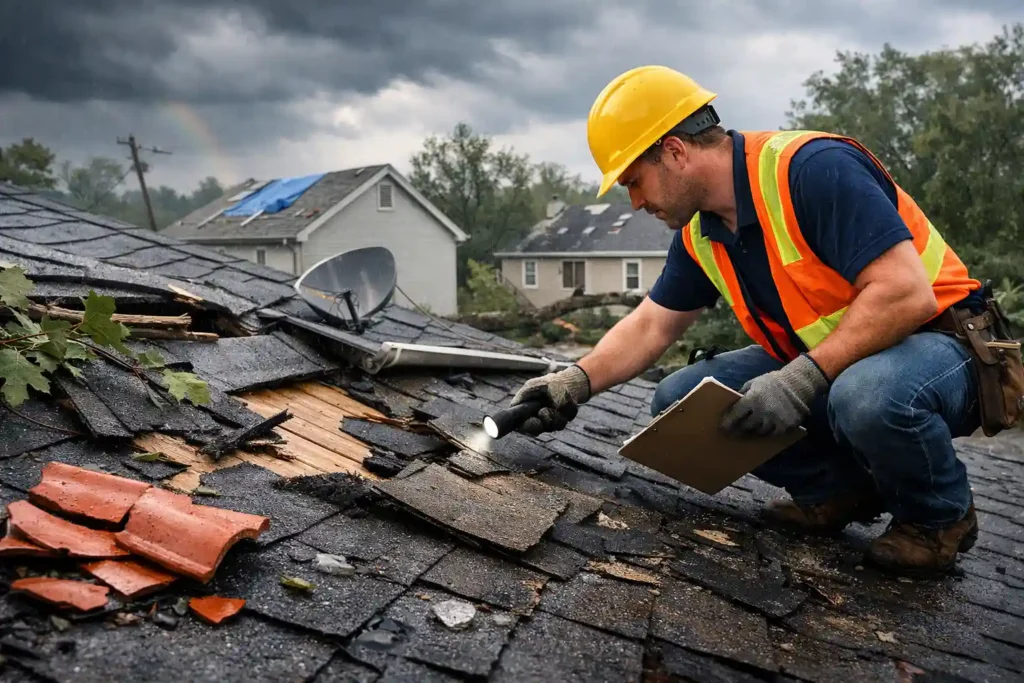
After a powerful storm rolls through Greeneville, the sound of wind and rain is often replaced by a sinking feeling of worry about your home. Your roof is your first line of defense, but it is also the most vulnerable to the high-speed gusts and hail that often hit East Tennessee. Ignoring potential damage can lead to expensive leaks, mold, and structural rot that may not show up until months later. This guide is built to help you look for the red flags without putting yourself in danger. By following a simple, step-by-step process, you can identify if your roof needs a professional touch and gather the proof you need for a smooth insurance process.
The Golden Rule of Post-Storm Inspections
The most important thing to remember after a storm is to stay off the roof. Even if you own a sturdy ladder, shingles can be incredibly slick when wet, and high winds may have loosened sections of the roof that are no longer stable to walk on. There is also the risk of structural instability or hidden damage to the roof deck that could lead to a fall. Before you head outside, look around for downed power lines or tree limbs that might be leaning against your house.
If you see electrical wires on the ground or touching your gutters, stay far away and call the utility company immediately. For your own check, stay on the ground and use tools like binoculars and your smartphone camera to get a closer look at the high points of your home. Dealing with adjusters can be overwhelming, but our team provides expert Storm Damage Restoration to ensure you receive the full coverage your policy provides.
The Ground-Level Forensic Scan (No Ladder Required)
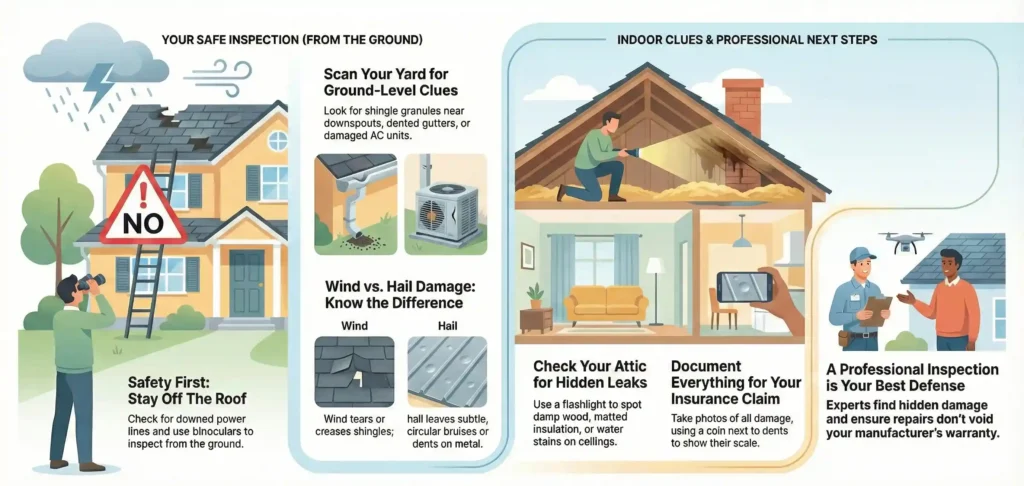
You can find a surprising amount of information about your roof’s health just by walking around your yard. Start at the base of your home and look at the drip line directly under your gutters. If you see piles of small, sand-like granules, your shingles have likely been bruised by hail and are shedding their protective coating. You should also look for pieces of metal, broken plastic from vent caps, or actual chunks of shingles that may have been ripped away. Often, the debris you find on the grass is the first clue that the wind reached speeds high enough to break the adhesive seals on your roof.
Fascia, Soffit, and Gutter Debris
Check the trim work around the edges of your roof, known as the fascia and soffits. High winds can pull these pieces away, creating openings for birds, squirrels, and driving rain. Look closely at your gutters and downspouts as well. Dented gutters are a primary sign of hail impact. If your downspouts are clogged with granules after a storm, it means your shingles have lost the UV protection they need to stay flexible. At Covenant Roofing & Restoration, we often use these ground-level signs to build a case for a full insurance replacement.
Property Perimeter Signs
Don’t just look at the house; look at the rest of your property. If your wooden fence is splintered, your mailbox is dented, or your outdoor AC unit has combed fins from hail, it is almost certain that your roof took the same level of impact. Insurance adjusters look at these surrounding items to confirm the severity of a storm. Taking photos of a dented grill or a shattered birdbath provides excellent supporting evidence that a major weather event occurred at your specific address in Greeneville.
| Area to Check | What to Look For | Why It Matters |
| The Yard | Shingle pieces or metal scraps | Indicates high-wind uplift or tearing |
| Downspouts | Heavy granule buildup | Signals loss of shingle lifespan and hail hits |
| AC Unit | Dented cooling fins | Proof of hail size for insurance adjusters |
| Window Wraps | Dents in metal trim | Confirms storm direction and intensity |
Identifying Damage by Storm Type
Different storms leave behind different signatures of destruction, and knowing the difference helps you understand what you are telling your insurance company. In East Tennessee, we often deal with straight-line winds that can reach speeds over 60 miles per hour, as well as localized hail that can range from pea-sized to golf-ball-sized. Both are destructive, but they attack your roof in very different ways. Being able to point out these specific indicators ensures that an adjuster doesn’t overlook the invisible damage that often leads to leaks months down the road.
Wind Damage Indicators
Wind damage is usually easy to spot because it leaves the roof looking disheveled. You are looking for shingles that are missing entirely, leaving the black underlayment exposed. However, the more dangerous sign is creased shingles. This happens when the wind lifts a shingle up but doesn’t tear it off; instead, it folds it back, breaking the fiberglass mat inside. Once that mat is broken, the shingle loses its waterproof ability. We also check for lifted flashing around your chimney or in the valleys. If the metal has been pulled away from the wood, water will funnel directly into your kitchen or living room ceilings the next time it rains. If you spot creased or missing shingles, it is vital to schedule emergency roof repair services immediately to seal your home before the next rain rolls over the Appalachians.
Hail Damage Indicators
Hail damage is much more subtle than wind damage and is often missed by the untrained eye. On an asphalt roof, hail leaves behind bruises, small, dark circles where the granules have been pounded into the asphalt mat. These spots look like a thumbprint in the shingle. On metal parts of the roof, like your ridge vents or turtle vents, hail will leave clear dents. Even small dents in these metal components are important because they prove that the hail had enough force to damage the more durable parts of your home, which means your shingles were definitely affected as well.
Checking the Hidden Areas: Attic and Interior Clues
If the storm was severe, the evidence might be waiting for you inside your home. Even if you don’t see water dripping from the ceiling, moisture could be building up in your attic. This latent damage is dangerous because it leads to mold growth and wood rot that stays hidden until it becomes a massive structural problem. We recommend taking a high-powered flashlight into your attic during the first daylight hours after a storm to look for the fingerprints of a leak.
The Flashlight Test and Shiners
When you are in the attic, turn off the lights and look for shiners. These are nails that missed the rafters and are now sticking out of the roof deck. If they look wet or rusty, water is seeping in through the shingle layer. You should also look for damp spots on the plywood or OSB boards. If the wood looks darker in certain areas or has a tide mark (a brown ring), you have an active leak. Pay close attention to the areas around your chimney and vent pipes, as these are the most common points of failure after a heavy Tennessee rain.
Insulation and Ventilation Analysis
Check your attic insulation to see if it looks matted or flat in certain spots. Wet insulation loses its ability to keep your home warm and becomes a breeding ground for mildew. You should also look at your soffit vents and ridge vents from the inside. Storm debris, like leaves and small twigs, can be blown into these openings, blocking the airflow. If your attic can’t breathe because of storm debris, the heat will build up and cook your shingles from the inside out, causing them to fail years before they should.
Wall and Ceiling Stains
Back inside your living space, look at the corners where the walls meet the ceiling. Sometimes a roof leak won’t show up in the middle of the room; instead, water travels down a rafter and into the wall cavity. If you see bubbling paint, peeling wallpaper, or a new yellow stain in the corner of a room, your roof’s perimeter has likely been compromised. Catching these signs immediately after a storm is vital for your insurance claim, as it proves the damage was caused by the recent weather event and not by a long-term lack of maintenance.
Documenting for Your Insurance Claim: The Evidence Phase
Once you have identified potential issues from the ground or inside your attic, the next step is gathering organized proof. Insurance companies in Tennessee require clear evidence to process a storm damage claim. The more detail you provide, the faster your claim can move forward. Start by taking wide-angle photos of your entire home from all four corners to show the context of the storm. Then, move in closer to take detailed shots of the specific damage you found, like a dented gutter or a pile of shingles on the lawn. Keeping a simple log of the date and time the storm hit Greeneville will also help align your claim with official weather reports.
The Power of Photos and Temporary Mitigation
When taking photos, use an object like a coin or a ruler next to hail dents to show their size. This helps the adjuster understand the intensity of the impact. If you have an active leak that is dripping into your home, you have a responsibility to prevent further damage. This is called mitigation. You can place a bucket under a drip or move furniture away from the area, but avoid making permanent repairs until an adjuster sees the roof. If you must use a tarp, keep the receipts for the materials; most insurance policies will reimburse you for these emergency expenses as part of your claim.
The HAAG Factor in Professional Assessments
At Covenant Roofing & Restoration, our team includes HAAG-certified inspectors. This is a specialized certification in the roofing industry that focuses specifically on forensic damage assessment. While a homeowner’s photos are helpful, a report from a HAAG-certified pro carries significant weight with insurance companies. We know exactly what an adjuster is looking for—such as the specific number of hits in a ten-foot square, and we provide a professional document that makes it much harder for an insurance company to deny a valid claim.
Why a Professional Roof Inspection is Your Best Defense
A professional inspection does more than just find leaks; it protects your home’s long-term value. Many storm-related issues are latent, meaning they won’t cause a ceiling stain for six months or a year. By then, the insurance claim window may have closed, leaving you to pay for the repair out of your own pocket. A professional can see the microscopic cracks in shingle mats and the loosened flashing that a standard homeowner will miss. Because many storm impacts are invisible from the ground, a free professional roof inspection is the only way to guarantee your shingles haven’t suffered latent damage that will lead to leaks later.
Manufacturer Warranty Protection
Your roof likely came with a warranty from the manufacturer, such as GAF or CertainTeed. However, if you allow an unlicensed handyman to do patchwork after a storm, you might accidentally void that warranty. A professional roofing contractor ensures that every repair meets the manufacturer’s strict standards. This keeps your long-term protection intact. We make sure that the materials used for the repair match your existing roof in both quality and color, maintaining your home’s curb appeal and structural integrity.
Frequently Asked Questions
How long do I have to file a roof claim after a storm in Tennessee?
Most Tennessee policies give you one year from the date of the storm to file a claim, but it is best to check your specific policy. Waiting too long can make it harder to prove that the damage was caused by the storm and not by general wear and tear.
Is it worth calling insurance for a few missing shingles?
Yes. A few missing shingles often indicate that the adhesive seal on the rest of the roof has been weakened. An inspection will tell you if those few shingles are a sign of a much larger problem.
Does my insurance premium go up if I file a storm damage claim?
Since storms are Acts of God and not caused by your negligence, many states prevent insurance companies from raising your individual rates for a single storm claim. However, rates can sometimes rise for an entire zip code after a major disaster.
What does hail bruising look like on a roof?
It looks like a dark, circular spot where the granules have been knocked away, leaving the black asphalt mat exposed. It often feels soft to the touch, like a bruise on an apple.
Can I fix storm damage myself?
Roofing is dangerous and requires specialized tools to ensure a watertight seal. DIY repairs often fail during the next rain and can lead to your insurance company denying future claims due to improper repair.
Get a Free Post-Storm Assessment from Covenant Roofing & Restoration
Don’t let the stress of a storm linger over your head. If you suspect your home took a hit during the last Greeneville storm, let the experts at Covenant Roofing & Restoration give you the Promise of a thorough and honest inspection. We will walk you through the entire process, from the first photo to the final shingle, ensuring your home is stronger than it was before the clouds rolled in.