Choosing the right roofing system for your home or business is a crucial decision. Not only does it affect the aesthetic appeal of your property, but it also plays a significant role in your building’s durability, energy efficiency, and long-term maintenance costs. In Greeneville, TN, where weather conditions can vary, selecting a reliable roofing system becomes even more important. If you’re exploring metal roofing options, you’ve probably come across Standing Seam and Exposed Fastener metal roofs. Both systems are popular, but they differ in several key ways. We will dive into the specifics of both roofing systems, their advantages and disadvantages, and help you make an informed decision based on your project needs.
Understanding Metal Roofing Systems
Metal roofing is made from various materials, including steel, aluminum, copper, and zinc. These roofs are long-lasting, fire-resistant, and energy-efficient, making them ideal for buildings in areas prone to extreme weather, like Greeneville, TN. Metal roofing systems are classified into several categories, with standing seam and exposed fastener being the most widely used options. Both systems offer a wide range of benefits, but their installation process, durability, and cost can vary significantly. It’s a versatile option, suitable for residential, commercial, and agricultural buildings. Two of the most common types of metal roofing are standing seam and exposed fastener.
What Is a Standing Seam Metal Roof?
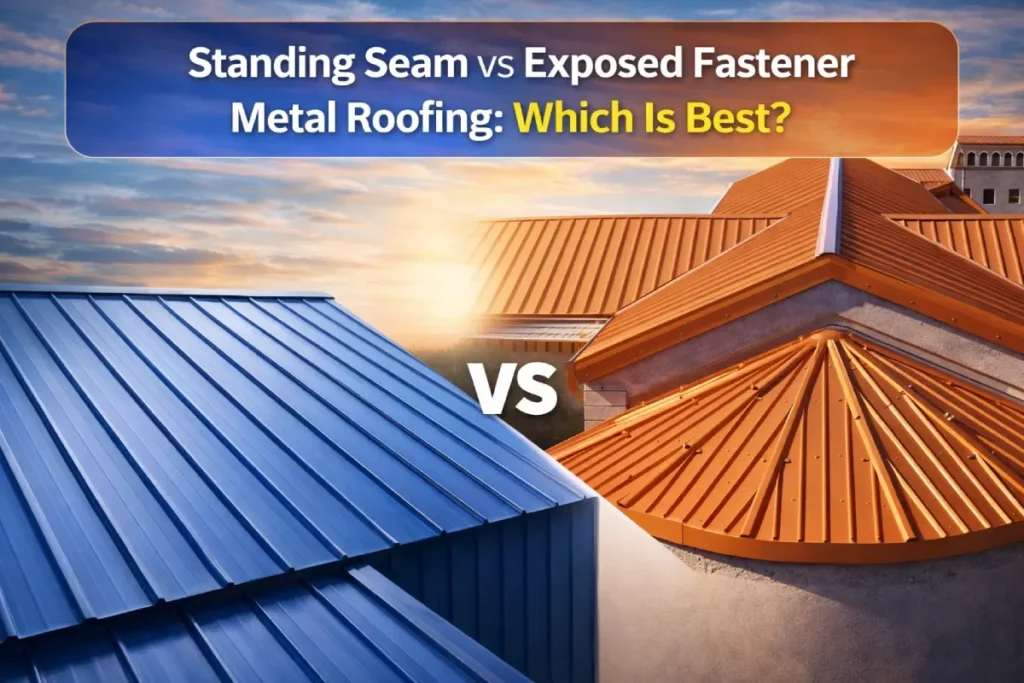
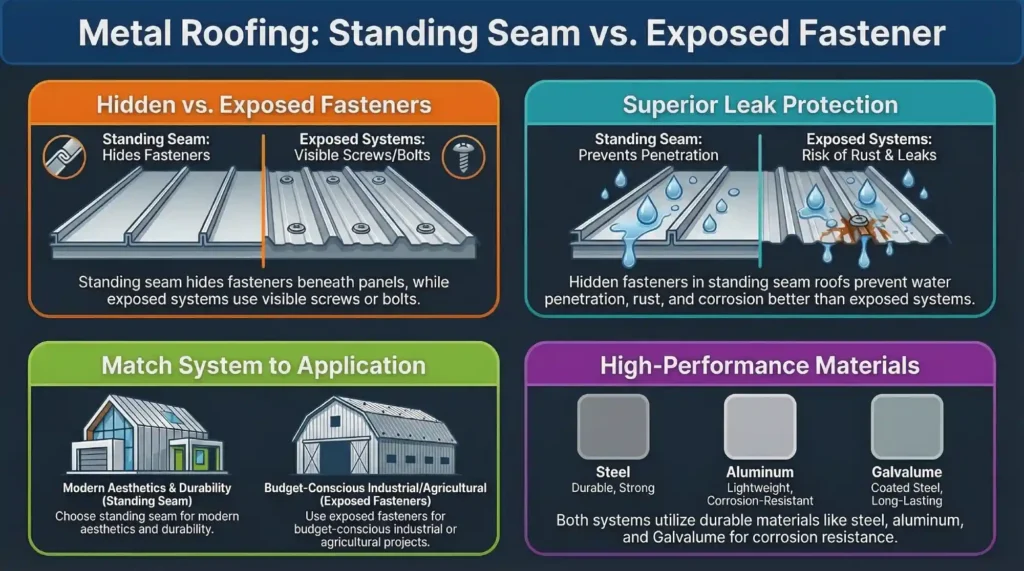
A standing seam metal roof is one of the most popular choices for residential, commercial, and industrial buildings. It features long vertical panels that interlock with each other at raised seams, creating a clean, modern look. The fasteners used in standing seam roofs are hidden beneath the panels, which prevents them from exposure to the elements. This design offers enhanced protection against leaks, rust, and corrosion.
How It Works
The seams in a standing seam roof are designed to “stand up” above the roof surface, making the fasteners hidden from view. The panels are usually snapped or mechanically locked together. This creates a water-tight seal that is ideal for both low-slope and steep-slope roofs. The hidden fasteners reduce the risk of water penetration, making the roof more durable and weather-resistant.
Materials Used
Standing seam metal roofs are often made from steel, aluminum, copper, and zinc. These materials provide excellent protection against extreme weather and corrosion. Galvalume is one of the most common materials used, offering a blend of aluminum and zinc coating to enhance corrosion resistance.
What Is an Exposed Fastener Metal Roof?
An exposed fastener metal roof uses visible fasteners to attach metal panels to the roof deck. These fasteners, typically screws or bolts, are visible on the surface of the panels. While this system is widely used, it is more prone to wear and tear due to the exposure of fasteners to the elements. Over time, these fasteners can become loose or corroded, potentially leading to leaks.
How It Works
Exposed fastener metal roofs consist of overlapping panels that are fastened to the roof structure with screws or bolts. These fasteners are directly visible on the surface, which allows for quicker installation but can lead to higher maintenance costs. The system is often used in agricultural, industrial, and low-budget residential applications where aesthetics are not the primary concern.
Materials Used
Like standing seam roofs, exposed fastener systems are typically made from steel or aluminum. However, because the fasteners are exposed, there’s a greater risk of corrosion and rust, especially in areas with high humidity or frequent rain. To mitigate this, manufacturers use Galvalume coatings or other rust-resistant materials.
Advantages of Standing Seam Metal Roofing
Standing seam metal roofing offers several significant benefits that make it a top choice for those looking for durability, energy efficiency, and a modern aesthetic. Let’s explore these advantages in detail.
Aesthetic Appeal
One of the standout features of standing seam metal roofs is their sleek, clean lines. The hidden fasteners and smooth, uninterrupted surface create an elegant, contemporary look that works well for both residential and commercial properties. While most owners eventually have to choose between roof replacement vs repair, a standing seam system significantly delays that need by protecting fasteners from the elements.
Ideal for:
- High-end residential homes
- Commercial buildings
- Agricultural buildings looking for a modern touch
Longer Lifespan
Standing seam roofs are built to last. With proper installation and maintenance, a standing seam roof can last anywhere from 40 to 70 years or even longer. This is significantly longer than most other roofing materials. The hidden fasteners and continuous seams reduce the risk of wear and tear, ensuring your roof remains in top condition for decades.
Advantages:
- Resistant to rust and corrosion due to hidden fasteners.
- Withstands harsh weather conditions such as high winds, heavy rain, and snow.
- Can endure extreme temperature fluctuations without significant wear.
Low Maintenance
One of the most appealing aspects of standing seam roofing is its minimal maintenance needs. Because the fasteners are hidden, there is less chance of them loosening or rusting over time. This makes it a highly cost-effective solution. If you are currently dealing with minor issues on an older roof, our covenant roofers team can assist with professional roof repairs to extend its life until you are ready for a full upgrade.
Maintenance Tips:
- Clean the roof annually to remove debris, leaves, and dirt.
- Inspect the seams periodically for signs of wear, although these roofs are low-maintenance.
Energy Efficiency
Standing seam metal roofs are excellent at reflecting solar heat, which can help reduce cooling costs in the summer months. Many standing seam roofs come with reflective coatings that contribute to energy savings. These roofs can be designed with Energy Star certified coatings that increase energy efficiency by reducing the amount of heat absorbed by the building. This makes them a great choice for homeowners and business owners looking to reduce their energy bills and environmental footprint.
Benefits:
- Reflects heat to keep indoor spaces cooler.
- Ideal for homes and buildings in sunny climates like Tennessee.
Advantages of Exposed Fastener Metal Roofing
Exposed fastener metal roofs are a popular choice for budget-conscious individuals or those seeking a quicker, easier installation. While they may not offer the same longevity as standing seam roofs, they still have plenty of advantages, especially for specific applications.
Affordability
One of the biggest advantages of exposed fastener metal roofs is their lower upfront cost. They are faster to install, which helps reduce labor costs. This is often the preferred choice for those who need a roof replacement on a strict budget or for agricultural buildings like barns. For those looking to save on initial expenses without sacrificing the benefits of a metal roof, exposed fasteners are an excellent option.
Ideal for:
- Budget-conscious homeowners
- Agricultural buildings like barns or storage units
- Industrial buildings with limited aesthetic requirements
Ease of Installation
Exposed fastener roofs are easier and faster to install than standing seam systems, which helps reduce labor costs. The panels are attached to the roof deck using visible fasteners, making it a straightforward installation process that doesn’t require specialized tools or skills. This makes it an ideal choice for DIY projects or contractors who need to complete a roof installation quickly.
Installation Time:
- Typically takes less time than standing seam roofs.
- Ideal for buildings with tight deadlines.
Flexibility in Repairs and Replacement
Another advantage of exposed fastener systems is the ability to easily replace or repair individual panels. Since the fasteners are visible, they can be quickly accessed, making repairs more manageable and cost-effective. If a panel becomes damaged or if fasteners start to loosen, it’s a straightforward process to replace the affected section without needing to redo the entire roof.
Key Benefits:
- Easier and less costly to replace individual panels.
- Quick repairs reduce the overall cost of maintenance.
Disadvantages of Standing Seam Roofing Systems
While standing seam roofing systems have numerous advantages, they also come with some downsides. It’s important to be aware of these drawbacks to ensure the roof is the right choice for your building and budget.
Higher Initial Cost
The primary disadvantage of standing seam roofing is its higher upfront cost. Standing seam roofs require more complex installation and higher-quality materials, which can result in a significant initial investment. However, this cost is often offset by the roof’s long lifespan and low maintenance needs, which save money in the long run.
Factors to Consider:
- Initial cost may not be suitable for smaller budgets.
- Ideal for long-term investments, especially in climates with severe weather.
Installation Complexity
Due to the complexity of the design, standing seam metal roofs require skilled professionals for installation. This can add to the overall cost and may increase the time required for the project. While the end result is a high-quality roof, the need for experienced contractors may limit the pool of available installers in some areas.
Challenges:
- Requires specialized skills for proper installation.
- May not be suitable for DIY installations.
Disadvantages of Exposed Fastener Roofing Systems
While exposed fastener metal roofing systems are affordable and easy to install, they do come with several disadvantages that may make them less suitable for certain buildings or climates.
Higher Maintenance Needs
Exposed fastener roofs require more maintenance than standing seam roofs. Because the fasteners are exposed to the elements, they are prone to rust and loosening over time. This can lead to water infiltration, which may cause leaks or other damage if not addressed regularly. Maintenance can involve inspecting fasteners, replacing rusted screws, and ensuring that seals remain intact.
Key Maintenance Points:
- Regular inspection of fasteners and seals is essential.
- Increased risk of leaks and rusting due to visible fasteners.
Shorter Lifespan
Exposed fastener systems generally have a shorter lifespan compared to standing seam roofs. While they can last 20 to 40 years with proper care, they don’t offer the same level of durability as standing seam systems. Over time, the exposed fasteners can deteriorate, leading to costly repairs or the need for a full roof replacement sooner than expected.
Considerations:
- Not ideal for long-term use in areas with harsh weather conditions.
- Requires more frequent roof replacements.
Aesthetic Limitations
Exposed fastener roofs often have a more industrial or utilitarian look, which may not suit all properties. While this can be perfectly fine for agricultural or industrial buildings, it might not be the best choice for homeowners who are focused on curb appeal. Additionally, the visible fasteners can detract from the clean, modern appearance that many residential and commercial owners desire.
Aesthetic Challenges:
- Industrial look might not appeal to all homeowners.
- Visible fasteners are less visually appealing than standing seam designs.
Quick Comparison: Standing Seam vs. Exposed Fastener Metal Roof
| Feature | Standing Seam Metal Roof | Exposed Fastener Metal Roof |
| Cost | Higher initial cost | More affordable upfront |
| Installation | Complex, requires skilled professionals | Easy to install, DIY-friendly |
| Durability | Long lifespan (40-70 years) | Shorter lifespan (20-40 years) |
| Maintenance | Low maintenance, minimal repairs | Higher maintenance, more frequent repairs |
| Aesthetic Appeal | Sleek, modern look | More industrial look, less visually appealing |
| Weather Resistance | Excellent resistance to leaks, rust, and corrosion | More prone to rusting and leaks over time |
| Energy Efficiency | High energy efficiency, reflective coatings available | Moderate, depending on materials used |
| Ideal Use | Residential homes, commercial buildings | Agricultural, industrial buildings |
Cost Breakdown: Standing Seam vs. Exposed Fastener Roofs
When deciding between standing seam and exposed fastener metal roofs, the cost is often one of the most important factors to consider. Here’s a breakdown of the typical costs associated with each roofing system:
| Cost Category | Standing Seam | Exposed Fastener |
| Material Costs | $4.00 to $7.00 per sq. ft. | $2.50 to $5.00 per sq. ft. |
| Labor Costs | High due to complexity | Low due to ease of installation |
| Installation Time | 2-3 days per 1,000 sq. ft. | 1-2 days per 1,000 sq. ft. |
| Maintenance Costs | Low | High (more frequent repairs) |
| Lifespan | 40-70 years | 20-40 years |
Before you sign any contracts, make sure you have a list of questions to ask before you hire a roofer to ensure the installation meets local standards. If your current roof has been hit by a recent event, we can provide specialized storm damage restoration to secure your property quickly.
Making the Final Decision: Which Roof Is Right for You?
When choosing between standing seam and exposed fastener metal roofing systems, it’s important to weigh the benefits and drawbacks of each option based on your building’s needs, your budget, and the climate of Greeneville, TN.
- Standing Seam Metal Roof: Best for residential homes, commercial buildings, or structures where long-term durability, low maintenance, and aesthetic appeal are priorities. Though it has a higher initial cost, its extended lifespan, energy efficiency, and minimal upkeep make it a solid investment in the long run.
- Exposed Fastener Metal Roof: Ideal for agricultural buildings, warehouses, or projects on a tighter budget. While the installation costs are lower, the system requires more maintenance and has a shorter lifespan compared to standing seam roofs.
If you’re unsure which system is best for your project, we encourage you to contact us at Covenant Roofing. Our team of experienced professionals can guide you through the selection process and provide you with an estimate that fits your needs and budget.
Frequently Asked Questions (FAQs)
1. What is the difference between standing seam and exposed fastener metal roofs?
Standing seam roofs feature hidden fasteners with interlocking panels, providing a sleek, modern appearance and superior durability. Exposed fastener roofs have visible screws or bolts securing the panels, making them easier and cheaper to install but requiring more maintenance over time due to the risk of rusting and loosening fasteners.
2. How long does a standing seam metal roof last?
A standing seam metal roof typically lasts between 40 to 70 years with proper maintenance. Its hidden fasteners and durable materials make it resistant to corrosion and damage, extending its lifespan significantly compared to other roofing systems.
3. Is an exposed fastener metal roof cheaper than a standing seam roof?
Yes, exposed fastener metal roofs are generally more affordable upfront. They have a simpler design and are quicker to install, which makes them a more budget-friendly option. However, they may require more frequent maintenance and have a shorter lifespan compared to standing seam roofs.
4. Can I install a standing seam roof myself?
Installing a standing seam roof is complex and requires specialized skills and tools. It is recommended to hire a professional roofer with experience in standing seam installations to ensure proper installation, as incorrect installation can lead to leaks and other issues.
5. How do I maintain an exposed fastener metal roof?
Exposed fastener roofs require regular inspections to check for loose or rusted fasteners. You should also inspect the seals around the fasteners and replace them if necessary. Cleaning the roof periodically to remove debris and applying rust inhibitors will help extend the lifespan of your exposed fastener roof.