A roof problem rarely begins with a dramatic collapse or a steady stream of water pouring into your living room. In most Greeneville homes, roof damage starts quietly, a small flashing gap near a chimney, aging underlayment at the eaves, or attic heat buildup that weakens shingles year after year. By the time a stain appears on the ceiling, moisture may already be affecting the decking underneath. Understanding the anatomy of a roof helps homeowners catch warning signs early, make better repair decisions, and protect their property from avoidable damage.
In a climate like Greeneville, TN, where heavy rain, windstorms, humidity, and seasonal temperature swings are common, every layer of the roofing system plays a critical role. If you ever need a professional evaluation, Covenant Roofing & Restoration provides detailed roof inspections and repair services throughout the area.
Table of Contents
How a Roof System Is Built (From Structure to Surface)
A residential roof is constructed in a layered sequence. Each layer has a distinct job, and long-term durability depends on how well those layers function together. Instead of viewing shingles as the roof itself, it is more accurate to see them as the final protective shield over a structured system beneath.
The Performance Layer Sequence
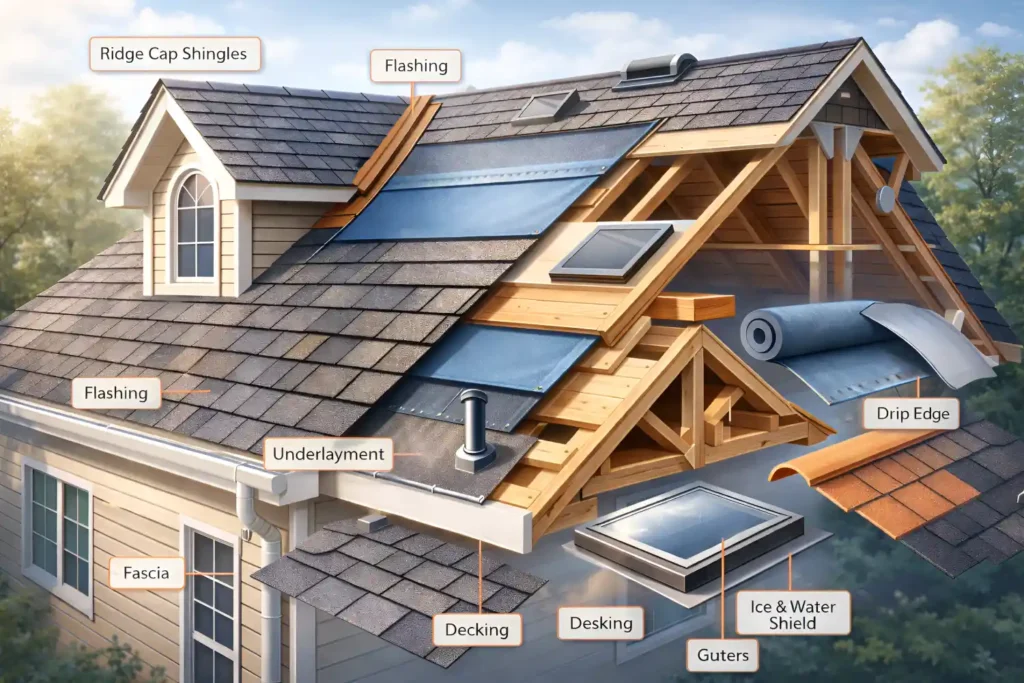
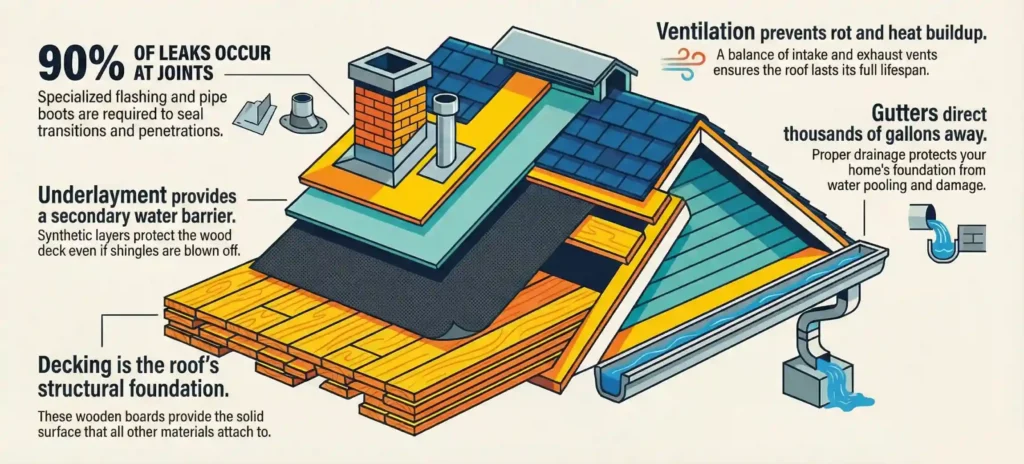
Every roof follows a logical construction order that begins with structural framing and ends with surface protection and ventilation. The framing supports the load of the roof. Decking provides a solid base. Underlayment and water barriers act as moisture defense layers. Flashing seals vulnerable joints. The outer material sheds rain and resists wind. Ventilation protects the attic from trapped heat and moisture.
If one layer fails, such as underlayment tearing during a windstorm, water can move downward and damage the decking. If ventilation fails, heat buildup can shorten shingle lifespan. This layered design means that problems rarely stay isolated.
Structural Core: What Supports the Roof
The structural framework is the backbone of the entire roofing system. In Greeneville, roofs must withstand heavy rainfall, occasional snow accumulation, and strong wind gusts during seasonal storms. Ensuring the structural integrity of your rafters and decking is the first step in our complete roof replacement services, providing a foundation that lasts for decades.
Rafters and Trusses
Rafters are individual sloped boards installed from the ridge to the exterior walls. They are often found in older homes and allow more flexibility for attic renovations. Trusses, on the other hand, are prefabricated triangular systems engineered for strength and efficiency. Most newer homes in Greeneville rely on trusses because they distribute weight evenly and provide consistent structural performance.
Trusses are designed to meet specific load requirements based on local building codes. Their engineered design helps resist wind uplift and reduces the likelihood of sagging over time. Rafters remain strong when properly constructed but require precise installation.
Ceiling Joists and Collar Ties
Ceiling joists run horizontally across the tops of walls and support the ceiling drywall below. Collar ties connect opposing rafters higher up near the ridge. These components stabilize the roof structure and prevent the exterior walls from spreading outward under load pressure.
When these elements weaken, homeowners may notice interior cracks in drywall, uneven rooflines, or doors that no longer close properly. These are structural warning signs that deserve professional evaluation.
Roof Pitch and Load Design
Roof pitch refers to the steepness of the roof. In East Tennessee, moderate to steep roof slopes are common because they allow water to drain efficiently. A steeper pitch reduces the chance of standing water, which helps shingles last longer. Lower-pitched roofs require more advanced moisture protection because water moves more slowly across the surface. Roof pitch also influences material selection. For example, certain metal roofing systems perform better on steeper slopes, while low-slope areas may require specialized membranes.
Roof Decking (Sheathing): The Structural Base Layer
Roof decking, also known as sheathing, is installed directly over the rafters or trusses. It forms a continuous flat surface that supports all materials above it. Most homes in Greeneville use plywood or OSB (oriented strand board) panels for decking.
Decking spreads weight evenly across the framing system and holds the nails or fasteners that secure shingles and underlayment. If moisture reaches this layer and causes rot, the entire roofing system becomes unstable.
Signs of decking damage often appear subtly. Soft areas when walking on the roof, visible sagging, or nail heads pushing upward through shingles can indicate moisture deterioration. During professional inspections, contractors check attic spaces for dark staining, mold growth, or warped panels that signal hidden damage.
Moisture Protection System: Defending Against Leaks
Water intrusion is the most common cause of roof failure. For that reason, roofing systems rely on multiple protective barriers beneath the surface material.
Underlayment as the Secondary Barrier
Underlayment is installed directly over the decking before shingles or metal panels are applied. Its purpose is to provide backup water resistance if wind-driven rain slips beneath the outer covering.
Traditional felt underlayment has been used for decades and remains cost-effective. Synthetic underlayment has become increasingly popular because it offers stronger tear resistance and improved durability during severe weather. In Greeneville’s storm-prone climate, synthetic products often provide longer-lasting performance.
Ice and Water Barrier in Critical Areas
Ice and water barrier is a self-adhering membrane installed in high-risk zones such as eaves, valleys, and around penetrations. Although Greeneville does not experience extreme northern ice conditions, freeze-thaw cycles still occur during winter months. Water that backs up at the eaves can seep beneath shingles if no barrier is present.
This membrane seals tightly around fasteners, helping prevent moisture from reaching the decking underneath. It is especially important in areas where water naturally collects or flows heavily.
Flashing: The Most Common Leak Source
Flashing consists of thin metal pieces installed at joints, intersections, and penetrations. It directs water away from seams where roofing materials meet walls, chimneys, or skylights. Because flashing sits at transition points, it is one of the most frequent sources of leaks. Because 90% of leaks occur at joints, our expert roof repair team focuses on the precise installation of flashing and pipe boots to stop water before it enters your home. Poor installation, corrosion, or separation from surrounding materials can allow water to enter. Step flashing is used along vertical walls. Valley flashing handles high water flow between slopes. Chimney flashing seals the base of masonry structures.
In many roof repair cases across Greeneville, flashing failure is identified as the primary issue rather than shingle damage.
Exterior Roofing Material: The Visible Protection Layer
The outer layer of a roof is what most homeowners notice first. However, its effectiveness depends heavily on the layers beneath it.
Asphalt Shingles
Asphalt shingles remain the most widely used roofing material in Greeneville because they balance cost, durability, and performance. Three-tab shingles provide a flat, uniform appearance and are generally more affordable. Architectural shingles feature a layered design that offers improved wind resistance and longer lifespan.
With proper ventilation and installation, architectural shingles typically last between twenty and thirty years in Tennessee’s climate.
Metal Roofing Systems
Metal roofing has gained popularity in recent years for its longevity and resistance to wind damage. Standing seam metal panels provide strong weather protection and can last several decades. Metal systems must be installed with proper underlayment and fastening methods to allow for natural expansion and contraction during temperature shifts. When installed correctly, they perform well during heavy rain and strong wind events common in the region.
Roofing materials are tested for impact resistance, wind uplift capacity, and fire safety. Higher-rated materials may provide better long-term value, particularly in storm-prone areas. Understanding these ratings helps homeowners make informed decisions when replacing an aging roof.
Roof Geometry: How Shape Influences Performance
The design and shape of a roof affect water drainage patterns and stress points.
Ridge
The ridge is the highest horizontal line where two roof slopes meet. It often houses ridge ventilation, allowing warm attic air to escape. A properly installed ridge cap seals this area while maintaining airflow
Hips and Valleys
Hips form where two roof planes meet at an outward angle, while valleys form inward angles that channel water down the roof. Valleys handle a large volume of runoff and are considered high-risk leak zones. Proper flashing and underlayment are critical in these areas.
Gables, Rakes, and Eaves
Gables are the triangular wall sections at the end of a pitched roof. Rakes are the sloped edges along those gables. Eaves are the horizontal lower edges that extend past exterior walls. These edges must be protected with drip edge and proper sealing to prevent water from damaging fascia boards and siding. In Greeneville, clogged gutters or missing drip edge can lead to wood rot near the eaves.
Roof Ventilation System: Airflow That Protects the Entire Structure
Attic ventilation plays a direct role in how long your roofing materials last. Without proper airflow, heat and moisture become trapped beneath the decking. Over time, this weakens shingles, warps wood, and increases the risk of mold growth.
Intake Ventilation at the Soffits
Soffit vents, installed beneath the eaves, allow cooler outside air to enter the attic space. This intake air creates circulation that pushes warm, moist air upward. In Greeneville’s humid summers, this airflow helps prevent excessive attic heat buildup, which can otherwise bake shingles from underneath and shorten their lifespan. Blocked soffit vents are a common issue. Insulation installed too tightly against the attic floor can restrict airflow. During inspections, contractors check that intake vents remain clear and functional.
Exhaust Ventilation at the Ridge
Ridge vents are installed along the peak of the roof and allow rising warm air to escape naturally. Because hot air rises, ridge vents create a continuous exhaust system when paired correctly with soffit intake vents. Balanced ventilation works like this: cooler air enters at the soffits, travels upward through the attic, and exits through the ridge. This steady movement reduces condensation during winter and lowers attic temperatures in summer. Without proper exhaust, moisture can collect on the underside of decking, leading to rot or mold.
In many Greeneville homes, ventilation upgrades can extend shingle life by several years.
Why Ventilation Failure Causes Premature Roof Damage
Improper ventilation can lead to several problems. Shingles may curl or blister due to trapped heat. Ice dams can form during colder months when attic heat melts snow unevenly. Moisture buildup can weaken decking and reduce structural strength. Homeowners often overlook ventilation because it is not visible from the ground. However, during a professional inspection, airflow balance is a key evaluation point.
Edge Protection and Drainage: Managing Water at the Perimeter
While ventilation protects from inside moisture, the roof’s edges manage external water runoff. The perimeter of a roof experiences constant exposure to rain and debris. Once the work is done, you should walk your property to ensure the drainage is clear and the grounds are clean; what to check after roof installation to help you verify the job was done right.
Eaves and Overhang Protection
Eaves extend beyond exterior walls and help direct water away from siding and foundations. Without adequate protection at this edge, water can seep behind fascia boards and cause wood rot. Drip edge metal is installed along the eaves and rakes to guide water into the gutter system instead of allowing it to run behind the structure. Missing or improperly installed drip edge is a frequent cause of hidden damage along roof edges.
Fascia and Soffit Integrity
Fascia boards run vertically along the roof edge and support gutters. Soffits sit beneath the eaves and often contain ventilation openings. These components are especially vulnerable when gutters clog and overflow. In Greeneville, fallen leaves and seasonal debris can block gutters quickly. Overflowing water may soak fascia boards repeatedly, leading to deterioration. Regular cleaning and inspection prevent this type of damage.
Gutters and Downspouts
Gutters collect rainwater and channel it away from the home’s foundation. Downspouts carry water safely to ground level and away from structural footings. When gutters sag, leak at seams, or become clogged, water can pool along the roofline. This increases the risk of eave damage and basement moisture problems. A properly functioning drainage system protects both the roof and the home’s foundation.
Roof Penetrations: Small Openings That Create Big Problems
Any object that passes through the roof surface creates a potential leak point. Even well-installed penetrations require periodic inspection because sealants and flashing materials age over time.
Plumbing Vent Stacks
Plumbing vents allow air to regulate pressure in drainage pipes. These vents extend through the roof and are sealed with specialized flashing boots. Over time, rubber boots can crack due to UV exposure. When this happens, water may enter around the pipe.
Chimneys and Skylights
Chimneys require layered flashing systems to seal the intersection between masonry and roofing materials. Skylights must be sealed tightly at all edges to prevent leaks during heavy rain. Because these areas involve material transitions, they are among the most common sources of water intrusion. In Greeneville, strong wind-driven rain can exploit even small flashing gaps.
Solar Panels and Mounted Equipment
Modern installations such as solar panels or satellite mounts require careful sealing at attachment points. Improper installation can create small penetrations that allow water to enter the decking. Any roof modification should include professional sealing to maintain warranty coverage and structural protection.
Climate Impact in Greeneville, TN: Why Local Conditions Matter
Roofs in East Tennessee face specific environmental challenges. Understanding these helps homeowners recognize why certain components require closer monitoring.
- Wind and Storm Damage: Seasonal storms can lift shingles or loosen flashing. Even if shingles appear intact from the ground, wind uplift can weaken nail fasteners beneath the surface. After major storms, professional inspections help identify hidden damage before leaks develop.
- Heavy Rainfall and Drainage Stress: Greeneville experiences periods of intense rainfall. Valleys and drainage systems must handle high water flow without backing up. Improperly sealed valleys are a frequent leak source during heavy storms.
- Humidity and Heat Exposure: Summer humidity increases attic moisture levels if ventilation is insufficient. High heat also accelerates shingle aging. Balanced ventilation and proper insulation reduce these risks.
Most Common Roof Failure Points Homeowners Should Watch For
Certain areas consistently show early signs of trouble. Monitoring these locations can prevent larger repair bills. Valleys are prone to leaks because they channel concentrated runoff. Flashing joints near chimneys and walls are common failure zones due to material movement. Eaves may deteriorate when gutters overflow. Vent penetrations can weaken as rubber boots age. Decking may sag if moisture enters from above or below. Homeowners who notice water stains in attic spaces, loose shingles after storms, or sagging rooflines should schedule an inspection promptly.
How Long Each Roof Component Typically Lasts
Different parts of a roofing system age at different rates. Shingles may show surface wear long before flashing fails, while underlayment may deteriorate quietly beneath intact materials. The table below provides general lifespan ranges for common residential roofing components in East Tennessee conditions.
| Roof Component | Average Lifespan | Common Signs of Failure |
| Architectural Asphalt Shingles | 20–30 years | Curling edges, granule loss, missing tabs |
| 3-Tab Shingles | 15–25 years | Cracking, wind lifting |
| Metal Roofing | 40–70 years | Rust at seams, loose fasteners |
| Flashing (metal) | 20+ years | Separation, corrosion, sealant cracks |
| Underlayment | 15–25 years | Moisture intrusion beneath shingles |
| Ice & Water Barrier | 20+ years | Rarely visible unless roof removed |
| Roof Decking | 30+ years (if dry) | Soft spots, sagging, attic staining |
| Gutters & Downspouts | 20 years | Sagging, seam leaks, overflow |
These ranges depend heavily on ventilation balance, storm exposure, and installation quality. A well-installed roof with proper airflow can exceed expected lifespan. Poor ventilation can shorten it significantly.
Warning Signs Your Roof Needs Professional Attention
Roof systems rarely fail without visible clues. The key is knowing what those signs mean.
Interior Indicators of Roof Problems
Water stains on ceilings or upper walls often point to flashing or valley issues. Peeling paint near rooflines may signal slow moisture intrusion. If attic insulation feels damp or you see mold growth on the underside of decking, ventilation may be inadequate. A sudden rise in energy bills during summer months can also indicate a ventilation imbalance. Excess attic heat forces cooling systems to work harder.
Exterior Warning Signs
From ground level, look for uneven rooflines or visible sagging. Missing or lifted shingles after storms require prompt inspection. Granule buildup in gutters indicates shingle surface breakdown. Rusted flashing near chimneys or skylights is another common issue. Clogged gutters that repeatedly overflow can damage eaves and fascia boards. Over time, this weakens structural edges and increases the risk of interior leaks.
Preventative Maintenance That Extends Roof Life
Routine maintenance is far less expensive than emergency repair. In Greeneville’s climate, simple annual checks can prevent widespread damage. Seasonal gutter cleaning prevents water backup at the eaves. Inspecting flashing joints for cracked sealant reduces leak risk. Checking attic ventilation openings ensures airflow remains unobstructed. After major storms, visual inspection from the ground can identify displaced shingles or debris impact.
Professional inspections every few years provide a deeper evaluation. Contractors examine decking integrity, check nail fastening patterns, review ventilation balance, and document storm-related damage that homeowners may not see.
When Roof Repair Is Enough and When Replacement Is Necessary
Not every issue requires a full roof replacement. Isolated flashing failure, limited shingle damage, or minor ventilation imbalance can often be repaired effectively.
However, widespread granule loss, repeated leak history, sagging decking, or shingles nearing the end of their service life may justify replacement. If a roof is over twenty years old and has experienced multiple repairs, investing in a new system may be more cost-effective long term.
Professional assessment determines whether structural components remain sound. Replacing shingles without addressing damaged decking or poor ventilation will not solve underlying issues.
The Importance of Professional Roof Inspections in Greeneville
Storm systems moving through East Tennessee can cause damage that is not immediately visible. Wind uplift may loosen fasteners beneath intact shingles. Hail impact can bruise shingle layers without obvious cracks.
A professional inspection includes evaluation of:
- Structural framing stability
- Decking moisture levels
- Flashing condition
- Valley integrity
- Ventilation balance
- Drainage performance
For homeowners in Greeneville, working with a local contractor familiar with regional weather patterns ensures accurate diagnosis. Covenant Roofing & Restoration provides comprehensive roof inspections, storm damage assessments, and repair or replacement services tailored to local conditions.
Choosing the Right Roofing Contractor
Roof anatomy knowledge helps homeowners ask better questions. When evaluating a contractor, consider whether they inspect the entire system or focus only on surface materials. A qualified roofer should assess ventilation, flashing, decking, and drainage, not just shingles.
Clear documentation, detailed estimates, and an explanation of findings indicate professional standards. Homeowners should also confirm proper licensing and insurance coverage. Local expertise matters. A contractor familiar with Greeneville’s rainfall patterns, wind exposure, and building codes can recommend materials and installation methods suited to the area.
Final Takeaway: Why Roof Anatomy Knowledge Protects Your Investment
A roof is a layered protection system that shields your home from water, wind, heat, and structural stress. Each component from rafters and decking to flashing and ventilation, plays a specific role. When one element weakens, the rest of the system can be affected. By understanding how your roof is built, you can recognize warning signs early, schedule inspections at the right time, and avoid preventable damage.
Regular maintenance, balanced ventilation, and professional evaluation after storms are practical steps that extend roof life. For homeowners in Greeneville, staying proactive makes a significant difference. If you suspect damage or want peace of mind before the next storm season, a professional inspection ensures your roofing system continues performing as intended.