Last Updated: November 4, 2026
Quick Summary
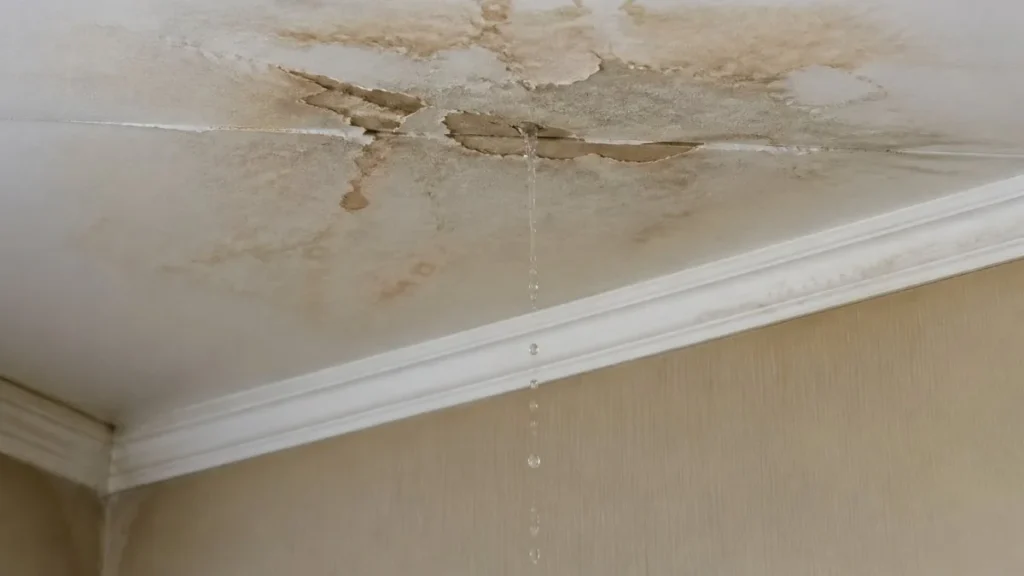
Roof leak damage starts when water gets past your roof’s outer layers and soaks the structure underneath, causing stained ceilings, rotting decking, and soggy insulation. The cause almost always traces back to one of eight failure points, such as damaged shingles, clogged gutters, flashing failures, or cracked pipe boots.
- Water can run along rafters and decking for 5 to 15 feet before it shows on your ceiling.
- A stain that grows in dry weather points to plumbing, not the roof.
- Wind-driven rain forces water sideways into joints, flashing, and worn seals during heavy storms.
- Poke a small hole in a bulging ceiling to release trapped water safely.
- Call a licensed roofing contractor first, not a general handyman, when your roof leaks.
Table of Contents
- What Causes Roof Leak Damage: The 8 Failure Points That Matter
- How to Tell Where a Roof Leak Is Coming From
- Why Roof Leaks in Heavy Rain Are a Different Problem
- How to Fix a Leaking Roof From the Inside (Temporary Steps)
- Roof Leak Repair Cost: What Drives the Price
- My Roof Is Leaking: Who Do I Call First?
- Schedule an Inspection Before the Next Storm
- Frequently Asked Questions
What Causes Roof Leak Damage: The 8 Failure Points That Matter
Roof leak damage starts when water gets past your roof’s outer layers and soaks the structure underneath. A small gap can quickly become stained ceilings, rotting decking, and soggy insulation.
Water is patient. A crack the width of a credit card lets in enough rainwater to ruin drywall over a season. The real question isn’t whether your roof will leak, but where it will fail first.
1. Damaged, Missing, or Aging Shingles
Shingles are your roof’s first shield against rain. When they crack, curl, or blow off, water gets a direct path to the decking. Older shingles lose granules and turn brittle, and missing shingles after a windstorm are a clear warning sign.
Watch for:
- Shingles that look curled or lifted at the edges
- Bald patches where granules have worn away
- Nails backing out or rusted roofing nails
2. Clogged or Damaged Gutters
Gutters move rainwater away from your roof and foundation. When they clog with leaves, water backs up under the shingles and rots the fascia board. Sagging or loose gutters do the same damage from the outside in.
3. Flashing Failures at Joints and Penetrations
Flashing is the metal strip that seals roof joints, valleys, and edges where your roof meets walls or chimneys. Flashing failure is one of the most common hidden causes of water intrusion: the metal lifts, corrodes, or was installed wrong, and water slips behind it.
Drip edge problems fall in this same category. A bad drip edge lets water wick back under the shingles instead of shedding off the roof.
4. Chimney, Vent, and Pipe Boot Failures
Every roof penetration is a weak spot. Chimneys, roof vents, and pipe boots all create openings that must be sealed tight. Pipe boots, the rubber collars around plumbing pipes, crack with sun exposure; a cracked boot is a slow, steady leak you won’t notice until the ceiling stains.
Chimney leaks often come from failed step flashing or a worn seal at the base.
5. Skylight Leaks and Poor Installation
Skylights leak when the seal around the frame breaks down or the unit was installed without proper flashing. A skylight set into the roof without correct layering invites water in at every storm.
If you see moisture around a skylight frame, don’t wait. The wood framing underneath absorbs water fast.
How to Tell Where a Roof Leak Is Coming From
Finding the source takes patience, because water rarely drips straight down. It follows rafters, decking, and insulation before it shows up on your ceiling, so the visible stain is often several feet downhill from the actual entry point. Here’s how to trace it, plus a checklist to confirm the water is really coming from the roof and not plumbing, condensation, or HVAC equipment.
Step 1: Map the indoor symptom
Note the exact spot where water appears and mark it with tape. Record when it appears: only during rain, only in cold weather, only when the HVAC runs, or constantly. Timing is a diagnostic clue. A stain that grows hours after rain stops usually means water is traveling along framing. A stain that appears only in cold weather points to an ice dam or condensation.
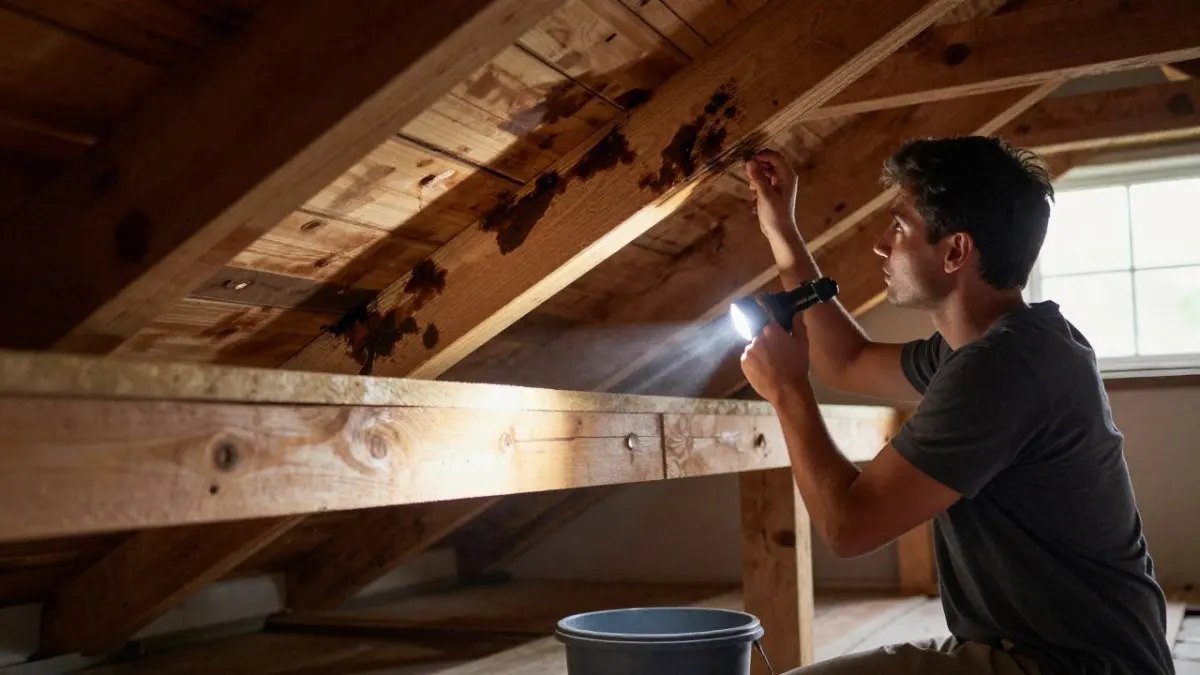
Step 2: Inspect the attic uphill from the stain
Bring a bright flashlight and look uphill and along the framing from the stain. Check for dark or damp decking, water trails on rafters, rusted nails, sagging insulation, and white chalky residue on wood (efflorescence) that signals repeated wetting and drying. Water commonly runs along the underside of a rafter or the top of a ceiling joist for 5 to 15 feet before it drops.
Step 3: Confirm the roof is the source (differential checklist)
Before you climb anything, rule out the three most common false alarms:
- Plumbing leaks. Supply and drain lines produce constant drips that do not track with rain. Look for a stain that grows overnight in dry weather, and check for a fixture above the stain.
- Condensation. Warm moist air condensing on cold roof decking or ductwork can mimic a leak. Condensation stains are usually diffuse, appear on the coldest surfaces, and worsen with shower or cooking activity. Poor attic ventilation and bath fan ducting that terminates in the attic are common culprits.
- HVAC leaks. A clogged condensate drain pan or line, or a frozen evaporator coil thawing, drips water near air handlers and ceiling registers. The stain appears when the system runs, not when it rains.
If the stain tracks with rain, appears uphill of a penetration, or shows water trails on framing, the roof is the likely source. If it does not, call an HVAC or plumbing professional before a roofer.
Step 4: Inspect the roof surface above the suspected area
Check above the suspected area for missing shingles, cracked flashing, lifted step flashing at walls and chimneys, cracked pipe boots, and failed sealant at skylights. On asphalt shingles, look for granule loss, curled or lifted tabs, and exposed or rusted nails. On metal roofs, check fastener grommets and panel laps. On tile roofs, look for cracked or slipped tiles and deteriorated underlayment at valleys and edges.
Step 5: Test with a hose (safely, from the ground or attic)
Have someone spray a small area with a garden hose while you watch inside, working uphill section by section.
Schedule An Appointment Today →
Watch out: never climb onto a wet roof. Wet shingles, metal, and tile are slip hazards, and falls cause serious injury. Stay on the ground and work from the attic when you can.
One insider tip: leaks often show up far from the actual hole.
Why Roof Leaks in Heavy Rain Are a Different Problem
Roof leaks in heavy rain expose weaknesses that stay hidden in light weather. Wind-driven rain forces water sideways into joints, under flashing, and past worn seals, so a roof that stays dry in a drizzle can pour during a downpour. Light rain falls mostly vertically and sheds off the shingle field, while heavy rain arrives with wind pressure that pushes water uphill and sideways into any gap, lap, or seal that is not fully watertight.
What changes in a storm
- Wind-driven rain enters at vertical joints, wall-to-roof intersections, chimney sides, and skylight frames that face the wind. The side of the roof facing the storm takes the most water, so a leak on the windward side points to a joint or penetration, not the shingle field.
- Hydrostatic pressure at the eaves builds when gutters and downspouts cannot handle the volume. Water backs up under the bottom shingle course and rots the fascia and sheathing.
- Ponding on low-slope roofs occurs when drains and scuppers are undersized or clogged. Standing water finds seams and penetrations that stay dry in light rain.
How material and slope change the risk
- Asphalt shingle roofs are most vulnerable at valleys, step flashing, pipe boots, and any area where granules have worn away. On steep slopes, shingles shed water well until a seal fails; on low slopes, shingles rely more on underlayment, so a failed underlayment shows up first in heavy rain.
- Metal roofs leak at fastener grommets, panel laps, and end laps when screws back out or washers degrade. Wind-driven rain can push water uphill along panel seams if the lap is not sealed correctly.
- Tile roofs shed water at the tile surface, but the underlayment does the real waterproofing. Cracked or slipped tiles let water reach the underlayment, and heavy rain exposes deteriorated underlayment at valleys and edges first.
Cold-weather and regional risks
Ice dams make heavy-rain problems worse in cold months. Snow melts over warm attic areas, refreezes at the eaves, and backs water up under the shingles, rotting decking and soaking walls (Eaves Sealed in Cold Climates).
So if your roof only leaks in storms, the failure is usually at a joint, penetration, or drainage point, not the shingle field. If it leaks in cold weather only, suspect ice dams or condensation.
How to Fix a Leaking Roof From the Inside (Temporary Steps)
You can slow an active leak from inside before a pro arrives. These steps buy time and limit interior damage:
- Move furniture and electronics away from the drip
- Place a bucket under the leak and lay towels around it
- Poke a small hole in a bulging ceiling to release trapped water safely
For a fuller walkthrough, see our guide on how to temporarily fix a roof leak before it gets worse.
Roof Leak Repair Cost: What Drives the Price
Repair pricing depends on the location of the leak and the extent of damage, and it varies by job. For a deeper look, see our average cost of roof repair pricing guide. A simple pipe boot swap costs far less than a leak that rotted decking and soaked insulation. The main price drivers:
| Cost Driver | What It Means | Impact on Price |
|---|---|---|
| Leak location | Easy-to-reach vs. hidden joints | Harder spots cost more |
| Damage extent | Surface fix vs. rotted decking | Rot adds labor and materials |
| Roof material | Shingle, metal, or flat roof | Material type changes the fix |
| Access | Steep slope or tight attic | Adds time and safety gear |
| Urgency | Emergency call-out | After-hours work adds cost |
Every roof is different, so pricing is determined case by case. For current prices or a quote, contact Covenant Roofing & Restoration directly.
My Roof Is Leaking: Who Do I Call First?
Call a licensed roofing contractor first, not a general handyman. If you need roof repairs in Greeneville, TN, our team handles leaks, wind damage, and insurance-related repairs. A roofer can trace the source, check for hidden damage, and document everything your insurer needs.
Here’s the order that protects you most:
- Stop the water and protect valuables
- Call a licensed roofer for an inspection
- Photograph all damage for your insurance file
- Get the repair scoped and quoted in writing
Covenant Roofing & Restoration is a licensed Tennessee building contractor and GAF factory-certified company, and we help homeowners navigate insurance claims.
Schedule an Inspection Before the Next Storm
The best time to catch a roof leak is before it happens. A routine inspection finds worn flashing, cracked boots, and aging shingles while they’re still cheap to fix.
Our team handles storm damage repair, and we have a 4.9/5 rating from customer reviews. One customer put it simply: “It’s so hard to find honest and reliable contractors these days and Covenant Roofing & Restoration came through!”
Don’t wait for the next downpour to find your weak spot. Schedule a storm damage inspection and get ahead of the leak.
Frequently Asked Questions
How long before a roof leak causes damage?
Damage can begin within hours of water intrusion. Ceiling stains, paint bubbling, and attic mold often appear within 24 to 48 hours of an active leak. Structural rot and insulation damage take longer, typically weeks to months, but the timeline shortens in humid conditions. A small, slow leak that goes unnoticed for a season can rot decking and framing before any interior stain shows. Address any suspected roof leak damage early to limit the scope of repairs.
Does homeowners insurance cover water damage from a roof leak?
Coverage depends on the cause. Most policies cover sudden damage from a storm, wind, or hail, but exclude damage from neglected maintenance or normal wear and tear. If a roof leak repair cost stems from an aged roof or clogged gutters, the claim is often denied. Document the damage with photos, keep receipts, and ask your adjuster to explain the coverage decision in writing. A contractor experienced with insurance claims can help you build a clear case.
What is the average cost to fix a roof leak?
Roof leak repair cost varies widely based on the source, roof pitch, material, and access. A simple pipe boot or flashing repair sits at the low end, while a leak tied to a skylight, chimney, or widespread shingle failure costs more. Pricing also depends on whether the repair is a patch or part of a larger restoration. Request a written estimate after an inspection so the scope and price are clear before work starts.
Can a small roof leak cause serious damage?
Yes. A pinhole leak can saturate insulation, stain ceilings, and feed mold growth long before it drips visibly. Water follows framing and often surfaces far from the actual entry point, which makes small leaks hard to trace. Over time, moisture rots decking, rusts fasteners, and damages attic structures. Even a minor roof leak warrants a professional inspection to confirm the source and prevent hidden damage from spreading.
Your roof won’t tell you it’s failing until water is already inside. Covenant Roofing & Restoration can find the weak point first, with shingle and metal roofing expertise, insurance claim support, and clear communication from inspection to final nail. Get started with Covenant Roofing & Restoration and protect your home before the next storm rolls in.