Storms in Greeneville, TN, can be unpredictable, bringing sudden hail, strong winds, or heavy thunderstorms. After a storm, many homeowners struggle to determine whether the damage on their roof comes from hail or wind. Misidentifying the cause can lead to improper repairs, faster roof deterioration, or even denied insurance claims. Understanding the distinct signs of hail damage versus wind damage is critical to protecting your home, maintaining roof performance, and ensuring that any insurance claims are accurate. In this guide, we break down the differences between hail and wind damage, provide inspection tips, and show you when to call a professional like Covenant Roofing for a free storm damage assessment.
Why Understanding the Difference Matters
Hail damage and wind damage affect roofs in very different ways. Hail impact can cause small dents, missing granules, exposed shingle backing, or soft spots that may not be visible from the ground. Over time, these subtle signs can lead to leaks, water intrusion, and accelerated roof deterioration. Wind, on the other hand, lifts or tears shingles, damages flashing, and may create leaks immediately, especially when gusts exceed 40 mph.
Distinguishing between these roof damage types is essential for several reasons:
- Insurance Claims Accuracy: Filing a claim with the correct type of damage ensures coverage. Wind damage claims are often processed faster, while hail claims require more detailed documentation.
- Repair vs Replacement Decisions: Identifying whether damage is from hail or wind can prevent unnecessary full replacements or avoid temporary fixes that fail later.
- Home Safety and Longevity: Correctly assessing storm damage protects the attic, roof decking, and interior walls from water damage, ceiling bubbles, or insulation issues.
A proper understanding of the differences allows Greeneville homeowners to act quickly and confidently after a storm, minimizing costs and ensuring roof safety.
What Causes Hail Damage
Hail forms during thunderstorms and supercell events when strong updrafts carry raindrops into freezing layers of the atmosphere. Once these ice pellets reach your roof, the impact can cause small, circular dents in asphalt shingles, metal vents, gutters, or flashing. The severity depends on the size of the hail and the roof material:
- Thresholds: Hail measuring 1 inch or larger in diameter can damage shingles, crack tiles, and dent metal components.
- Roof Materials: Asphalt shingles may show granule loss or exposed shingle backing, while metal roofs may develop dents or dings.
- Subtle Damage: Hail often damages shingles without immediate leaks. Soft spots or bald areas may appear, increasing long-term deterioration risk.
Signs of hail damage can include:
- Small round impact marks or subtle pits on shingles
- Missing granules leaving exposed asphalt
- Soft or spongy areas when walking on shingles
- Dents on flashing, vents, and gutters
- Damage often concentrated on storm-facing sides of the roof
Hail damage can be difficult to detect without a professional inspection. Our team in Greeneville can assess your roof after a storm, document hail impact, and guide you through repair or insurance options.
What Causes Wind Damage
Wind damage occurs when storm winds exert extreme force on roofing materials, lifting or tearing shingles, flashing, and other roof components. Winds exceeding 40 mph can cause noticeable issues, but damage severity depends on multiple factors such as roof age, maintenance, and design. Older shingles dry and crack over time, making them more prone to being lifted or torn by high winds. Ridge caps, flashing edges, and roof slopes that face prevailing winds are usually the first areas affected.
Unlike hail, which causes concentrated impact points, wind exerts a directional force. It can pull loose shingles, bend flashing, or even detach gutters entirely. Falling branches or debris from surrounding trees may further damage the roof and accelerate leaks. Severe wind events, including hurricanes, nor’easters, or localized thunderstorm gusts, can remove shingles, cause horizontal creases, and expose the roof decking beneath.
Visual & Structural Signs: Hail vs Wind Damage
Identifying the type of damage on your roof is key to deciding the correct repair method. Below is a detailed comparison table to help Greeneville homeowners quickly spot the differences between hail and wind damage:
| Feature | Hail Damage | Wind Damage |
| Shingles | Small dents, missing granules, exposed shingle backing | Lifted, curling, missing, or torn shingles |
| Flashing | Dented or subtly impacted | Lifted, bent, or torn edges |
| Gutters / Downspouts | Dents, minor bending | Detached, bent, or damaged from debris impact |
| Roof Layers | Subtle pits, soft spots, granule loss | Exposed underlayment or decking due to lifted shingles |
| Roof Edges / Ridges | Usually intact | Often first affected; edges may peel or curl |
| Debris | Rarely displaced | Shingles or broken materials may be found in yard |
| Vents / Metal Components | Small circular dents | Bent or displaced metal edges |
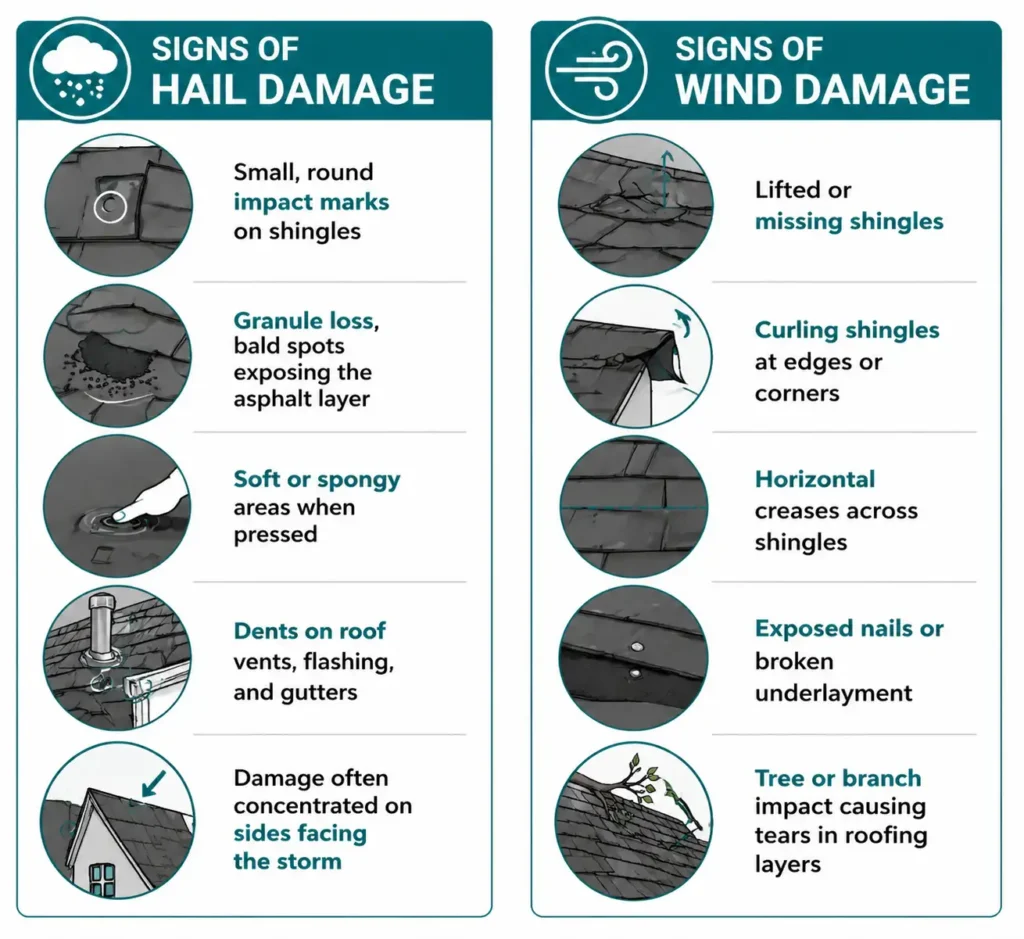
Signs of Hail Damage
Hail impacts leave distinct marks that often require close inspection:
- Small, round impact marks on shingles
- Granule loss, bald spots exposing the asphalt layer
- Soft or spongy areas when pressed
- Dents on roof vents, flashing, and gutters
- Damage often concentrated on sides facing the storm
Signs of Wind Damage
Wind damage tends to be more obvious and directional:
- Lifted or missing shingles
- Curling shingles at edges or corners
- Horizontal creases across shingles
- Exposed nails or broken underlayment
- Tree or branch impact causing tears in roofing layers
After a storm, many homeowners struggle to identify the type of damage. It’s essential to inspect your roof for post-storm damage to detect hidden hail dents, lifted shingles, and compromised flashing before they lead to leaks.
Secondary Indications Around the Property
Damage does not always appear only on the roof itself. Check surrounding areas to confirm the type of storm damage:
- Gutters and downspouts: Hail may leave dents, while wind may bend or tear them.
- Fascia and siding: Small chips or dents from hail; ripped or bent sections from wind gusts.
- Yard debris: Shingles or broken branches scattered indicate wind damage.
- Attic inspection: Water stains, ceiling bubbles, or damp insulation may reveal hidden leaks.
These secondary signs are often critical for documenting damage for insurance claims. Professional inspections are recommended to ensure no detail is missed, especially for subtle hail damage.
Combined Storm Damage
Some storms bring both hail and strong winds, which can create overlapping damage patterns. For example, a hailstorm with 1.5-inch hailstones accompanied by gusts over 50 mph may leave dents on shingles and lift roof edges simultaneously. Recognizing mixed damage is essential:
- Hail marks indicate impact areas and potential long-term deterioration.
- Wind damage shows directional lifting and tearing.
- Repair planning must address both types to prevent future leaks or structural problems.
We provide thorough inspections, detailed damage reports, and free storm damage assessments. Our team documents both hail and wind damage, helps with insurance claims, and recommends whether partial repair or full roof replacement is necessary.
When to Call a Professional Roof Inspector
After a storm, knowing when to call a professional can save money and prevent further damage. Even minor hail or wind damage can worsen over time if not addressed. Professional roof inspectors, like those at Covenant Roofing in Greeneville, TN, use specialized techniques to identify both visible and hidden issues.
Why Professional Inspection Matters
- Hidden Hail Damage: Small dents, missing granules, and soft spots can go unnoticed.
- Wind Damage Accuracy: Lifted or torn shingles may appear minor but can lead to immediate leaks.
- Insurance Documentation: Professionals provide detailed photos, notes, and reports that improve claim success.
- Safety: Walking on a damaged roof is risky; inspectors use proper equipment and safety protocols.
Inspection Tips for Homeowners:
- Check shingles, flashing, gutters, and walls for damage.
- Walk the perimeter and examine yard debris.
- Look inside the attic for water stains or damp insulation.
- Document everything with time-stamped photos before repair work.
Insurance Claims: Hail vs Wind Damage
Correctly identifying hail vs wind damage is essential for filing insurance claims. Each type has different requirements and payout considerations.
Differences in Claim Handling
- Wind Damage: Often easier to spot; insurance adjusters can quickly verify missing or lifted shingles.
- Hail Damage: Requires detailed inspection, as subtle dents or granule loss may not immediately cause leaks. Documentation is key.
How to Document Damage
- Take wide, medium, and close-up photos of all affected areas.
- Collect granules from gutters to show hail impact.
- Note any collateral damage to flashing, vents, or siding.
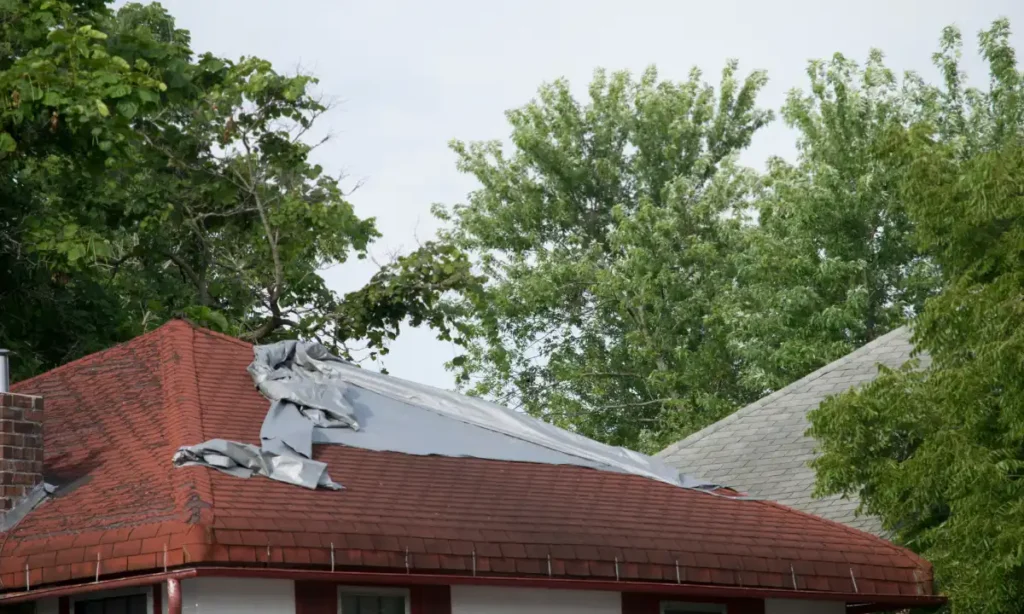
- Keep receipts for any temporary mitigation measures, such as tarping.
Common Insurance Pitfalls
- Cosmetic Damage Exclusions: Some policies do not cover purely aesthetic damage.
- Misclassification: Misidentifying wind vs hail damage may result in claim denial.
- Delayed Reporting: Immediate inspection and documentation improve claim success.
Post-Damage Checklist
After a storm, taking immediate steps helps protect your home and supports insurance claims:
- Safety First: Avoid walking on a damaged roof.
- Document Everything: Photos of shingles, gutters, vents, fascia, and surrounding debris.
- Temporary Protection: Apply tarps or protective covers to prevent water intrusion.
- Call a Licensed Contractor: Schedule a professional inspection with experts like Covenant Roofing & Restoration
- Review Insurance Policy: Understand your deductible, coverage limits, and exclusions.
- Repair Decisions: Use inspection reports to decide between partial repair or full roof replacement.
FAQs: Hail Damage vs Wind Damage
Q1: How can I tell if damage is from hail or wind?
Wind damage typically appears as lifted, missing, or torn shingles, whereas hail damage usually leaves circular impact marks, soft spots, or areas where granules have been knocked off. Observing the pattern and type of damage can help you determine which storm element caused it.
Q2: Can hail damage be hidden under shingles?
Hail damage can sometimes be hidden under shingles, especially if the dents or bruises are small. Even when not immediately visible, these weak spots can compromise the shingles’ integrity and may lead to leaks or further roof problems months after the storm.
Q3: Should I call my insurance before a contractor?
It’s best to document all roof damage first before contacting your insurance company. Taking photos and getting a professional inspection report provides strong evidence, making it easier to support your claim and ensuring the insurer recognizes the full extent of the damage.
Q4: Does all hail damage require full roof replacement?
Not all hail damage requires a full roof replacement. Minor impacts may only require spot or partial repairs, but if there is extensive granule loss, bruised shingles, or weakened areas, a complete replacement may be necessary to prevent long-term leaks and roof deterioration.
Q5: How soon should I schedule a roof inspection?
You should schedule a roof inspection within 48–72 hours of a storm to catch damage early. Acting quickly helps prevent additional water infiltration, minimizes the risk of worsening structural damage, and ensures your insurance claim remains valid and properly documented.
Next Steps for Greeneville Homeowners
Storm damage can be confusing, but taking the right steps prevents further harm and ensures your roof lasts. Homeowners in Greeneville, TN, should:
- Schedule a Free Storm Damage Assessment: Professionals will inspect for hail and wind damage, including shingles, flashing, gutters, and attic areas.
- Document Damage for Insurance: Photos, granule collection, and written notes are essential.
- Decide Repair vs Replacement: Use professional guidance to avoid unnecessary costs.
- Prevent Future Damage: Regular maintenance and inspections after storms reduce risk.
At my covenant roofers, our Greeneville team offers reliable inspections, repair services, and insurance support to help your home recover safely and quickly from hail and wind storms. Protect your home today by contacting us for a free assessment.